A concrete volume calculator Allison Park, PA homeowners use before ordering ready-mix turns three measurements into one order-ready number: cubic yards. The formula is simple, but the mistakes that come from skipping it (wrong unit conversions, a mixed-up radius, no waste allowance) are what cause short pours and second truck calls. This guide breaks the math down shape by shape, then shows exactly how much extra to order so you're not the job that needs a cold joint.
How to Calculate Concrete Volume
Every concrete volume calculation comes down to the same three moves: measure, multiply, and convert to cubic yards.
- Measure the length, width, and thickness of the pour area, all in feet.
- Multiply length × width × thickness to get cubic feet.
- Divide cubic feet by 27 to get cubic yards, since one cubic yard equals 27 cubic feet.
- For complex pours, like an L-shaped patio or a slab with a thickened edge, split the area into smaller rectangles, calculate each one separately, and add the totals together.
Slab thickness is almost always given in inches, so convert it to feet first, 4 inches becomes 0.33 feet, before multiplying. Cubic yards became the standard U.S. ordering unit because concrete is sold by volume, in cubic yards, in a freshly mixed unhardened state, and truck mixers vary between 8 to 12 cubic yards per batch.
Concrete Volume Formulas by Shape
The base formula, length × width × height divided by 27, covers any rectangle. Circular pads, footings, curbs, and stairs each need a small adjustment.
| Shape | Formula | Watch For |
|---|---|---|
| Rectangular slab | L × W × H (ft) ÷ 27 | Thickness in inches must convert to feet first |
| Circular slab/footing | π × r² × H (ft) ÷ 27 | Radius is half the diameter, not the full measurement |
| Strip footing | L × W × D (ft) ÷ 27 | Depth is set by local code, not by guesswork |
| Curb & gutter | Cross-section area × linear footage ÷ 27 | Calculate the profile once, then multiply by run length |
| Stairs | Sum of each tread volume + platform | Round up for formwork waste |
#### Square and Rectangular Slabs
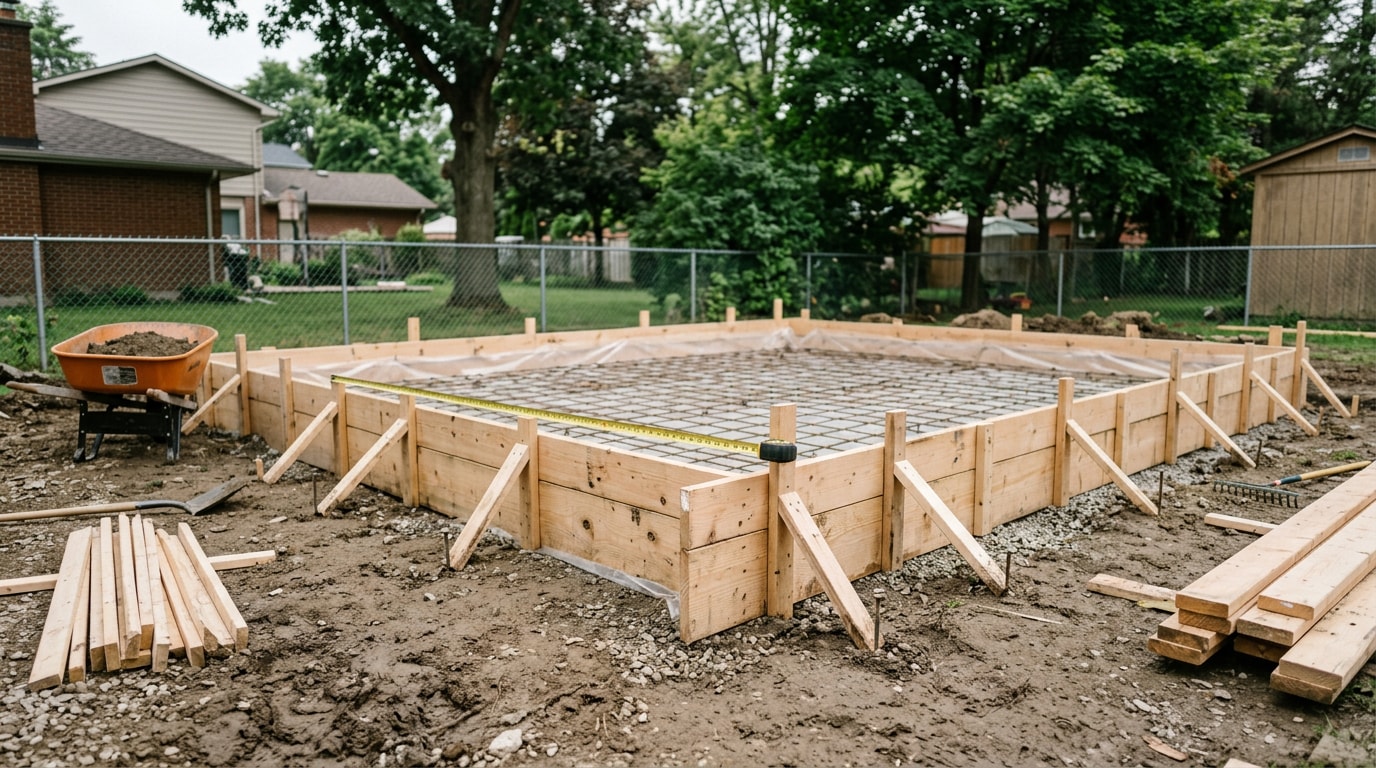
For a rectangular slab, the formula is width × length × height (in feet), divided by 27 for cubic yards. A 12-foot by 10-foot patio slab at 4 inches (0.33 feet) thick works out to 12 × 10 × 0.33, or 39.6 cubic feet, about 1.47 cubic yards. Thickness is the number most often rounded wrong, so measure it carefully before you order.
#### Circular Slabs and Round Footings
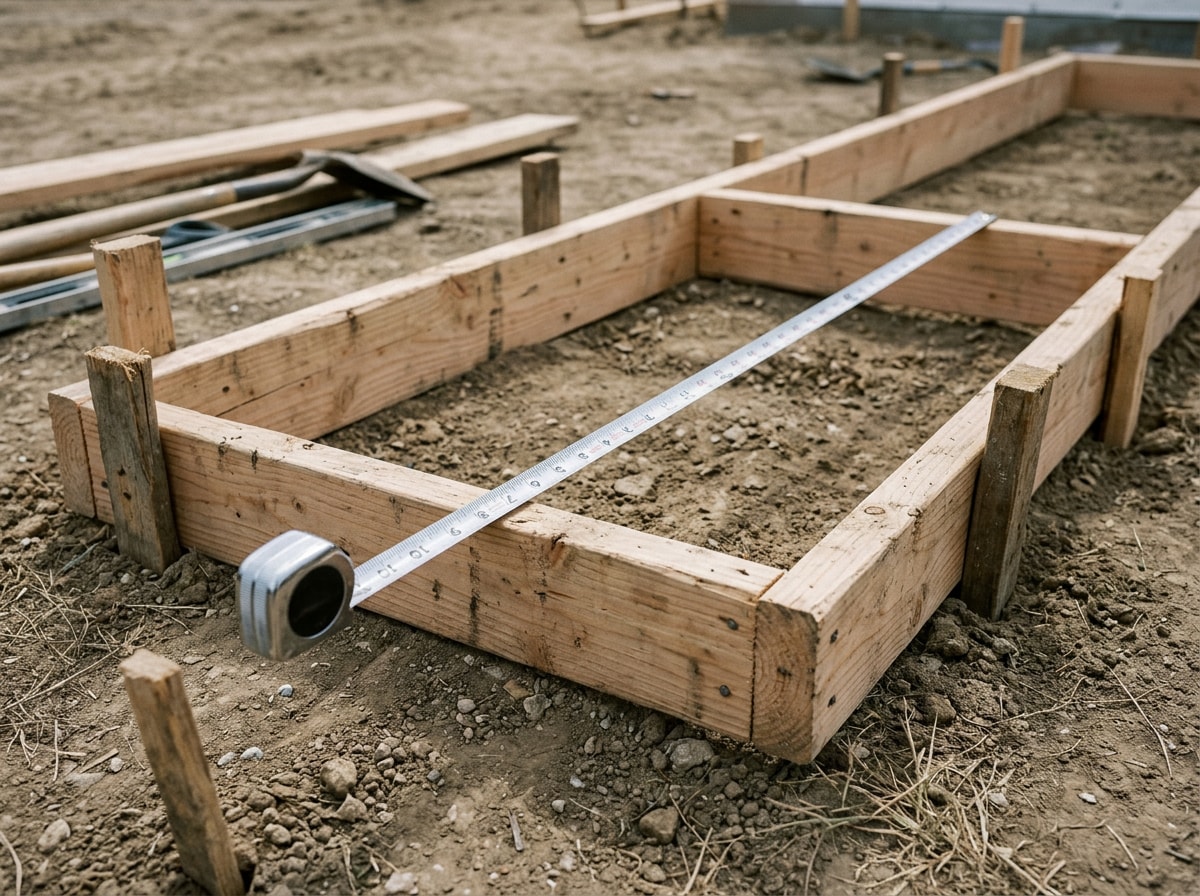
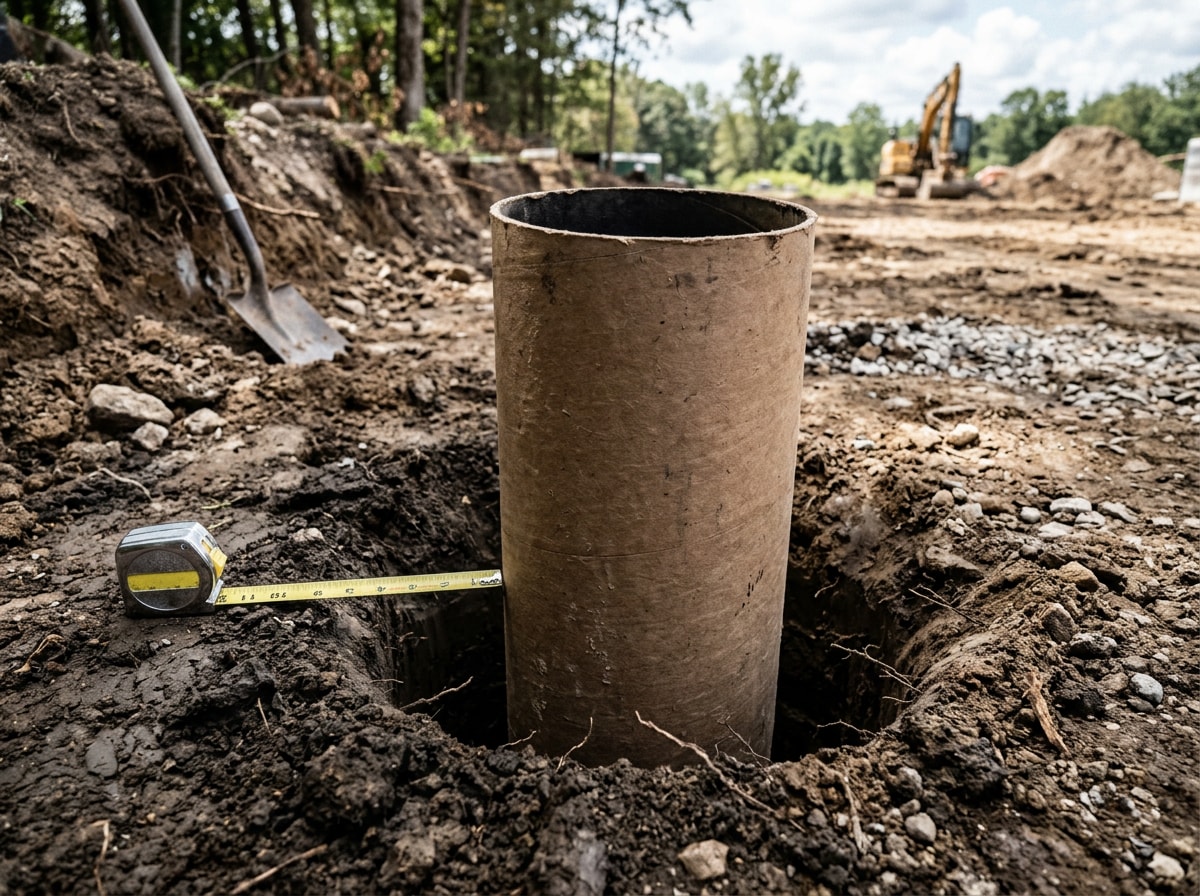
Round pads, sonotubes, and post footings use the cylinder formula: π × radius² × height. The radius is half the diameter. Mixing the two up is the most common mistake in a circular footing calculation; a 12-inch sonotube has a 6-inch radius, not a 12-inch one. Converting the radius and depth to feet, π × (0.5)² × 3 feet comes out to roughly 2.36 cubic feet per post. Multiply that by however many footings the project needs.
#### Footings
Continuous or strip footings follow the same length × width × depth math as a rectangular slab. Footing depth, though, isn't really a pour decision, it's set by local frost-line and building-code requirements. Footings shall not bear on frozen soil unless the frozen condition is permanent, and local tables set the minimum footing depth and insulation requirements for frost-protected footings . Allegheny County jurisdictions commonly require footings well below grade for frost protection, so confirm the exact depth with your local building department before finalizing a foundation pour.
#### Curbs & Gutters
A curb and gutter run is one long, narrow rectangular volume. Calculate the cross-section area (the curb's height-by-width profile) once, then multiply by the total linear footage of the run. That gives the total concrete volume for the entire stretch in a single pass instead of measuring foot by foot.
#### Stairs
Stair volume is calculated step by step: treat each tread as its own small rectangular slab, find the volume for each, then add the landing or platform. A three-step run totals the three treads plus the platform slab, summed into one cubic-yard figure. Step pours also tend to need extra for formwork waste, so round up slightly.
Concrete Slab Calculator
A slab calculator takes three inputs, depth, width, and length, and returns cubic yards (or cubic meters) along with an estimated bag count. Here's the math in one pass: a 20-foot by 20-foot slab at 5 inches (0.42 feet) thick equals 20 × 20 × 0.42, or 168 cubic feet, 6.2 cubic yards.
Most pros don't stop at the theoretical number. Quantity of concrete ordered should be 4% to 10% more than an estimate calculated from the plan dimensions to account for contingencies, and a good estimate should be reevaluated before placing an order . For the 6.2-yard slab above, that's roughly 6.5 to 6.8 cubic yards once spillage and subgrade variation are factored in.
For help prepping the subgrade and finishing the surface once concrete arrives, see our concrete finishing services, or get a free estimate before you place an order.
How Much Extra Concrete Should You Order?
Running the exact calculated number is the single most common reason a pour comes up short on delivery day. Order too little and you're waiting on a short-load truck at $40 to $60 extra per yard; order too much and you're paying for a clean-up load you didn't need.
The industry standard split the difference a long time ago. Quantity of concrete ordered should be 4% to 10% more than an estimate calculated from the plan dimensions to account for contingencies , covering spillage, an uneven subgrade, and forms that spread slightly under the weight of wet concrete. A tighter, well-prepped site can stay near the 4% end; a rough grade or a first-time DIY form should budget closer to 10%.
Understanding Concrete Volume Units
U.S. ready-mix is always ordered in cubic yards, but most calculators also display cubic feet and cubic meters along the way.
| Unit | Use | Conversion |
|---|---|---|
| Cubic yards (yd³) | Standard U.S. ordering unit for ready-mix | 1 yd³ = 27 ft³ |
| Cubic feet (ft³) | Intermediate unit used mid-calculation | 1 ft³ = 0.037 yd³ |
| Cubic meters (m³) | Metric standard outside the U.S. | 1 yd³ ≈ 0.765 m³ |
How Many Bags of Concrete Do You Need?
Bag count depends entirely on bag size and yield. Allow at least 1 ft³ (28.3 L) of mixer capacity for each 80 lb (36.2 kg) bag of QUIKRETE Concrete Mix to be mixed at one time , and the manufacturer's own data sheet lists that bag's yield at roughly 0.60 cubic feet of mixed concrete.
| Bag Size | Approximate Yield | Bags per Cubic Yard |
|---|---|---|
| 40 lb | 0.30 ft³ | ~90 |
| 60 lb | 0.45 ft³ | ~60 |
| 80 lb | 0.60 ft³ | ~45 |
To convert a cubic-yard volume into a bag count, multiply cubic yards by 27 to get cubic feet, then divide by the bag's yield. Bagged concrete works fine for small footings or post holes, but ready-mix delivery is usually more practical once a pour exceeds a cubic yard or two. Our site preparation work gets the subgrade ready either way.
If you're also weighing cost per yard against a bagged order, our concrete cost calculator guide for Allison Park breaks down current pricing by project size.
FAQ
How Do I Calculate How Much Concrete I Need?
Multiply length × width × thickness, all in feet, then divide by 27. That single formula covers slabs, footings, and most residential pours; the only variable is getting each measurement into feet first.
How Much Is a Yard of Concrete?
A cubic yard equals 27 cubic feet. As a quick visual reference, a 10-foot by 10-foot slab poured about 3.2 inches thick uses roughly one cubic yard of concrete.
How Much Extra Concrete Should I Order?
Order 4% to 10% more than your calculated plan volume to cover spillage, an uneven subgrade, and form spread. Tight, well-prepped sites can stay near 4%; rougher grades should budget closer to 10%.
How Much Does Concrete Weigh?
Standard wet concrete weighs roughly 4,000 to 4,050 pounds per cubic yard, though the exact weight varies by mix design and aggregate type. That weight matters for truck access and disposal planning on tighter sites.
How Thick Should a Concrete Slab Be?
Residential walkways and patios typically run 4 inches thick, while driveways need closer to 5 to 6 inches to handle vehicle loads. Thickness is the single biggest driver of total volume, so confirm it before estimating a driveway expansion project.
How Deep Do Footings Need to Be?
Footing depth is set by your local building department based on frost-line requirements, not a fixed national number. Footings shall not bear on frozen soil unless the frozen condition is permanent , so confirm the exact depth for your Allison Park property before pouring.
Ready to turn these numbers into an actual order? Visit Johnny's Asphalt or request your free estimate and we'll help you size the pour correctly the first time. You can also browse projects and service areas, including Allison Park, PA, to see the kind of concrete and paving work we handle locally.