Concrete wheel stops in McCandless Township, PA need to do one job well: stop a vehicle cold without cracking, heaving, or walking out of place through a North Hills winter. This guide covers real installed pricing, material comparisons, anchoring methods built for freeze-thaw cycles, and a full step-by-step install sequence. Skip the vague marketing copy — here are the actual specs.
Quick Answer: Cost, Size & Lifespan
| Question | Answer |
|---|---|
| Installed cost per stop | $65–$125 (concrete), supply + anchoring |
| Material-only cost per unit | $25–$60 |
| Standard size | 6 ft long x 4–6 in high x 6–9 in wide |
| Typical weight (6 ft unit) | 185–215 lb |
| Typical lifespan | 10–15 years with proper anchoring |
| Best anchor method | Epoxy pin on concrete; rebar spike on asphalt |
| 50-stall lot, fully installed | Roughly $3,250–$6,250 |
Why McCandless Township Lots Need Wheel Stops
Without a wheel stop, drivers routinely over-pull into a space. That clips curbs, cracks sidewalks, dents siding, or sends a bumper into landscaping on sloped lots.
McCandless Township's retail centers along Perry Highway, HOA-managed lots, and office parks all share the same exposure. A few hundred dollars in wheel stop installation now is cheaper than repeated bumper strikes, cracked curbing, or a slip-and-fall claim later.
We've anchored wheel stops into lots across the township, and the pattern holds everywhere: the installs that fail early almost always skipped proper hole cleaning or used the wrong pin for the substrate, not a weak concrete mix. For a look at related surface work in the area, see our parking lot resurfacing services.
What Is a Concrete Wheel Stop?
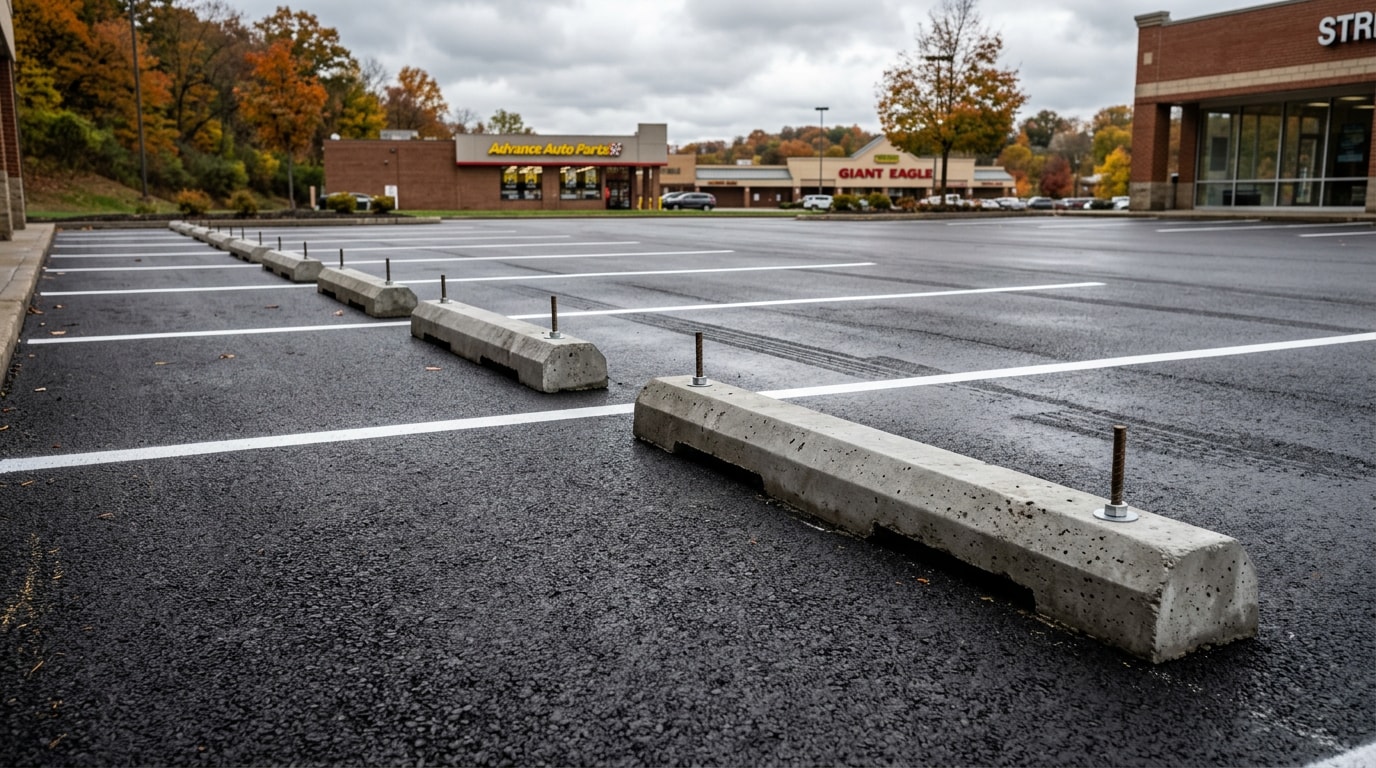
A concrete wheel stop is a precast, steel-reinforced concrete unit placed at the head of a parking space to stop a vehicle's forward travel at a set point. It's also called a parking block, parking bumper, or car stop depending on the region and supplier.
Embedded rebar gives the block tensile strength it wouldn't have as plain concrete. That matters because wheel stops absorb repeated impact loads over their service life.
Units are cast off-site under controlled conditions, cured, then trucked to the property and anchored into the final parking surface. They aren't poured in place.
Wheel Stop Materials Compared
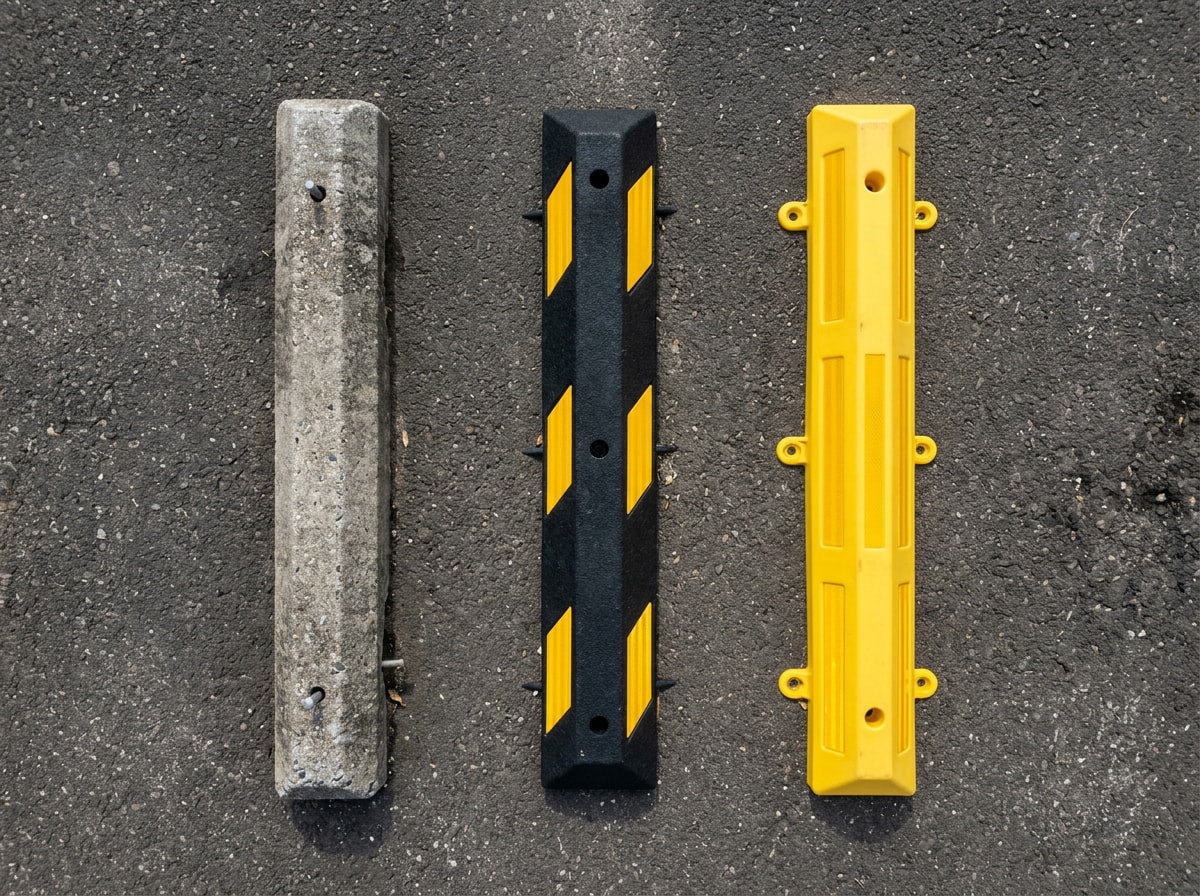
Property owners typically choose between concrete, rubber, and plastic-composite wheel stops. Each handles weather, weight, and wear differently.
| Material | Typical Lifespan | Cold-Weather Behavior | Weight (6 ft) | Best Use Case |
|---|---|---|---|---|
| Concrete | 10–15 years | Rigid; holds shape but can chip at edges from repeated plow contact if poorly anchored | 185–215 lb | High-traffic lots, long-term installs |
| Rubber | 5–10 years | Flexes rather than cracks, but surface wear accelerates with road salt | 20–40 lb | Lots needing frequent reconfiguration |
| Plastic-composite | 7–12 years | Moderate flexibility; can become brittle in deep freezes | 15–30 lb | Lighter-duty or budget installs |
Concrete's rigidity comes from compressive strength, which resists crushing under tire loads. That's the trade-off against rubber's flexible polymer structure through repeated Pittsburgh freeze-thaw cycles.
Placement spacing should also follow accessibility guidance in the U.S. Access Board's parking space standards, especially near accessible stalls.
What Concrete Wheel Stops Actually Cost Installed
Most online cost guides blend material-only pricing with installed pricing, which is where a lot of budget confusion starts.
- Material only: $25–$60 per standard 6-ft precast unit.
- Installed (supply + rebar or epoxy anchoring): $65–$125 per stop.
- Heavy-duty 7–8 ft units: $125–$250+ installed, often needing forklift placement.
- 50-stall lot, fully installed: roughly $3,250–$6,250, depending on anchor method and access.
Site access, substrate (asphalt vs. existing concrete), and order quantity all move the number more than the stop itself does. For an exact number on your lot, get your free estimate instead of guessing from a national average.
Site Prep and Layout Before Installation
Installation starts before any drilling. Crews survey the lot, mark stall striping, and set a consistent setback distance from the curb or wall so every stop in a row lines up evenly.
Layout also has to account for drainage slope and utility lines beneath the pavement. Our site preparation work in McCandless Township usually starts here, before a single pin goes in the ground.
On larger jobs, 6–8 ft concrete units can weigh 185–250+ pounds. That usually means a forklift or multi-person crew is needed to move them safely, consistent with NIOSH's ergonomic guidelines for manual material handling.
Anchoring Methods for Freeze-Thaw Winters
Two anchoring methods dominate the industry:
- Rebar pin anchoring — steel pins driven through pre-drilled holes into the asphalt or concrete substrate. Works well on asphalt.
- Epoxy anchoring — a structural adhesive bonds the pin in place. Often preferred on concrete substrates for a stronger, more permanent hold.
In a freeze-thaw climate like McCandless Township, anchoring quality decides whether a stop shifts, heaves, or stays put through repeated winter cycles. Epoxy products used for this should meet ASTM C881 epoxy-resin bonding standards for consistent bond strength.
If you're setting stops into a freshly placed pad, give the concrete time to cure first — our guide on concrete screed work in McCandless Township covers finishing timelines that affect when anchoring can safely begin.
Tools You'll Need
A standard install calls for:
- Hammer drill with an SDS-Plus bit sized to the rebar pin
- Rebar pins or epoxy anchor kits
- Tape measure and chalk line for layout marking
- Shop vacuum or compressed air for cleaning drilled holes
- Wire brush for hole cleaning before anchoring
Having these on hand before the first hole is drilled is one of the clearest signs of a properly planned job, DIY or contractor-led.
How to Install Concrete Wheel Stops: Step-by-Step
- Mark the layout. Measure and chalk-line the setback distance from the curb or wall so every stop in the row aligns.
- Position the stop. Set the precast unit in place, pre-cast anchor holes facing down toward the drill points.
- Drill the anchor hole. For concrete, a 5/8-inch SDS-Plus carbide bit typically matches a 5/8-inch rebar pin. Drill through the pre-cast holes and several inches into the substrate for enough embedment to resist lateral impact.
- Clean the hole. Dust left inside a drilled hole weakens epoxy bond strength, even with high-quality adhesive. Blow it out with compressed air, brush it with a wire brush, then blow it out again.
- Set the anchor. Drive the rebar pin home, or inject epoxy and seat the pin per the manufacturer's cure time.
- Check alignment and clean up. Confirm the stop sits level and square with the striping before moving to the next space.
Skipping the hole-cleaning step is one of the most common reasons anchors fail early. It gets skipped more often than it should.
FAQ
Can you install wheel stops on both asphalt and concrete?
Yes. Rebar pin anchoring works on both surfaces, though pin length and drill depth should match the substrate. Asphalt typically needs slightly longer pins for adequate holding strength.
How much does it cost to install concrete wheel stops?
Installed pricing commonly runs $65–$125 per stop for standard 6-ft precast units, including supply and anchoring. Material-only units run $25–$60. Get a free project estimate for exact pricing on your lot.
What is the standard size of a concrete wheel stop?
Most standard passenger-vehicle wheel stops measure about 6 feet long, 4–6 inches high, and 6–9 inches wide. Truck bays and larger vehicle lots sometimes use longer or taller units.
How long do concrete wheel stops last?
Concrete wheel stops typically last 10–15 years, though actual lifespan depends on anchoring quality, traffic volume, and exposure to Pittsburgh-area freeze-thaw cycles.
Where should a wheel stop be placed in a parking space?
Wheel stops are typically set back far enough that a parked vehicle's front tires reach them without the bumper overhanging a walkway or curb, usually 2–3 feet from the wall or obstruction. Spacing near accessible spaces should follow U.S. Access Board parking guidance.
Can I install wheel stops myself, or do I need a contractor?
A small residential job with a couple of stops is DIY-friendly with the right tools. Larger commercial lots, heavy-duty units, or epoxy anchoring into structural concrete are usually better left to a contractor who can position heavier units safely and guarantee the anchor work.
Do I need a permit to install wheel stops in McCandless Township?
Standalone wheel stop installation on an existing lot typically doesn't require a separate permit, but any accompanying striping or ADA-space changes should follow current accessibility requirements. Confirm specifics with the township before a large commercial job.
Concrete wheel stops are a small line item next to a full lot project, but they're worth getting right the first time. Whether you're placing a handful of stops at an HOA lot or anchoring fifty across a retail pad, Johnny's Asphalt handles layout, drilling, and anchoring as part of our broader paving contractor services. Browse examples of completed lot work in our project gallery, or get your free estimate today.