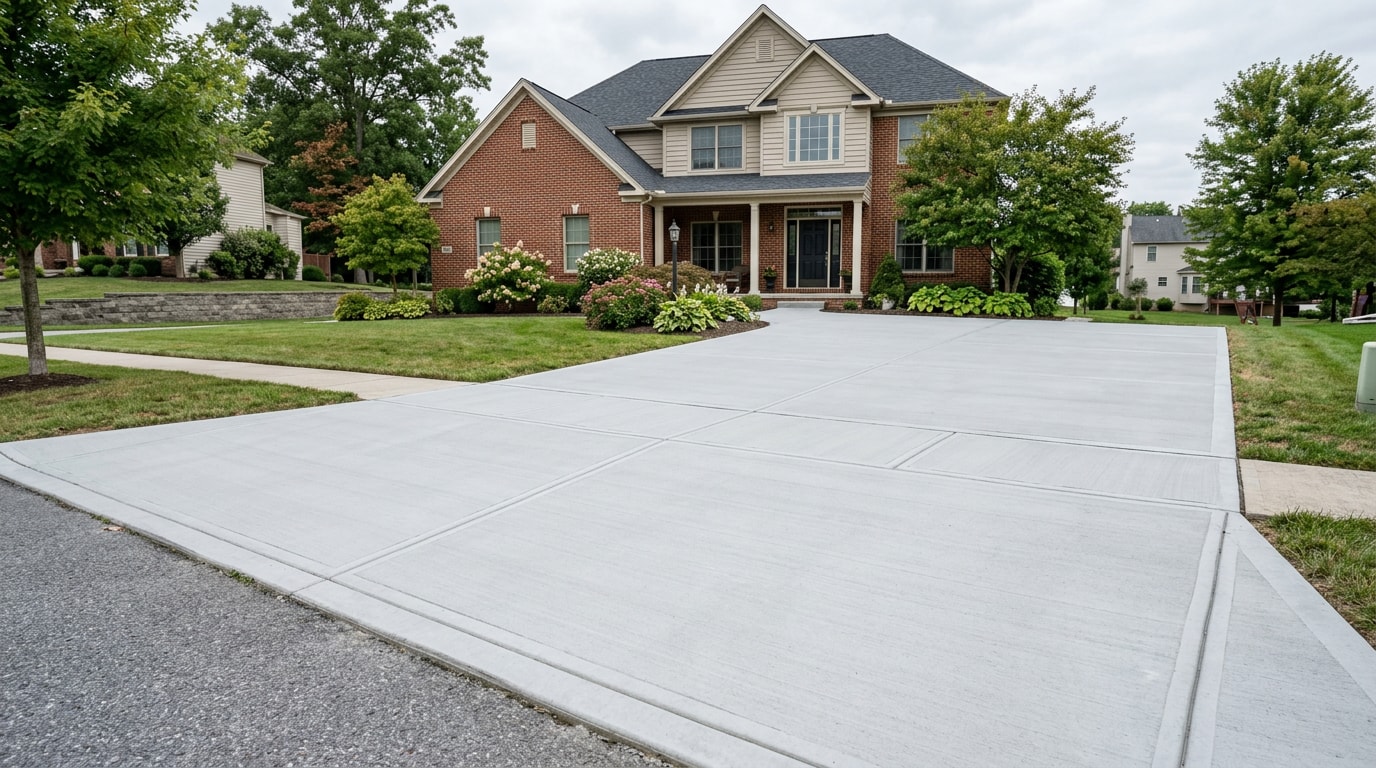

A concrete bird bath in Franklin Park, PA has to survive Allegheny County's freeze-thaw winters, not just look good in July. Pick the wrong basin depth, base width, or winter routine, and you'll be staring at a cracked bowl by March. Here's what actually holds up, from a crew that repairs frost-damaged concrete across the North Hills every spring.
Why Franklin Park's Winters Change the Buying Decision
Most bird bath buying guides are written for mild climates. Franklin Park isn't one of them.
Cracking a concrete bird bath isn't just about the bowl freezing. It's also about what's happening underneath it. When the ground under a heavy pedestal base soaks up water and freezes, that soil expands and shifts the base, which is the same frost heave mechanism that cracks driveways and tilts fence posts around the North Hills. A bird bath set directly on bare soil or mulch is more exposed to this than one set on a compacted gravel pad or a small concrete paver.
Most of Franklin Park, PA and the surrounding area falls in USDA Hardiness Zone 6b, with winter lows that regularly dip well below freezing. You can confirm your exact zone using the official USDA Plant Hardiness Zone Map. That zone data matters less for the birds and more for timing your drain-and-cover routine before the ground starts working against you.
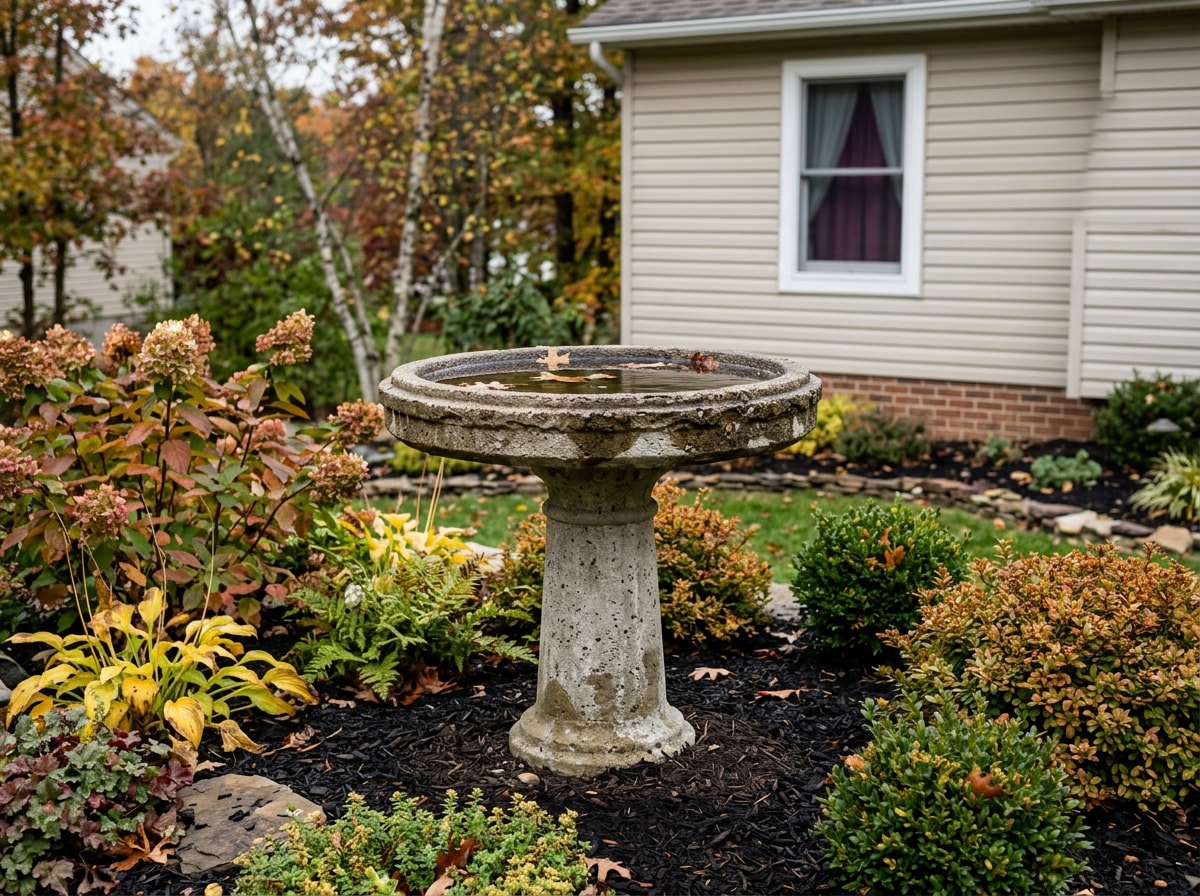
Concrete vs. Cast Stone vs. Resin: Which Material Holds Up
Material names on a product listing don't tell you much. Weight, basin shape, and winter care requirements tell you more.
| Material | Typical weight | Winter care needed | Durability notes |
|---|---|---|---|
| Standard poured concrete | Heavy, often 40 to 100+ lbs | Must drain, dry, and cover or store every year | Can develop hairline cracks without fiber reinforcement |
| Fiber-reinforced concrete / cast stone | Moderate, often 20 to 80 lbs | Same draining and covering routine | Synthetic fibers spread stress and resist cracking better than plain mixes |
| Resin or fiberglass composite | Light, often 5 to 20 lbs | Still needs draining; thin walls aren't frost-proof | Easy to move, but a narrow base can tip in wind |
| Ceramic | Light to moderate | Should come indoors before hard freezes | Glazed finish chips and cracks fastest in freeze-thaw cycles |
Concrete and cast stone make sense if you want a sculpted, substantial piece that stays put. Before buying, check the actual basin depth, the total weight, and the winter care instructions, not just the word "concrete" in the title.
Styles That Fit a Franklin Park Yard
A fluted pedestal suits a formal garden bed. A faux tree-trunk base fits a wooded or cottage-style lot, which describes a lot of Franklin Park properties backing up to tree lines. Clean geometric basins on minimal pedestals read as modern and pair well with newer landscaping.
Match the style to what's already there, patio material, fencing, plant beds, so the bird bath looks intentional instead of dropped in.
Picking a Basin and Base Birds (and Winters) Can Handle
Two things decide whether a concrete bird bath gets used by birds and survives outdoors: the basin and the base.
Basin Depth and Texture
According to Cornell Lab of Ornithology's All About Birds, the water should be no deeper than 1 inch at the edges, sloping to a maximum of 2 inches in the middle. A deeper, flat-bottomed basin forces birds to wade uncomfortably, and smaller species will often skip it entirely.
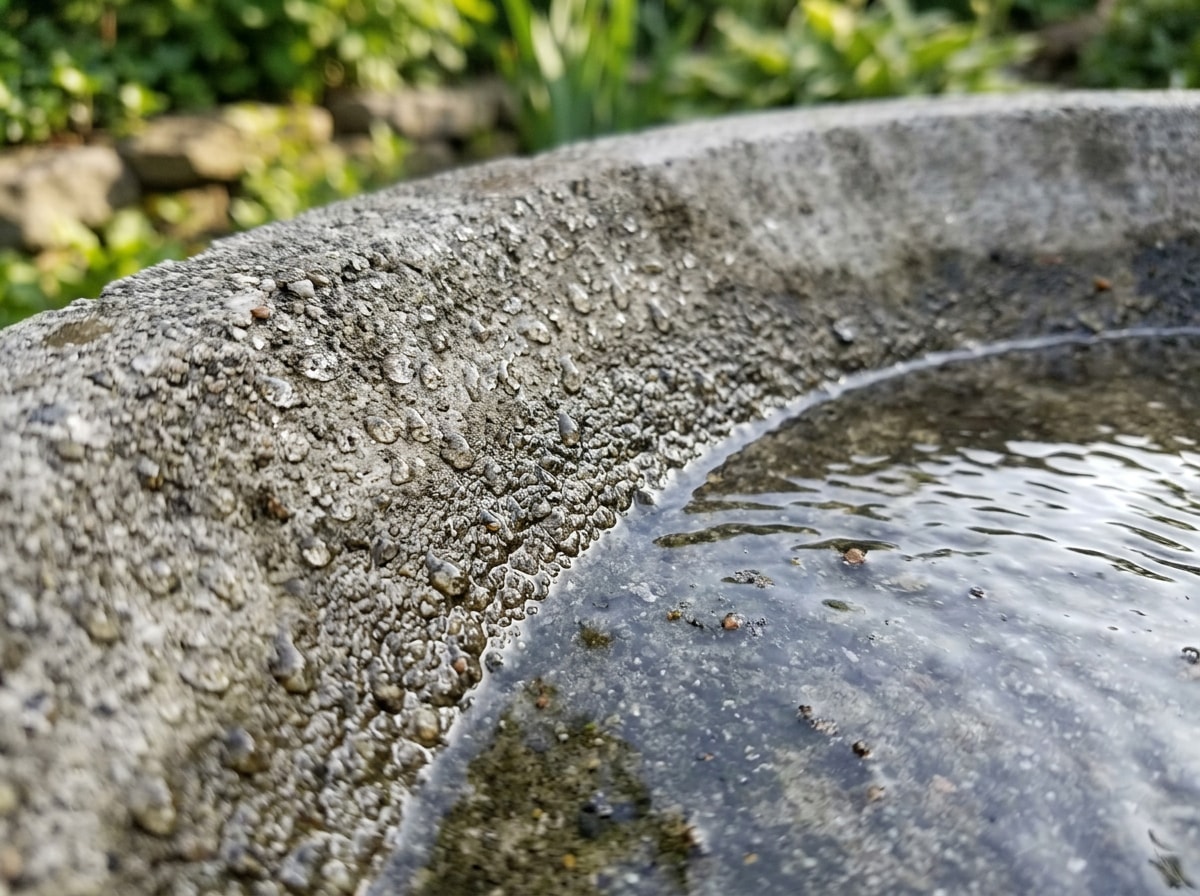
The interior surface needs enough texture for birds to grip without slipping. Too smooth and birds avoid it. Too rough and it traps algae and grime, which just means more scrubbing for you.
Base Width and Weight
A pedestal under 20 pounds is vulnerable to tipping unless the footprint is unusually wide. Look for a square or scalloped base that measures at least 8 inches across.
A few quick specs worth checking before you buy:
- Basin depth: 1 to 2 inches, sloped toward the center
- Base width: at least 8 inches across for genuine tip resistance
- Total weight: enough mass to resist wind and curious dogs without being impossible to move for winter storage
- Placement surface: level, compacted ground, not loose mulch or soft soil
A wider base also spreads weight more evenly, which helps on mulch beds or uneven ground where a narrow pedestal would slowly sink.
Keeping the Water Clean and Safe
Two habits cover most of what a concrete bird bath needs: regular cleaning and smart placement.
For cleaning, rotate between these depending on how dirty the basin gets:
- Hot water and dish detergent for routine grime
- Diluted bleach for stubborn algae, rinsed thoroughly before refilling
- Hydrogen peroxide or baking soda for a deeper, bird-safe scrub
- Distilled vinegar as a gentler alternative to bleach
- A copper penny dropped in the basin to slow algae growth between cleanings
Refreshing the water matters beyond keeping it visually appealing. Federal guidance on mosquito prevention specifically calls out changing the water in bird baths and pet dishes regularly as a basic step homeowners can take.
Set the bath on level ground so water doesn't pool to one side, and favor a spot with afternoon shade. Shade slows algae growth and keeps water cooler during hot stretches. Check it daily and dump cloudy or warm water on sight, regardless of what the basin is made of.
Winterizing a Concrete Bird Bath in Franklin Park, PA
Winter prep comes down to three steps, and timing them before a hard freeze matters more than the steps themselves:
- Drain it completely. Standing water left in the basin is what actually cracks concrete, not the cold air alone.
- Dry it fully. Any moisture left in surface pores can still freeze and expand.
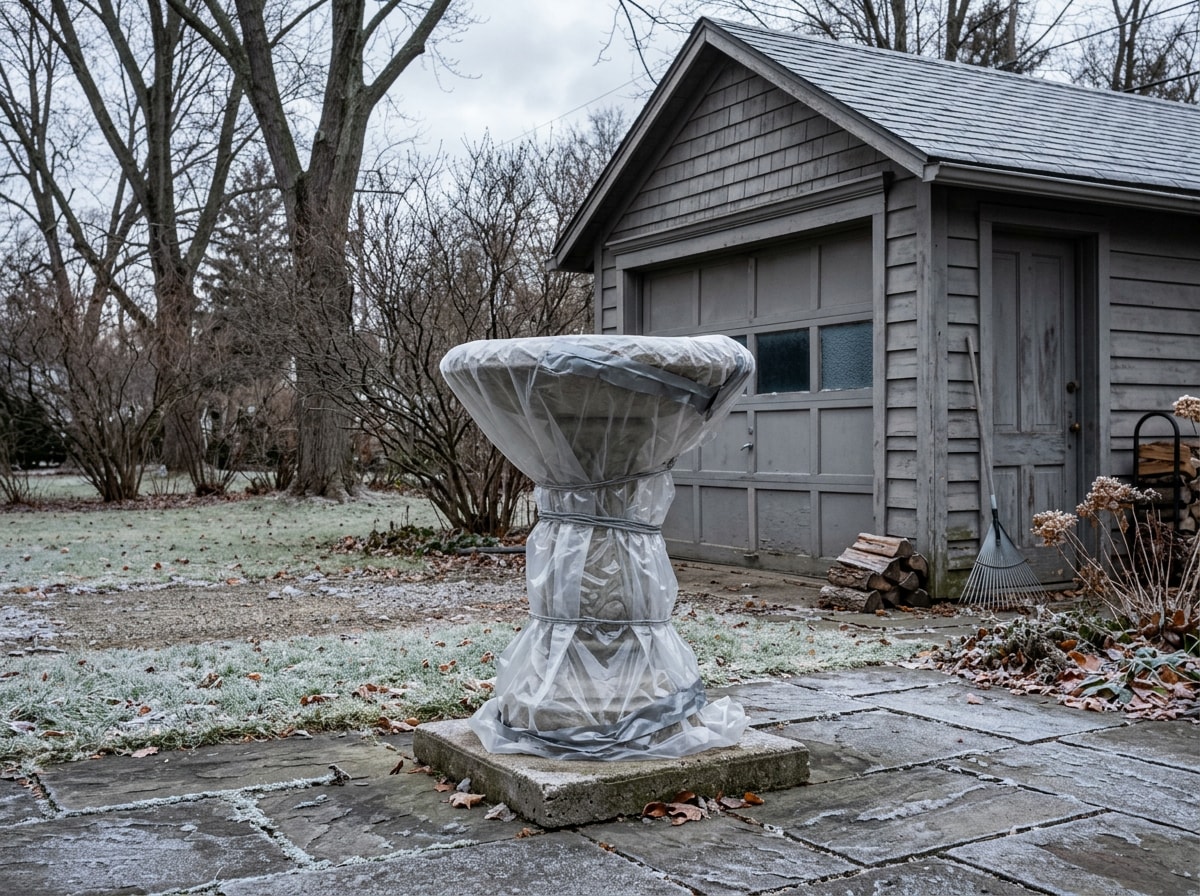
- Cover or store it. A garage or shed is ideal. If that's not an option, wrap the basin in a couple of layers of plastic to block moisture.
Given typical first-frost timing in this part of Allegheny County, early-to-mid October is a reasonable target to have this done, not a date to push against.
We see the aftermath of skipped winterization every spring in our own work. Concrete that absorbs water and then freezes doesn't just crack, it spalls and flakes the same way an uncovered patio slab does. We've written in more detail about how that damage develops in our guide to spalling concrete in Wexford, PA, and the mechanics are identical whether it's a bird bath basin or a driveway.
When a Cracked Base Needs a Concrete Pro
A bird bath itself is a small purchase, but the concrete pad or patio area around it isn't. If you're setting a heavy pedestal on an existing slab that's already spalling, or you want a proper gravel-and-paver base poured so the ground underneath stops heaving every winter, that's where a contractor earns their keep instead of a garden center.
Our crew at Johnny's Asphalt handles exactly this kind of work across Franklin Park and the North Hills, from concrete finishing for a clean, level base to full site preparation if you're redoing a patio area around a garden feature. If your existing concrete is already cracked or heaving, that's worth a second look before you set anything heavy on top of it.
Get My Free Estimate if you want a second opinion on a cracked slab or a stable base built for whatever you're putting on it, bird bath included.
FAQ
Why do concrete bird baths need to be sealed?
Sealing protects the surface from water absorption and UV fading. Without a sealer, moisture works into the concrete over time and speeds up cracking through repeated freeze-thaw cycles.
Can you leave a concrete bird bath outside in winter?
Only with prep. Drain the basin completely, dry it, and either cover it with plastic sheeting or move it into a garage or shed before the first hard freeze.
How often should you clean a bird bath?
Refresh the water every two to three days. Do a deeper scrub, using one of the methods above, roughly every one to two weeks, more often in hot weather.
How do you keep a concrete bird bath from cracking?
Drain it before winter, dry it fully, and cover or store it. Also check that the ground underneath is stable and well-drained so frost heave isn't working the base loose from below.
How much does a concrete bird bath weigh?
It varies widely by size and mix. A basin-only piece can run 30 to 60 pounds, while a full pedestal bath is often 60 to 150+ pounds. Lift-test before buying if you plan to move it seasonally.
Should I hire a professional to set the base?
For a lightweight basin on level ground, no. For a heavy pedestal piece, a sloped yard, or a spot near an existing cracked slab, a properly prepared gravel or concrete pad prevents sinking and heaving far better than bare soil.