Concrete wall forms are the temporary molds that hold wet concrete in place while a foundation or retaining wall cures, and choosing the right type affects everything from cost to how straight the finished wall turns out. In Allison Park's clay-heavy, freeze-thaw soil, the forming system a contractor uses can be the difference between a wall that lasts decades and one that cracks within a few winters. This guide breaks down the form types, 2026 pricing, the pour process, and the local codes that apply before you hire anyone.
What Are Concrete Wall Forms, Exactly?
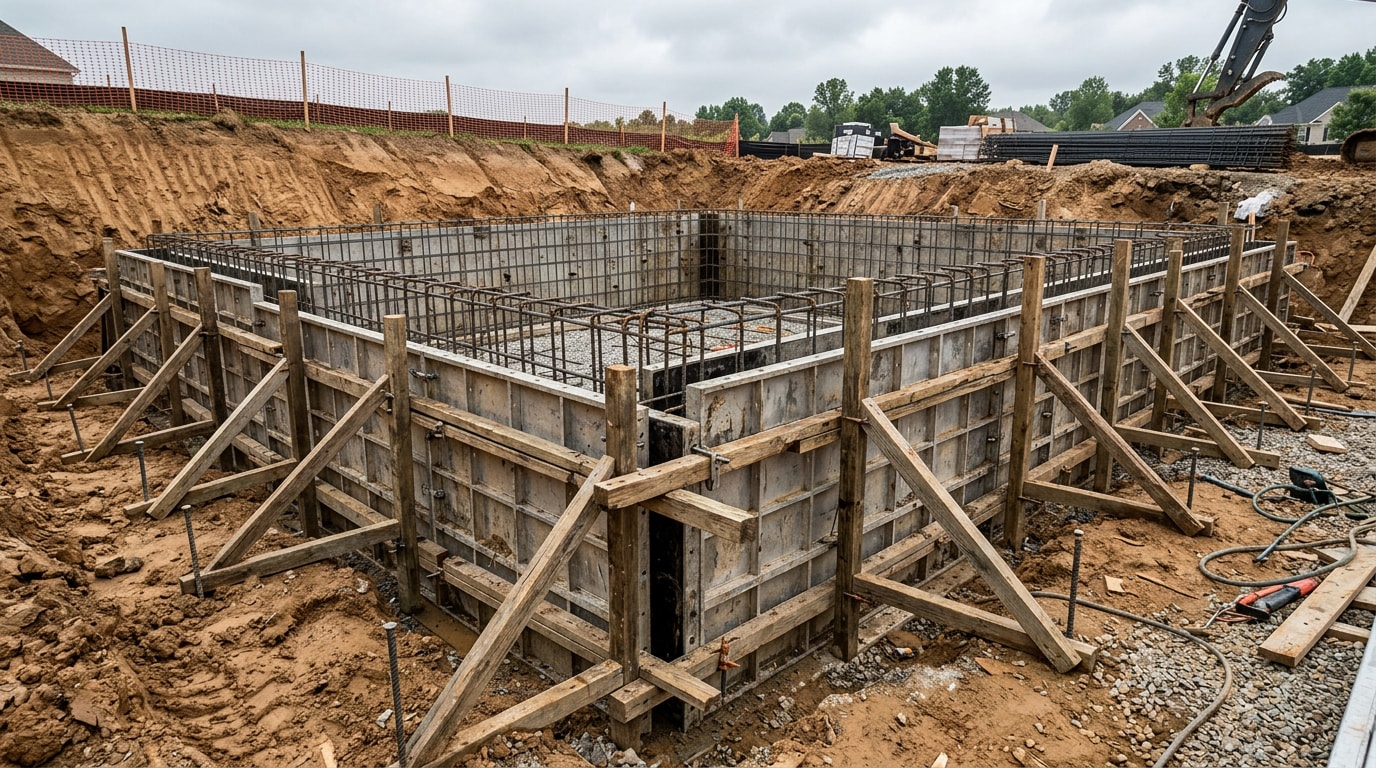
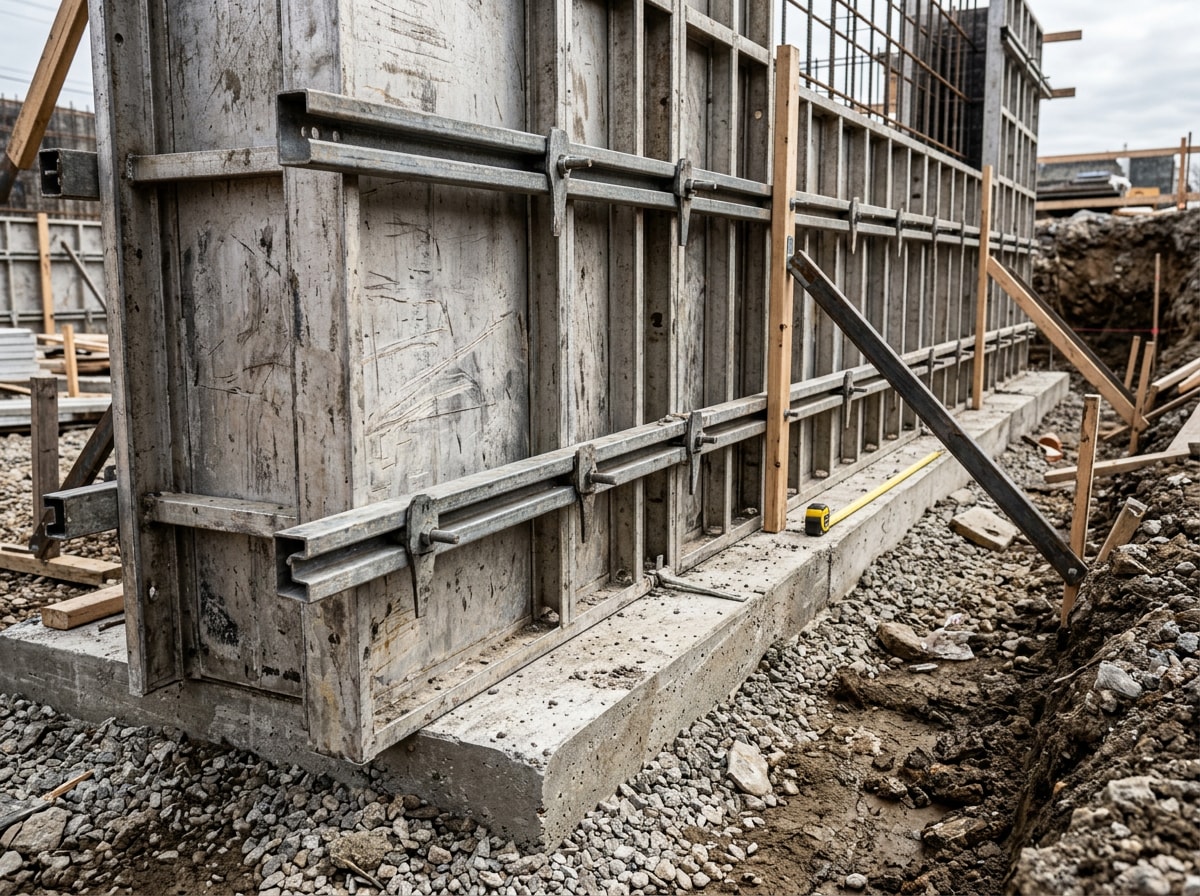
Wall forms are plywood, aluminum, or insulated panels braced on either side of a wall footing to contain poured concrete until it cures enough to hold its own shape. Footing forms go in first, then wall forms, then rebar, then the pour itself.
Most Allison Park homeowners run into wall forms during three types of projects:
- New home or addition foundations (basement and crawl-space walls)
- Retaining walls on sloped North Hills lots
- Poured concrete walls replacing failing block foundations
On recent North Hills pours, our crews have learned that Allegheny County's clay soil holds moisture longer than sandier soils, which means forms often need extra bracing time before backfill to avoid pushing a green wall out of plumb.
Form Types Compared: Plywood vs. Aluminum vs. ICF
Not all forms perform the same, and the material a contractor chooses affects the wall's finish, schedule, and long-term insulation value.
| Form Type | Best For | Typical Cost | Reuse | Trade-Off |
|---|---|---|---|---|
| Plywood (built on-site) | Custom shapes, one-off pours | $3–$6/sq ft material plus labor | 2–4 uses | Most flexible, most labor-intensive |
| Aluminum/steel (rental or owned) | Straight foundation walls | $2–$4/sq ft | Unlimited with rental | Fastest strip time, straightest finish |
| ICF (insulated, stay-in-place) | Energy-efficient new builds | $4–$8/sq ft installed | Permanent | Built-in insulation, higher material cost |
Contractors who own their aluminum forms, rather than renting, typically avoid the scheduling gaps that come with waiting on rental returns. For most Allison Park basements and retaining walls, aluminum or plywood systems remain the practical choice; ICF makes more sense for new energy-conscious builds where the permanent insulation value offsets the added cost.
How Much Do Concrete Wall Forms Cost in 2026?
Pricing depends on wall height, linear footage, soil conditions, and form type, but current industry ranges give a useful starting point for budgeting:
| Item | Typical 2026 Range | Notes |
|---|---|---|
| Form rental (per panel/day) | $2–$3/sq ft/day | Excludes setup and strip labor |
| Basic strip footings | $0.80–$3.50/sq ft of form contact | Depends on footing width |
| 8-inch basement walls | $5–$15/sq ft | Below two stories |
| ICF above-grade walls | $10–$20/sq ft | Higher material, lower labor |
| Ready-mix concrete (3,500 psi) | $140–$185/cu yd | Plus delivery fee |
| Ready-mix concrete (4,000 psi) | $150–$200/cu yd | Retaining or structural walls |
These are regional benchmarks, not quotes. Site access, wall complexity, and whether footings need engineering will move the number up or down. For a breakdown of local delivery pricing, see our ready-mix concrete pricing guide for Allison Park.
Want an exact number for your project? Get My Free Estimate and a crew member will walk the site before quoting.
The Wall-Forming Process, Step by Step
A strong wall starts long before any forms show up on-site. Here's the sequence a properly run job follows:
- Excavate and grade. Digging must reach undisturbed soil and extend below the local frost line. Stopping too shallow or digging into loose fill risks shifting and cracking later.
- Pour and cure footings. Footings are built wider than the wall above to spread the structure's weight across more soil, which reduces settling risk. Footings must fully cure before anything else is set on top.
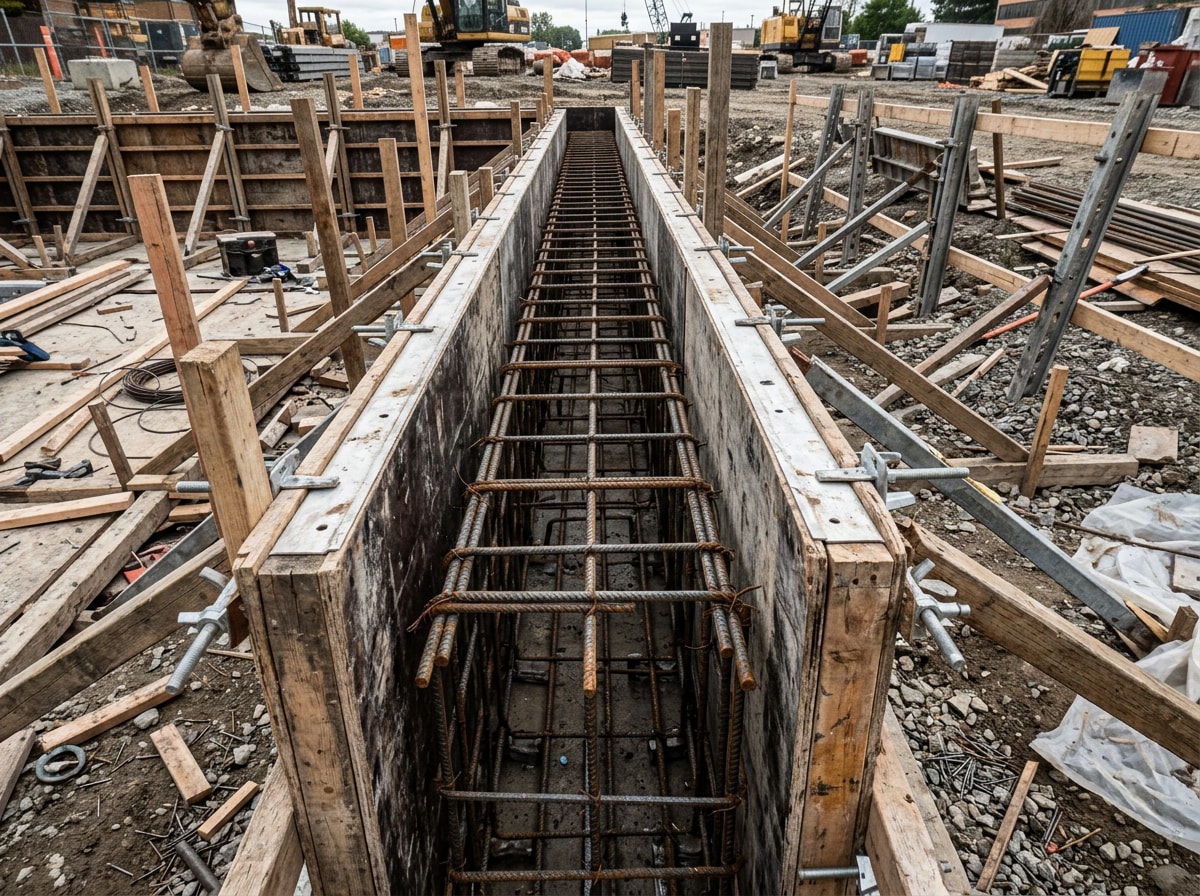
- Set wall forms plumb and square. Crews brace forms on both sides to resist the outward pressure of wet concrete pushing against them.
- Place rebar. Reinforcement goes in a grid inside the forms before the pour for added tensile strength.
- Pour and vibrate the concrete. Vibration removes air pockets that would otherwise weaken the wall.
- Strip forms and begin curing. Forms come off once the concrete reaches sufficient strength, not on a fixed calendar schedule.
- Waterproof and backfill. Backfilling too early, before the wall cures and drainage is in place, is one of the most common causes of bowed basement walls.
Allegheny County's freeze-thaw winters make the frost-depth and drainage steps especially important. The Pennsylvania Housing Research Center at Penn State notes that in cold climates, the base of the foundation must extend below the regionally specific frost depth in order to prevent the earth below the foundation from heaving .
Permits, Codes & Safety Requirements
Before any forms go up, a few code and safety checkpoints apply in Pennsylvania:
- Footing inspection. Pennsylvania's Uniform Construction Code requires a footing inspection after digging and before concrete is poured, and
the permit applicant is required to call requesting an inspection 3 business days in advance of desired inspection date .
- Formwork safety. OSHA's standard for cast-in-place concrete requires that
all base plates, shore heads, extension devices, and adjustment screws shall be in firm contact, and secured when necessary, with the foundation and the form , which protects workers from form failure during the pour.
- Formwork design. For projects needing engineered bracing calculations, the American Concrete Institute's Committee 347 publishes the industry-standard reference covering
design criteria for horizontal and vertical loads on formwork and safety factors for formwork accessories.
- Retaining wall height. Walls over roughly 4 feet typically require a permit and an engineer's stamp in most jurisdictions, so confirm your township's threshold before scheduling a pour.
A reliable concrete contractor will confirm frost-depth and inspection requirements with your township before digging starts, not after.
Why Hire a Local Professional Instead of Renting Forms Yourself
DIY form rental is possible, but a few things trip up first-timers:
- Bracing underestimation. Wet concrete exerts significant lateral pressure, and undersized bracing is a leading cause of blowouts.
- Rental scheduling. Rented forms come with a return deadline, which can force a rushed strip before concrete has fully cured.
- Inspection timing. Missing the footing inspection window can delay the entire project by days.
- Soil variability. Allison Park's clay content means drainage and footing depth decisions vary block to block, which is harder to judge without local experience.
Proper site preparation before forms ever arrive also matters as much as the forming system itself. Skipping grading or drainage planning at this stage is a common reason walls develop hydrostatic pressure problems after backfill.
You can see examples of completed foundation and retaining wall work in our project gallery.
Service Area: Concrete Wall Forms Near Allison Park, PA
We form and pour concrete walls throughout Allison Park and the surrounding North Hills, including Hampton Township, McCandless Township, Franklin Park, and Wexford. If your property sits in one of these townships, confirm your project falls within a contractor's coverage area before scheduling an estimate.
Johnny's Asphalt is a fifth-generation, family-owned contractor based in Allison Park, and our crews handle both the asphalt and concrete side of residential site work. Visit our homepage to see the full range of services, or go straight to a free estimate request.
FAQ
What are concrete wall forms made of?
Most are built from plywood sheeting with lumber bracing, engineered aluminum panels, or insulated concrete form (ICF) panels made of rigid foam. The choice depends on budget, wall shape, and whether permanent insulation is wanted.
How long do concrete forms stay on a wall before removal?
Forms typically stay in place until the concrete reaches enough compressive strength to support itself, usually 24 to 48 hours for vertical wall forms in moderate weather. Cold temperatures slow curing and extend that window.
Do I need a permit for a concrete wall in Allegheny County?
In most cases, yes. New foundation walls and retaining walls over about 4 feet tall generally require a building permit and a footing inspection before the pour. Check with your specific township, since requirements can vary slightly across the North Hills.
How much does it cost to form and pour a foundation wall in 2026?
Basic strip footings run roughly $0.80 to $3.50 per square foot of form contact, while 8-inch basement walls typically fall between $5 and $15 per square foot. Exact pricing depends on wall height, access, and soil conditions, so a site visit gives the most accurate number.
Is a poured concrete wall better than a block wall?
Poured walls generally offer stronger lateral strength and fewer joints where water can get in, while properly grouted block can still perform well in compression. For basements fighting hydrostatic pressure from clay soil, poured walls are usually the more durable choice.
Can I rent concrete wall forms and do it myself?
You can, but bracing a wall form to resist wet concrete's lateral pressure takes more precision than it looks. Underbraced forms are one of the most common causes of blowouts on DIY pours, and a failed pour costs far more to fix than hiring a crew upfront.