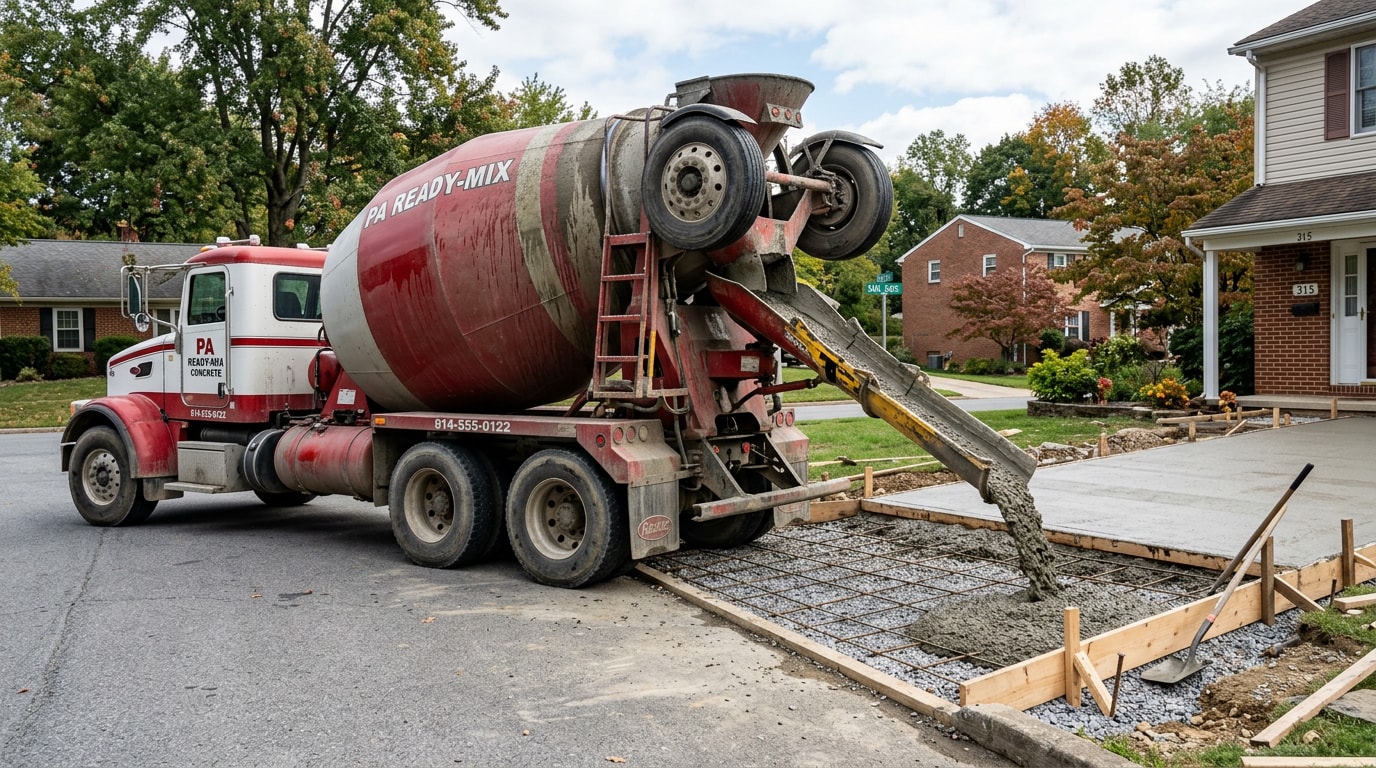
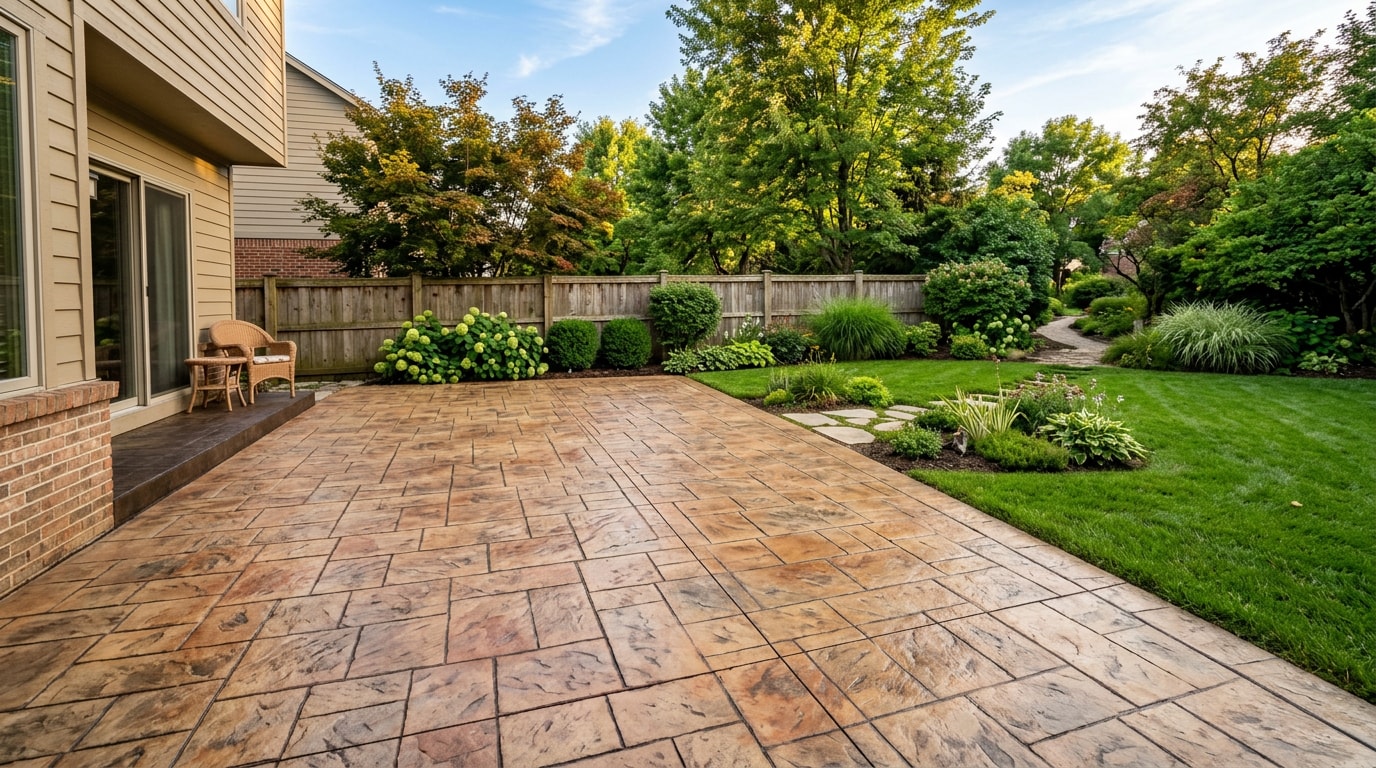
A stamped concrete patio in Sewickley, PA typically runs $15 to $28 per square foot installed in 2026, giving you the look of slate or stone without the stone price tag. Before you call a contractor, you need to know how Sewickley's Historic District rules affect exterior work, which finish actually holds traction on a sloped yard, and what separates a 25-year patio from one that cracks in five. This guide covers all three, plus real pricing, pattern options, and the base prep most quotes gloss over.
What Is a Stamped Concrete Patio?
Stamped concrete is a single poured slab textured with molds while the concrete is still wet, so the surface reads as slate, flagstone, cobblestone, or wood planking. Because it's one continuous pour instead of individual units, there are no joints for weeds to push through and no stones to shift or settle the way pavers can over time.
Contractors use the same process for patios, pool decks, walkways, and driveways across Sewickley and the surrounding North Hills communities.
Stamped Concrete Patio Cost in Sewickley, PA
Price is almost always the first question, so here it is upfront. Across current 2026 pricing guides, installed stamped concrete patios run $15 to $28 per square foot, depending on pattern complexity, number of colors, and how easy the site is to access. A plain broom finish costs less; exposed aggregate lands in the middle.
| Finish | Installed Cost (2026) | Resealing | Winter Traction | Structural Lifespan |
|---|---|---|---|---|
| Broom finish | $8 to $12/sq ft | Rarely needed | Good | 25 to 30 years |
| Stamped concrete | $15 to $28/sq ft | Every 2 to 3 years | Moderate | 25 to 30 years |
| Exposed aggregate | $12 to $18/sq ft | Occasional | Best | 25 to 30+ years |
Structural lifespan assumes a properly compacted base and correct slab thickness. Color and pattern sharpness on a stamped surface usually need attention well before the slab itself fails, which is why sealing matters so much.
Using that per-square-foot range, here's roughly what common patio sizes cost before site-specific factors like excavation, demo of an old patio, or a steep lot:
| Patio Size | Installed Cost Range (2026) |
|---|---|
| 200 sq ft (10' x 20') | $3,000 to $5,600 |
| 300 sq ft (15' x 20') | $4,500 to $8,400 |
| 400 sq ft (20' x 20') | $6,000 to $11,200 |
Every lot in Sewickley is different, especially with the borough's hillside terrain. Get your free estimate and we'll measure your space and give you a number based on your actual yard, not a national average.
Pros and Cons of a Stamped Concrete Patio
Pros:
- Looks like natural stone, brick, or wood at a fraction of the material cost
- One continuous slab, so no joints for weeds or ants
- Dozens of pattern and color combinations to match your home's exterior
- Easy to clean with a hose and a broom
- Adds to resale appeal when installed and sealed correctly
Cons:
- Can crack over time, especially with a thin slab or poor base prep
- Textured surfaces with a glossy sealer can get slick when wet
- Not a realistic DIY project; timing the stamp to the concrete's set is unforgiving
- Color can fade in direct, south-facing sun without a UV-rated sealer
- Repairs are harder to blend into a patterned surface than on plain concrete
Finish and Pattern Options for Western PA Homes
Every patio starts the same way underneath: compacted gravel base, air-entrained concrete at least 4 inches thick, and a slope graded to shed water. What changes is the surface on top.
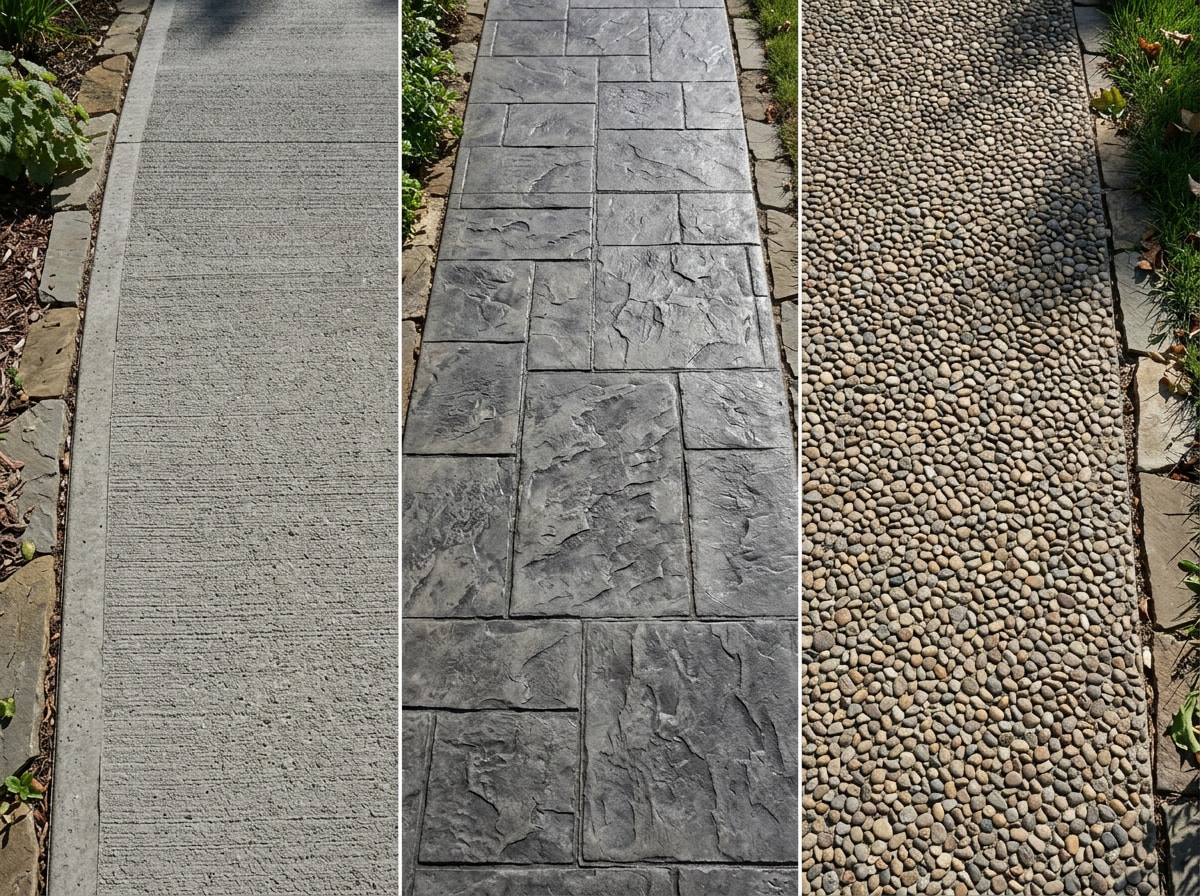
Stamp patterns are textured mats pressed into the wet concrete to mimic natural materials. The most common options for Sewickley patios and pool decks include:
- Ashlar slate – irregular, organic-looking stone pattern, a favorite for entertaining spaces
- Random stone – similar to ashlar but with more varied piece sizes for a less uniform look
- Cobblestone – smaller, repeating units for a more traditional, structured feel
- Wood plank – mimics decking boards, popular for pool surrounds and modern homes
- Running bond brick – a classic choice that pairs well with brick-exterior homes
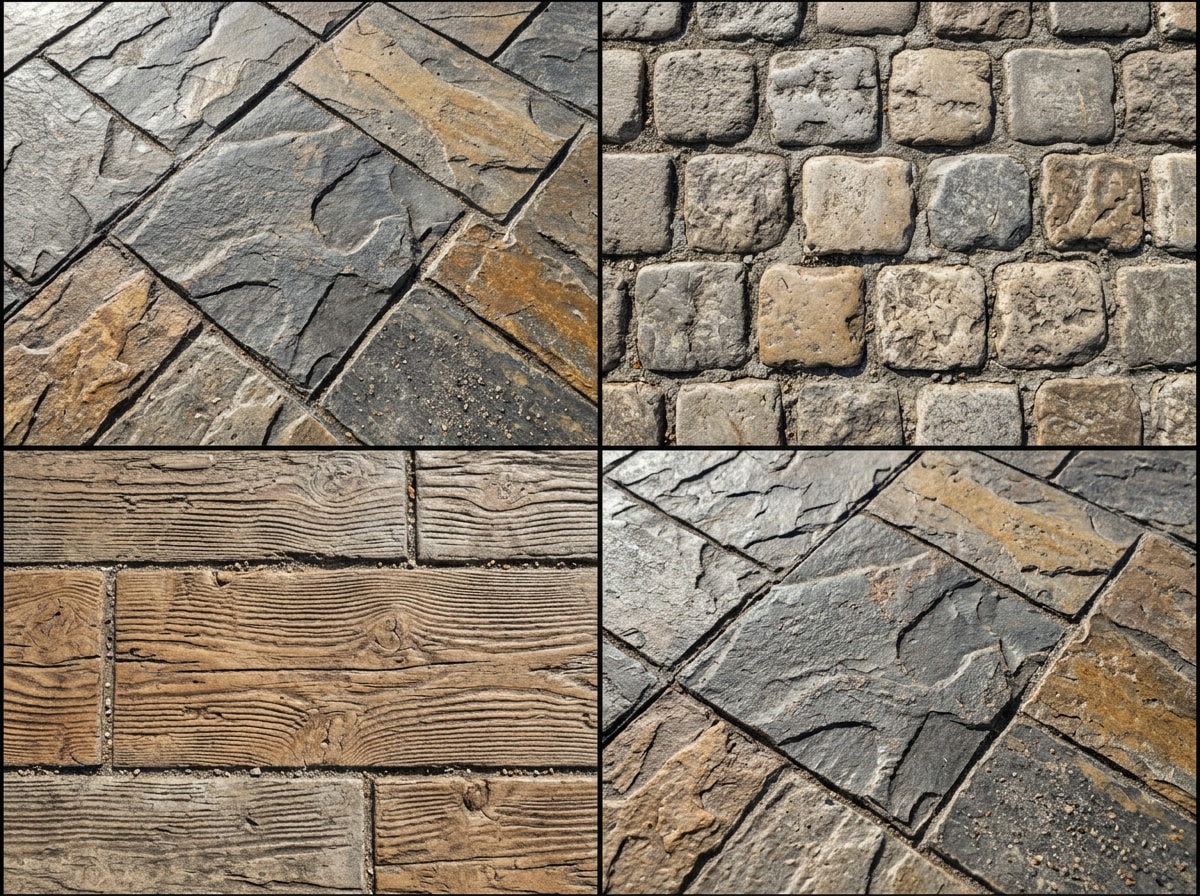
Pick a pattern and color that complement your home's existing siding, brick, or stone, not fight against it. A sample panel poured on-site before the full job is the best way to confirm color and texture match what you pictured.
How Long Does a Stamped Concrete Patio Last in Pittsburgh's Climate?
A properly installed stamped concrete patio holds up for 25 to 30 years structurally. But Pittsburgh's climate works against the cosmetic finish faster than it works against the slab itself.
Winters here bring frequent freeze-thaw swings, with temperatures crossing above and below freezing repeatedly between December and March, according to the National Weather Service's climate data for the Pittsburgh region. Water that gets under an unsealed or poorly sealed surface expands when it freezes, which is what causes flaking, spalling, and surface pitting well before the structural slab gives out.
Road salt tracked onto a patio from driveways and walkways accelerates that same process. That's the main reason local sealing schedules run on the shorter end of the 2 to 3 year window rather than the longer end.
Base Prep and Installation: Why It's the Part That Actually Matters
In more than a decade of pouring patios across Sewickley and the North Hills, our crews at Johnny's Asphalt have learned the stamp pattern is rarely what determines whether a patio lasts. The base underneath is.
A typical install follows this sequence:
- Site visit and layout – confirm dimensions, drainage direction, and truck or pump access
- Excavation – remove topsoil and old material to the correct depth
- Base compaction – lay and compact a granular base to support the slab evenly
- Forming – set forms to the finished height and a slope of roughly 2 percent away from the house
- Pour and stamp – place air-entrained concrete, then stamp while it's still workable
- Control joints and sealing – cut or tool joints into the layout, then apply sealer once cured
Control joints matter more than most homeowners realize. The National Ready Mixed Concrete Association recommends spacing joints at roughly 24 to 36 times the slab's thickness, which keeps shrinkage cracks confined to straight lines instead of random cracking across the patio, according to its technical guidance on joints in concrete slabs. On a stamped patio, those joints are planned to disappear into the pattern lines instead of standing out.
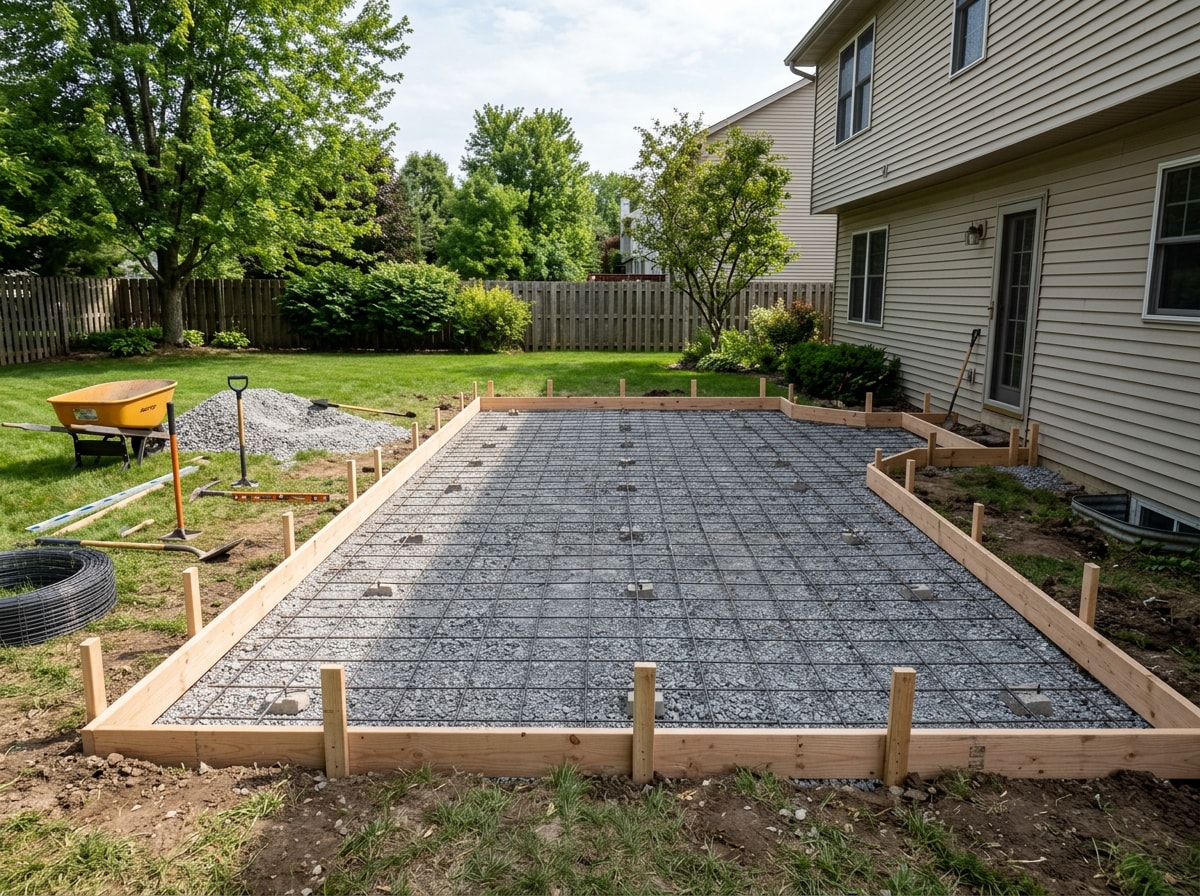
Want to see the kind of base prep and finished work we're talking about? Browse recent patio and paving projects from around the area.
Sealing and Maintenance
Plan on resealing a stamped concrete patio in this area every 2 to 3 years. Road salt, UV exposure, and repeated freeze-thaw cycles break sealer down faster here than in milder climates.
Spring is generally the best time to reseal, once winter salt residue has fully washed off the surface. The American Society of Concrete Contractors' Decorative Concrete Council notes that sealer should go on a fully cured, clean, dry surface, and ideally not in direct sunlight, to avoid bubbling or poor bonding, per its best practices for sealing stamped concrete.
Beyond sealing, maintenance is simple: sweep debris regularly, rinse with a hose, and avoid harsh deicing chemicals that can pit the surface.
Do You Need a Permit for a Patio in Sewickley, PA?
This is where Sewickley differs from a lot of neighboring towns. Construction in the Borough of Sewickley requires a permit from the Building Inspector, and all horizontal surfaces on a lot, including patios, decks, and driveways, count toward the property's impervious surface coverage limit under the zoning code.
If your home sits in one of Sewickley's three Historic Districts, exterior work, including a new or replaced patio, needs a Certificate of Appropriateness from the Historic Review Commission before Borough Council approval, according to the Borough's Building & Zoning page. That review step can add time to your project timeline, so it's worth confirming early, not after materials are ordered.
Our site preparation service includes handling grading and drainage details that zoning reviewers typically check, which helps keep the permit process moving.
Repairing or Resurfacing an Existing Patio
A worn, discolored, or lightly scaled slab doesn't always need a full tear-out. If the concrete underneath is structurally sound, a polymer-modified overlay, typically a quarter to a half inch thick, can be colored and stamped to look like a brand-new decorative surface.
Resurfacing generally costs a third to half of full replacement. Heaved, badly cracked, or hollow-sounding slabs need structural repair first; an overlay poured over a failing base will fail with it.
If you're dealing with a fresh pour that's cracked, discolored, or didn't cure the way you expected, our guide to wet concrete repair and new pours in Sewickley walks through what's fixable and what isn't. Our concrete finishing services cover both overlays and full replacement.
Ready to Start Your Sewickley Patio Project?
Pricing guides are a starting point, not a quote. The only way to know what your specific lot, slope, and Historic District status mean for your project is to have someone look at it.
Get My Free Estimate from Johnny's Asphalt, or visit our Sewickley, PA service area page to see the communities we cover. You can also start from our homepage to browse every paving and concrete service we offer.
FAQ
How much does a stamped concrete patio cost in Sewickley, PA?
Expect $15 to $28 per square foot installed in 2026, depending on pattern complexity, number of colors, and site access. A plain broom finish runs $8 to $12 per square foot for comparison.
What is stamped concrete, and how is it different from pavers?
Stamped concrete is a single poured slab textured to look like stone, brick, or wood. Unlike pavers, it has no individual joints, so there's nowhere for weeds to grow and no pieces to shift or settle independently.
Will a stamped concrete patio crack in a Pittsburgh winter?
All concrete moves as it cures and ages, so the goal is controlling where it cracks, not preventing it entirely. A compacted base, air-entrained mix, and properly spaced control joints keep shrinkage confined to the joint lines instead of cracking randomly across the surface.
How long does a stamped concrete patio last?
A properly installed, well-maintained stamped concrete patio typically lasts 25 to 30 years structurally. The decorative color and pattern often need resealing attention well before that, usually starting within the first decade if sealing is skipped.
Is stamped concrete slippery when wet?
It can be, particularly with a high-gloss sealer. Adding a slip-resistant additive to the sealer coat improves traction, and exposed aggregate is generally a safer choice than stamped concrete for steep, shaded, or pool-adjacent areas.
How often should I reseal a stamped concrete patio in this area?
Plan on every 2 to 3 years. Road salt and repeated freeze-thaw cycles break down sealer faster here than in milder climates, so spring resealing, after salt residue has washed away, is typically the best timing.
Do I need a permit for a patio in Sewickley, PA?
Most construction in Sewickley Borough requires a permit, and patios count toward your lot's impervious surface coverage limit. If your property is in one of the borough's three Historic Districts, exterior work also needs a Certificate of Appropriateness from the Historic Review Commission before it's approved.
How do you keep a patio from pooling water?
Contractors build a deliberate slope away from the house into the base and forms, usually around 2 percent, so rain and snowmelt run off instead of sitting on the slab.
This guide was written by the team at Johnny's Asphalt, a paving and concrete contractor serving Sewickley, Wexford, Cranberry Township, and the greater North Hills. Questions about your project? Contact Johnny's Asphalt.