A cracked concrete patio in Hampton Township, PA usually isn't a sign the slab failed, it's a sign the ground underneath it moved. Between clay-heavy soil and dozens of freeze-thaw cycles every winter, local patios crack in fairly predictable patterns long before they're actually unsafe. Here's how to tell which crack you're dealing with, what repair actually costs, and when a quick patch won't hold.
Why Concrete Patios Crack in Hampton Township, PA
Most patio cracks here start below the surface, not in the concrete itself. The slab is usually fine. The soil supporting it is what moves.
Western Pennsylvania winters put outdoor concrete through repeated freezing and thawing, and that cycle gradually loosens and compacts the soil beneath a patio in uneven ways. Research from Penn State Extension on local soil behavior found that one specific swelling clay mineral, smectite, which is often blamed for dramatic soil heaving, is not common in Pennsylvania soils, so that particular swelling mechanism is unlikely to be the cause here. That's worth knowing because a lot of patio-repair advice online overstates "expansive clay" as the culprit. In this region, ordinary freeze-thaw compaction and poor drainage around the slab's edge are usually doing more damage than the clay itself.
In the patio calls our crew runs across Hampton Township each spring, the crack almost never starts in the middle of the slab. It starts along the expansion joint closest to the house, where downspout runoff saturates the base soil every time it rains. That's a detail most generic repair guides skip entirely.
What Actually Weakens the Base
- Original soil compaction that wasn't dense enough when the patio was poured
- Erosion or washout under the slab from poor grading, clogged gutters, or downspouts dumping near the edge
- Seasonal moisture swings that soften the subgrade every spring thaw
- Tree root growth close to the patio, common on older Hampton Township lots
Types of Concrete Patio Cracks (and What Each One Means)
Not every crack is the same problem, and figuring out which type you have is the first real step toward picking a fix that lasts.
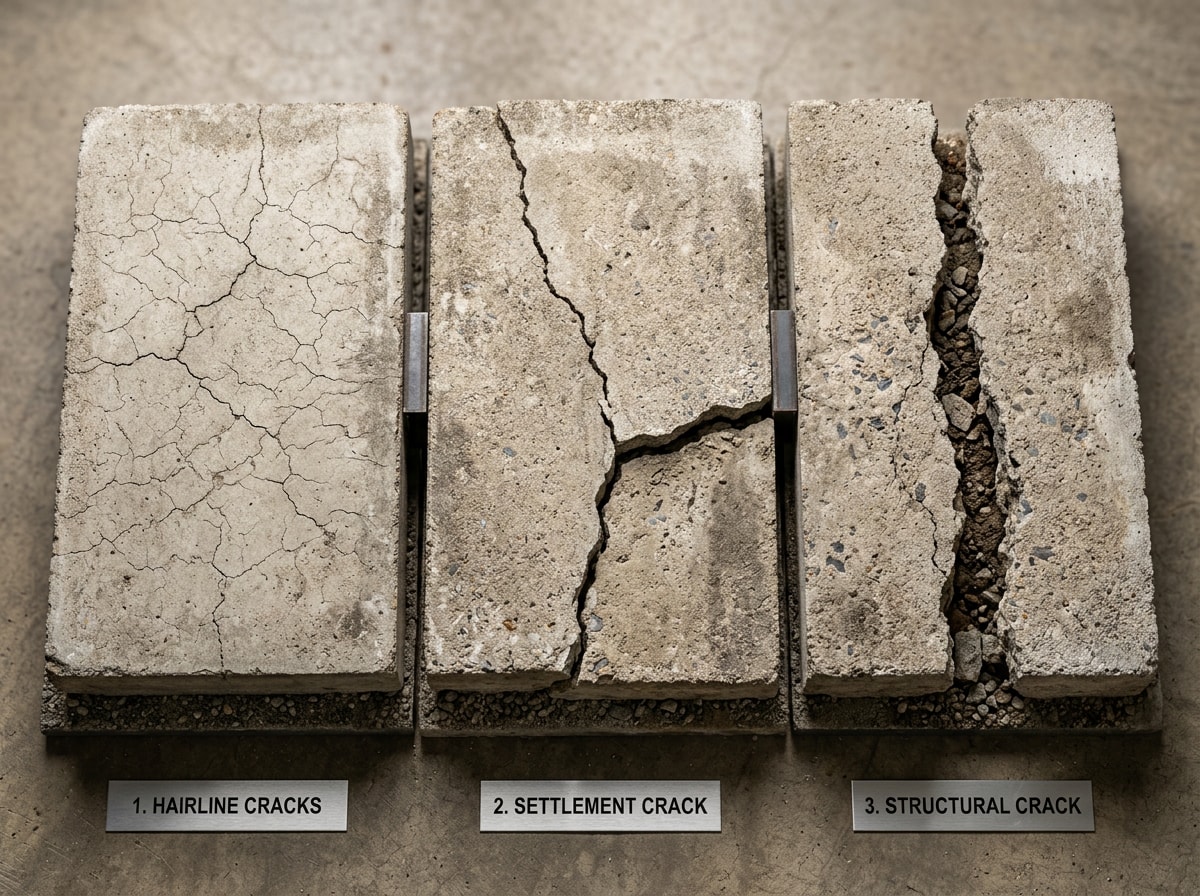
Hairline Cracks
These are thin, surface-level lines that show up as the concrete cures and shrinks slightly. They're cosmetic. They don't run deep, they don't widen on their own, and they rarely affect how the patio holds up.
Settlement Cracks
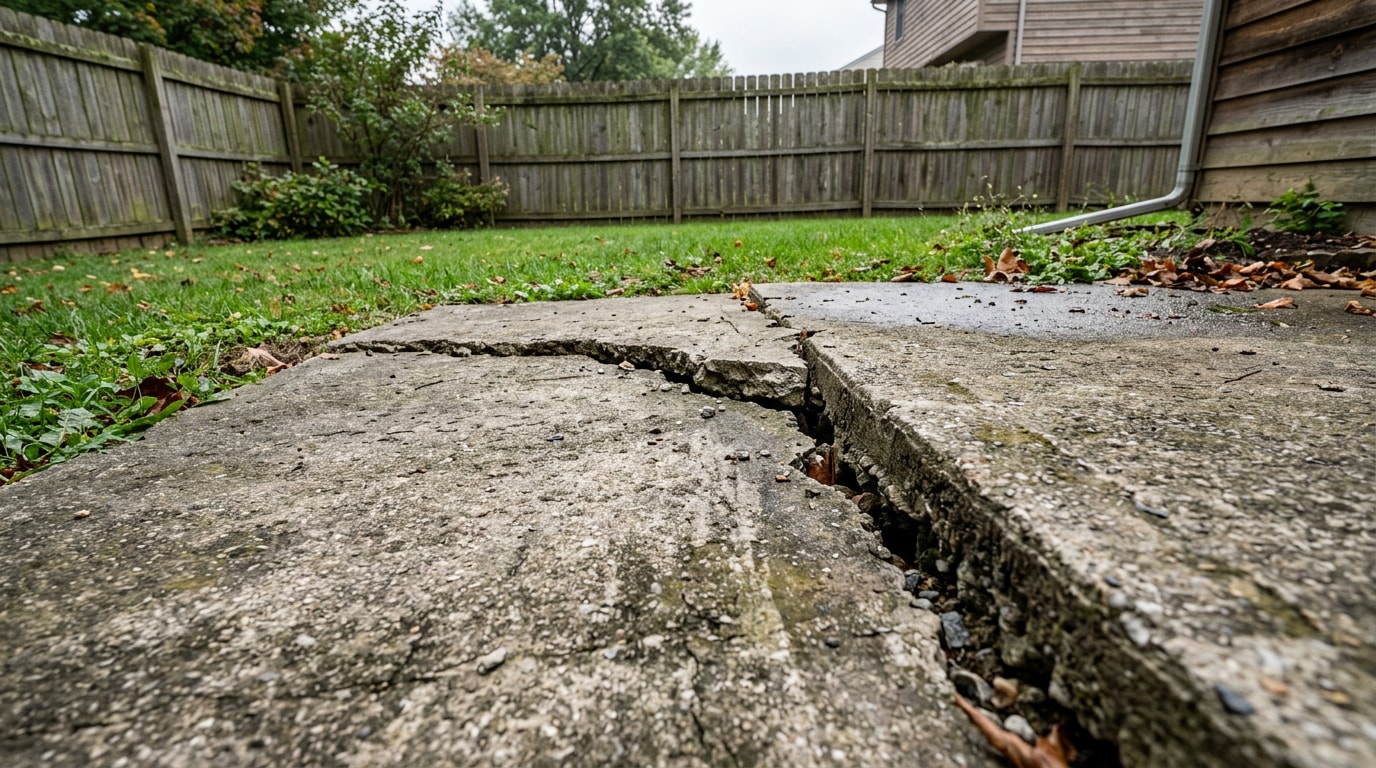
Settlement cracks appear when one section of the slab sinks lower than the rest, usually because the soil underneath that section compacted unevenly. These widen gradually over months or years rather than showing up overnight, and you'll often notice a slight step or lip where the two sides meet.
Structural Cracks
These run deeper, often through the full thickness of the slab, and are usually tied to inadequate reinforcement or significant ground movement. Engineering guidance from the American Concrete Institute on crack behavior notes that long-term effects on cracking should be considered alongside the crack-control procedures used during original construction , which is part of why a wide, actively growing crack is treated differently than a hairline one. As a practical rule of thumb, a crack wider than about a quarter-inch, or one with a noticeable height difference on either side, usually means patching won't hold for long.
Repair Options and What They Typically Cost
Once you know the crack type, the repair method usually picks itself. Here's how the main options compare.
| Repair Method | Best For | Typical Cost Range | Expected Lifespan |
|---|---|---|---|
| Crack filling/sealing | Hairline or minor stable cracks | $300-$800 | 3-5 years before resealing |
| Resurfacing/overlay | Surface wear without structural damage | $1,000-$3,000 | 8-15 years |
| Joint repair | Failed expansion joints letting in water | $200-$600 per joint run | 5-10 years |
| Slabjacking/mudjacking | Sunken, uneven settlement cracks | $500-$1,500 per section | 10+ years if soil issue is corrected |
| Section replacement | Wide structural cracks, failed sub-base | Varies by square footage | 20+ years with proper prep |
A few notes on each:
- Crack filling is the fastest, least invasive fix, but it won't correct an uneven slab or stop active settling underneath it. Our crack filling service is usually the right call for hairline damage only.
- Resurfacing bonds a fresh layer over an existing slab that's still structurally sound, which makes it a solid middle ground between a simple patch and full replacement. This falls under our concrete finishing work.
- Joint repair is one of the cheapest ways to head off future cracking, since failed sealant is what lets water into the base in the first place.
- Slabjacking lifts a sunken section back into place without demolition, but it only lasts if the underlying soil issue gets addressed at the same time.
Severity drives the price far more than crack length does. A six-inch hairline crack and a six-inch structural crack are not remotely the same repair.
DIY Crack Filler vs. Calling a Pro
A hardware-store crack filler can work fine on a small, stable hairline crack. It's cheap, it's easy to apply, and if the crack isn't actively widening or tied to settlement, it'll hold for a few years.
The trouble starts when that same filler gets used on a settlement or structural crack. Without addressing the soil or reinforcement issue underneath, the crack almost always comes back, usually worse.
Quick gut-check before you grab a tube of filler:
- Is the crack under 1/8 inch wide with no height difference across it? DIY filler is reasonable.
- Is there a visible step, or is the crack wider than a quarter-inch? That's a job for a contractor, not a caulk gun.
- Has the crack grown noticeably in the last few months? Active movement means the base is still shifting, and filler alone won't stop that.
What Before-and-After Repairs Actually Look Like
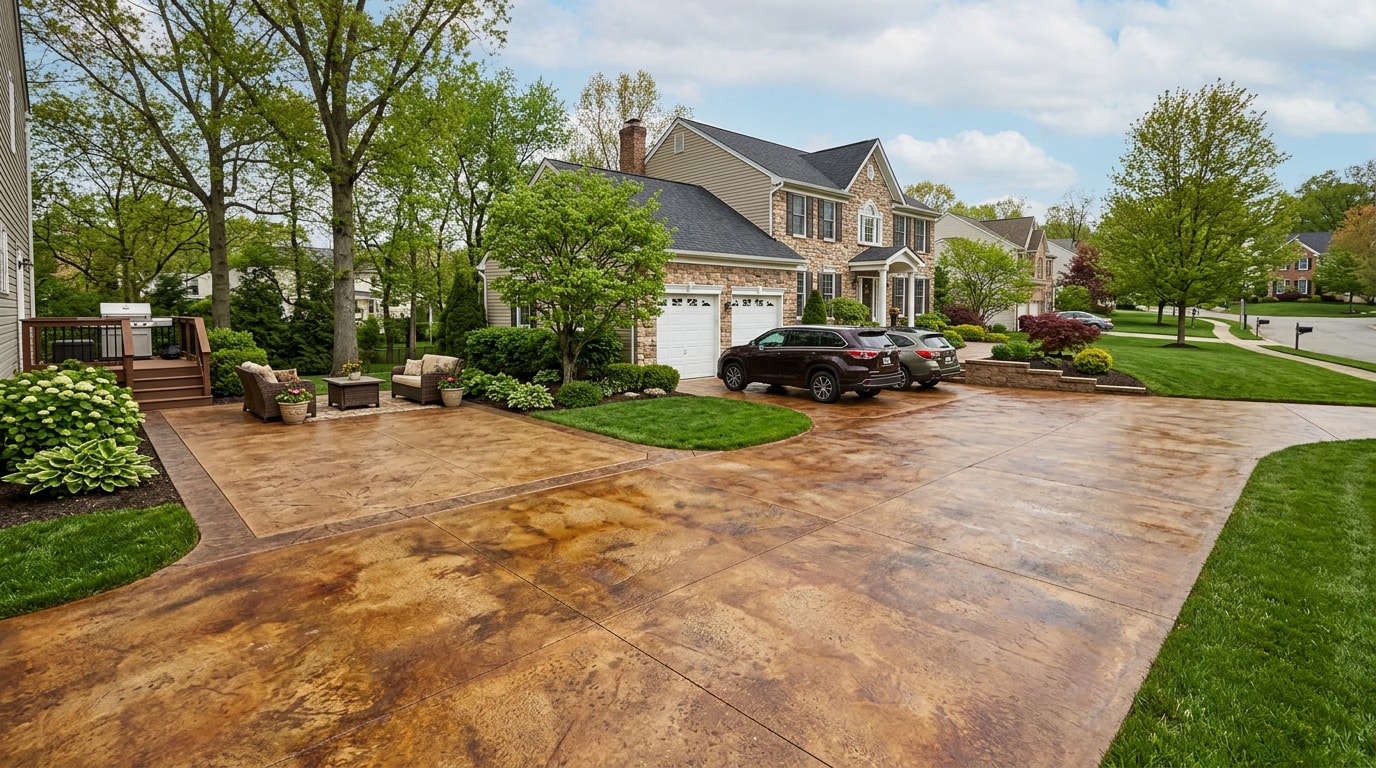
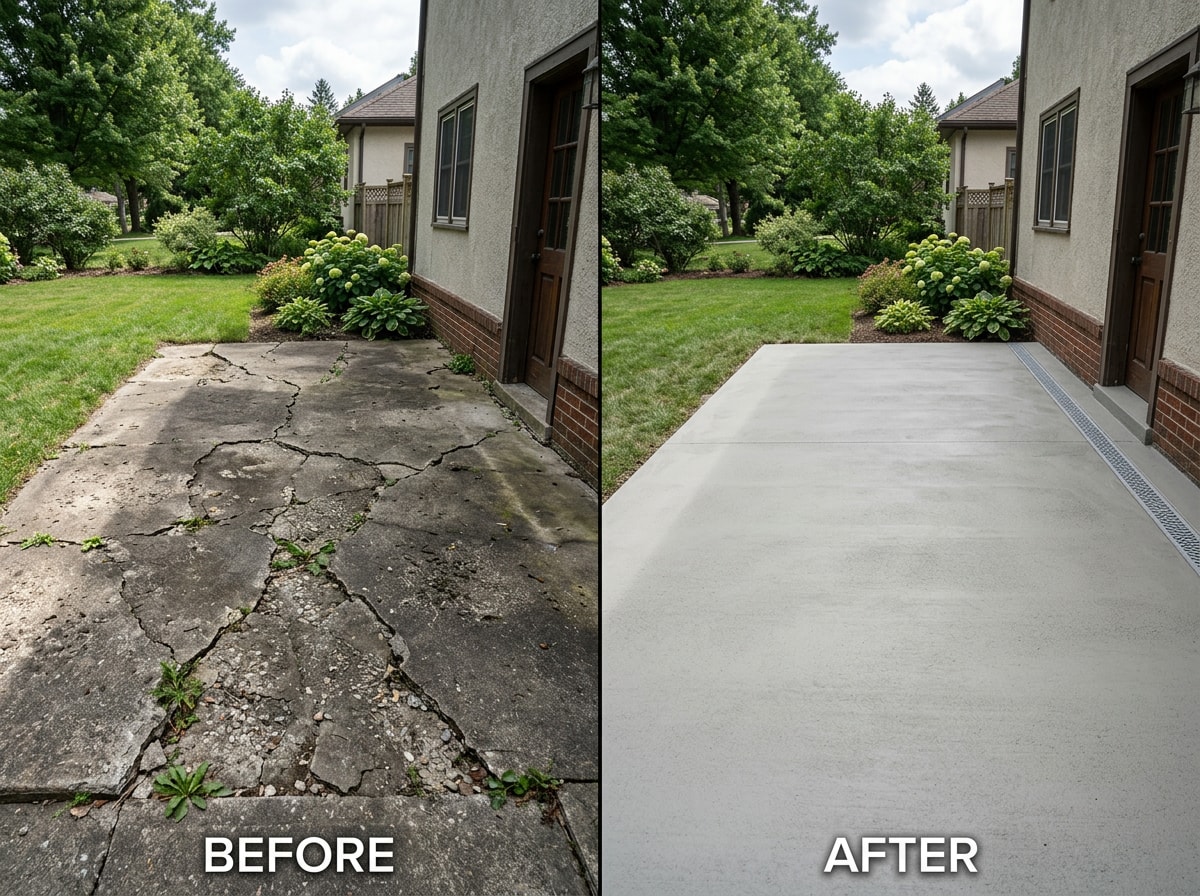
A properly filled, resurfaced, or releveled patio can end up looking nearly indistinguishable from a brand-new pour, with color-matched finishes hiding most repair lines. A restored patio also tends to drain better once the settlement issue underneath it is corrected, which helps keep the same crack from coming back the following winter. You can see examples of completed local work on our projects page.
If your issue is actually a fresh pour that never cured right rather than an old crack, that's a different problem with a different fix, covered in our guide to wet concrete repair and new pours in Sewickley.
Finding a Trustworthy Concrete Repair Contractor in Hampton Township
A trustworthy contractor gives you a written estimate, explains their specific repair method in plain language, and carries current registration and insurance before any work starts. Pennsylvania homeowners are protected under state law here: the Pennsylvania Legislature passed the Home Improvement Consumer Protection Act in 2008, requiring contractors who perform at least $5,000 worth of home improvements per year to register with the Attorney General's Office. It's worth confirming any contractor's registration through the Pennsylvania Attorney General's Home Improvement Consumer Protection resources before signing anything.
Ask how long a contractor has actually worked in the Hampton Township area specifically, and ask for references from recent patio jobs, not just driveway or foundation work. Johnny's Asphalt handles patio crack repair, resurfacing, and new concrete work throughout the area, and you can see our full service area on the Hampton Township page. Visit Johnny's Asphalt to see the rest of our paving and concrete services, or request a free estimate and we'll take a look at the patio in person before you commit to any repair plan.
FAQ
What causes concrete patios to crack in Hampton Township?
Freeze-thaw cycles, soil erosion under the slab, poor original compaction, and drainage problems near the edge are the leading causes in this region. The crack itself is usually a symptom of ground movement, not a flaw in the concrete.
How much does it cost to fix a cracked concrete patio?
It depends almost entirely on severity. Minor crack filling can run a few hundred dollars, while resurfacing or section replacement on a larger structural crack can climb into the thousands. An on-site look is the only way to get an accurate number.
Can a cracked concrete patio be repaired, or does it need to be replaced?
Small, stable cracks are usually fillable or sealable. Wide structural cracks, or cracks with a visible step across them, typically need resurfacing or partial replacement to actually last.
How long does a concrete patio repair last?
Crack filling typically holds 3-5 years before resealing is needed. Resurfacing lasts 8-15 years, and a proper slabjacking repair can last 10+ years if the underlying soil issue was corrected at the same time.
Is DIY crack filler a good long-term fix?
Only for small, stable hairline cracks. If the crack is tied to settlement or active soil movement, filler alone almost always fails and the crack returns, often wider than before.
What other concrete surfaces can be repaired the same way?
Driveways, sidewalks, steps, and pool decks all crack for similar reasons and generally use the same repair methods: crack filling, resurfacing, joint repair, or slabjacking, depending on severity.