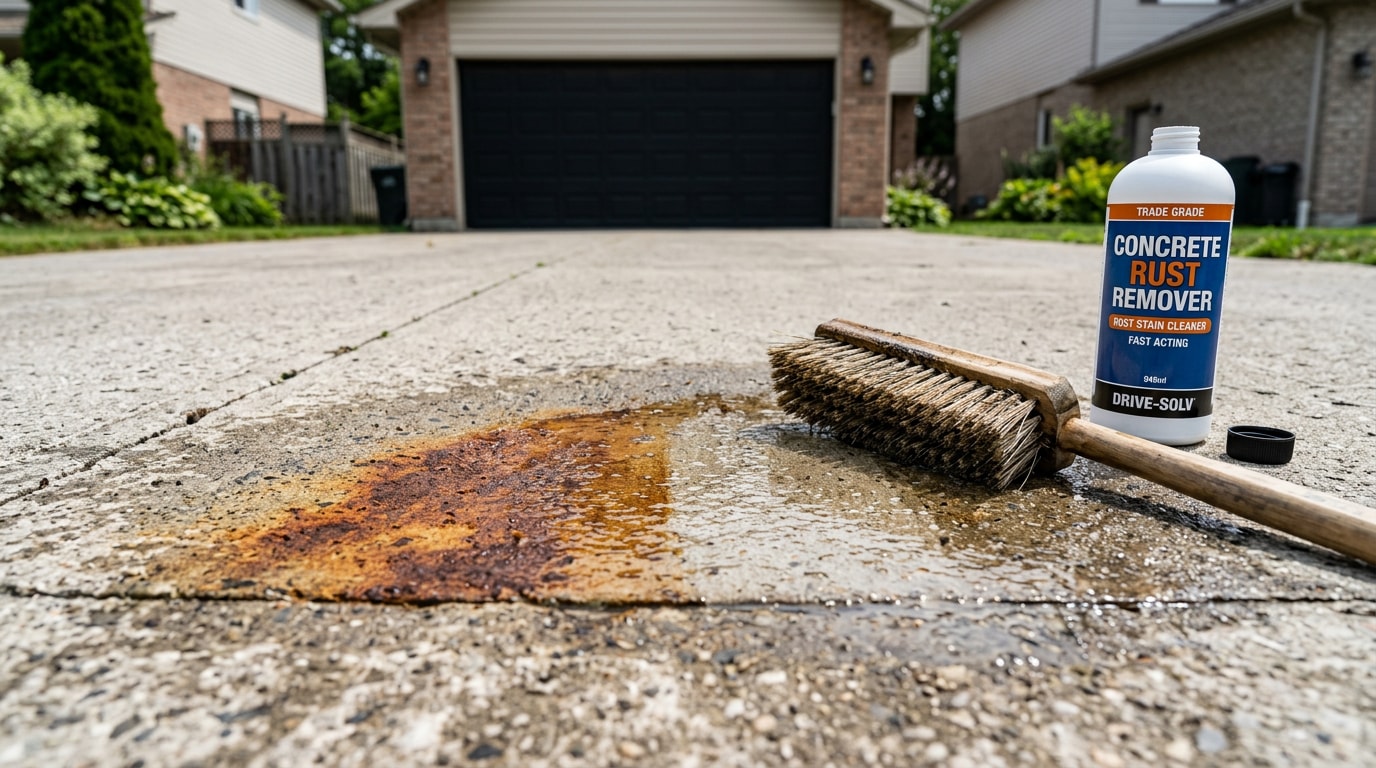
Rust stains on concrete in Cheswick, PA show up as orange-brown blotches on driveways, patios, and garage floors, usually within a season of a metal planter, bike rack, or exposed rebar touching the slab. Removing them doesn't call for power tools or a contractor visit, just the right acid, the right order, and about 30 minutes of patience. Here's the exact escalation process, from the mildest kitchen-cabinet fix to the method reserved for stains that have sat for years.
What Causes Rust Stains on Concrete?
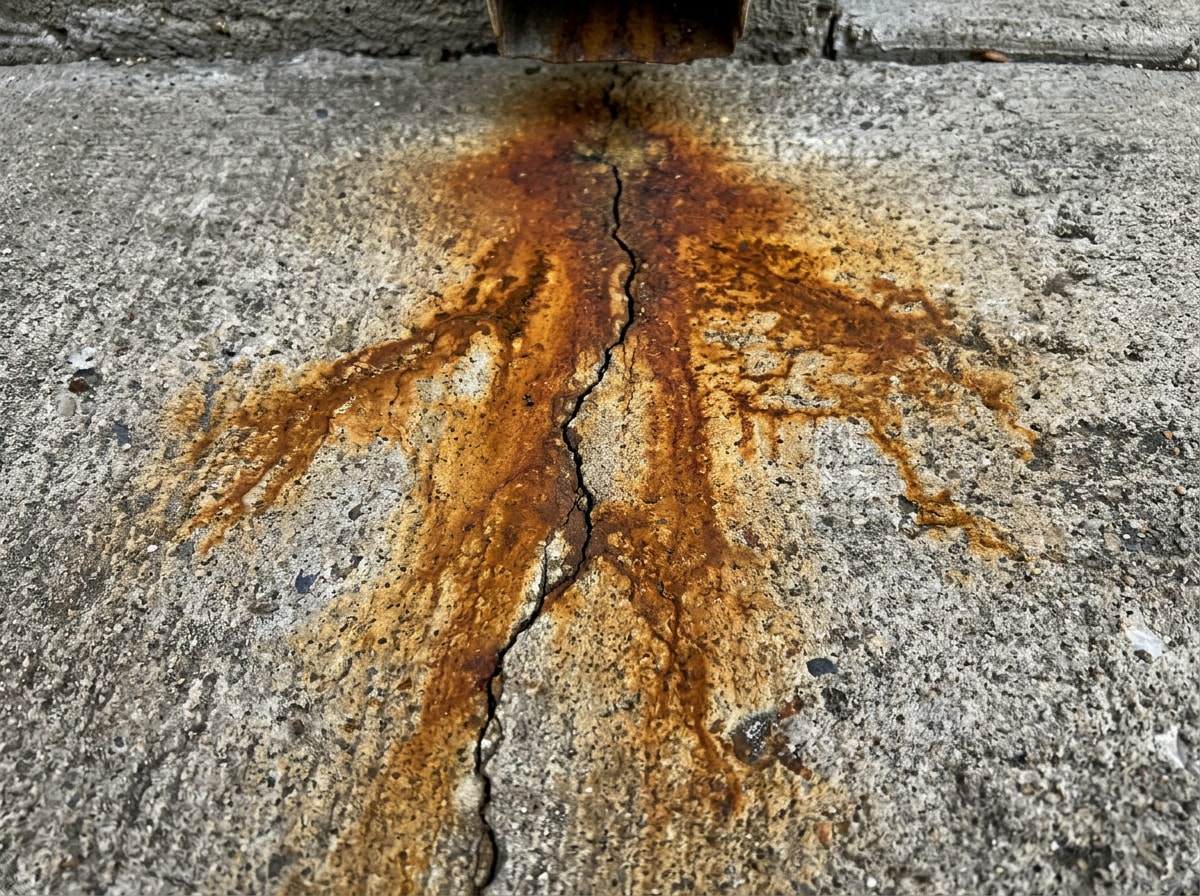
Rust stains form when iron reacts with oxygen and moisture, creating iron oxide that bleeds into the surface. The iron source is either external, like metal furniture, tools, or fence posts resting on the slab, or internal, such as rebar or wire mesh rusting beneath the surface and migrating upward through cracks or porous concrete.
Pinpointing the source matters before you start scrubbing. When our crews inspect a stained patio ahead of a concrete finishing job, the giveaway is usually a thin crack running right through the center of the stain. That means rebar rust is feeding the crack from below, and cleaning the surface only buys a temporary fix. If moisture keeps reaching that metal, the stain returns.
Western Pennsylvania's freeze-thaw winters make this especially common around Cheswick. Repeated freezing and thawing widens hairline cracks and exposes more rebar to moisture, while de-icing salt and metal snow-removal equipment add fresh sources of iron oxide to driveways and walkways each season. If a crack is already visible around the stain, it's worth having it addressed with crack filling before the rebar underneath gets worse.
What You'll Need: Tools, Supplies & Rust Removers for Concrete
Not every rust remover works the same way, and using the wrong one can waste a weekend or damage the slab. Match your supplies to the stain's severity before you start.
Cleaning agents by stain severity:
- Light stains: dish soap, lemon juice, white vinegar, or a baking soda paste
- Moderate stains: WD-40 or an oxalic acid cleaner formulated for rust
- Stubborn, older stains: TSP (trisodium phosphate) or, in extreme cases, diluted muriatic acid
Light stains respond to mild acids that lift fresh iron oxide without harsh chemicals. Moderate stains often need oxalic acid, since it binds to iron oxide and pulls it from the pores. Stubborn stains may call for TSP or muriatic acid, both of which demand real caution.
Whatever tier you're working in, wear chemical-resistant gloves and eye protection once acids enter the picture. A stiff-bristle brush, never wire, which can leave new metal flecks behind, rounds out the basic supply list.
How to Remove Rust Stains from Concrete, Step by Step
Treat rust removal as an escalating process. Start with the mildest method that could reasonably work, give it time to react, and only move to stronger chemicals if the stain holds on. Jumping straight to acid risks etching concrete you didn't need to touch.
Step 1: Prep the Concrete Surface
- Sweep away loose debris.
- Pre-wet the concrete with a garden hose. A damp, not soaked, surface helps the treatment spread evenly instead of soaking unevenly into dry, porous concrete.
- Scrub with dish soap and water to clear grease, dirt, and oils that would otherwise block the cleaner from reaching the stain.
- Rinse the soap off and let the surface dry slightly before treatment.
Step 2: Try Home Remedies for Light Rust Stains
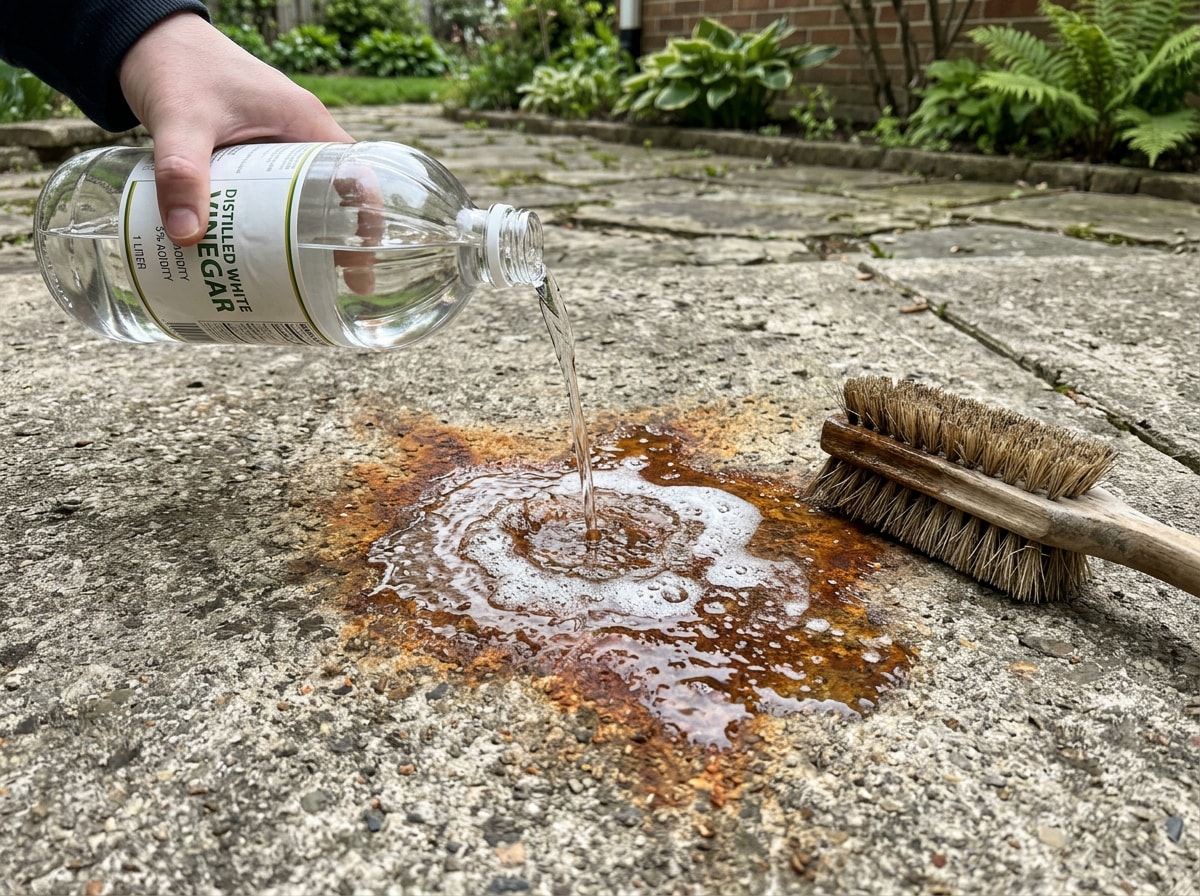
- Pour lemon juice or undiluted white vinegar directly onto the stain until it's fully saturated.
- Let it sit for 10 to 15 minutes so the mild acid can break the iron oxide bond.
- Scrub with a stiff-bristle brush in a circular motion.
- Rinse thoroughly and repeat if discoloration remains. Light stains often need two or three passes.
Step 3: Move to Commercial Cleaners for Moderate to Heavy Stains
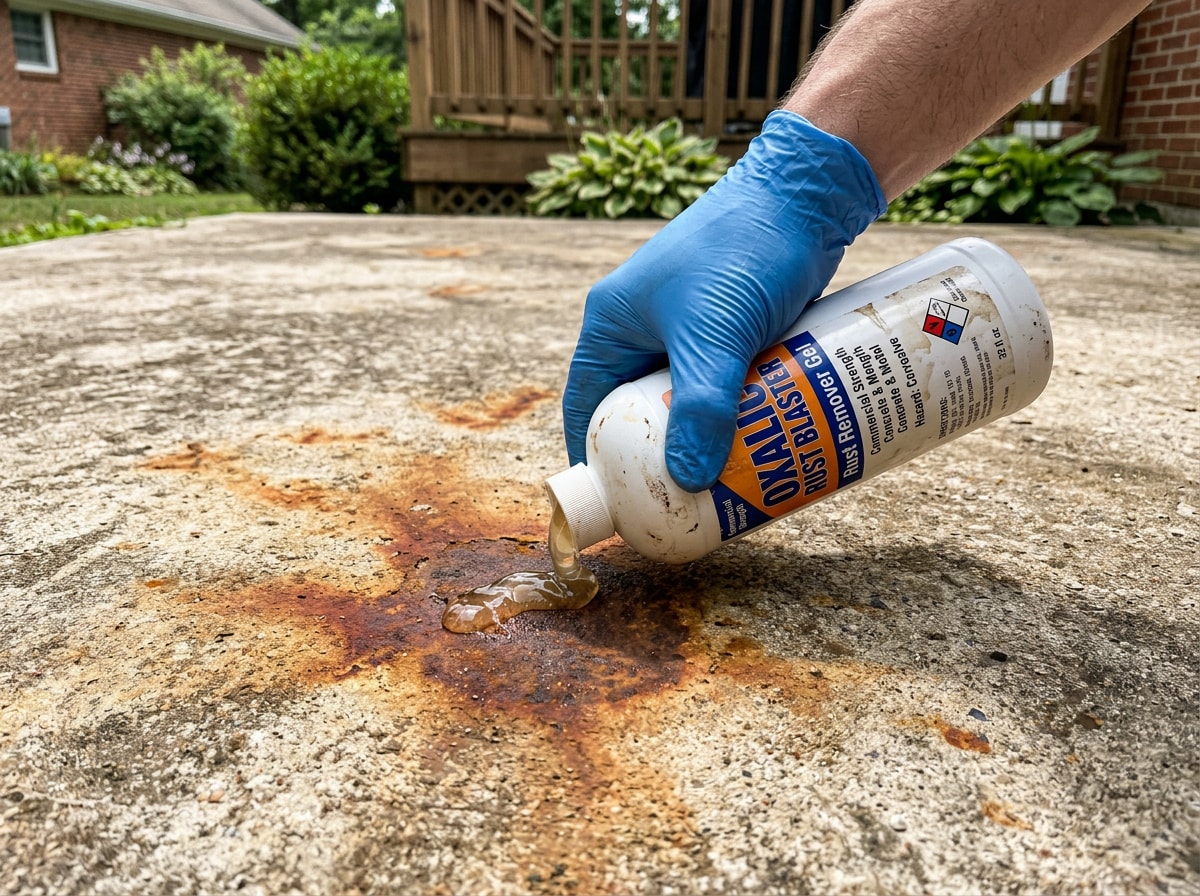
When home remedies don't fully clear the stain, a dedicated commercial rust remover is next. Oxalic acid-based cleaners and CLR-type products are formulated to dissolve iron oxide and are generally safe for broad use on plain concrete.
For a precise mix, a long-standing procedure cited by university extension services calls for dissolving 1 pound of oxalic acid powder in 1 gallon of water, soaking the stain liberally, and letting the solution sit for two to three hours before rinsing and scrubbing with a stiff broom . That dwell time is longer than most bottle labels suggest, which is often why a single pass fails to fully clear an older stain.
For deep, embedded staining, TSP or diluted muriatic acid may be necessary, but these are aggressive chemicals that can etch or discolor concrete and strip sealers if left too long or used at full strength. Hydrochloric acid (the active ingredient in muriatic acid) is highly corrosive to most metals , and it should only be used outdoors with gloves, eye protection, and good ventilation.
Here's how the main options compare:
| Method | Effectiveness | Cost | Safety Risk | Etching Risk |
|---|---|---|---|---|
| Vinegar | Light stains only | Low | Low | Very low |
| Oxalic acid | Moderate to heavy stains | Moderate | Moderate (needs ventilation) | Low if rinsed promptly |
| Muriatic acid | Heavy, embedded stains | Moderate | High (fumes, burns) | High if overused |
Step 4: Rinse, Dry, and Inspect
Rinse the treated area thoroughly with clean water to flush out all acid or cleaner residue, since leftover chemical can keep etching the surface. Let the concrete dry fully, then inspect it in good light. Faint shadowing may fade further over a day or two. If visible rust remains, repeat the same tier of treatment before escalating.
If a stain keeps reappearing in the same spot no matter how many passes you run, that's usually the rebar-through-the-crack scenario rather than a cleaning problem, and it's worth a second look before you spend another weekend on it. You can get a free estimate if you'd rather have that checked out than keep guessing.
Why Pressure Washing Alone Won't Remove Rust Stains
A pressure washer alone can't remove rust stains from concrete because rust is a chemical bond, not surface dirt. Iron oxide forms inside the concrete's pores, and water pressure only clears loose material sitting on top. It can't dissolve iron that has already bonded with the material itself.
Pressure washing still has a place. It's useful for rinsing cleaner residue after an acid treatment or clearing loose debris beforehand. On its own, though, it often just spreads the stain around instead of removing it.
How to Prevent Rust Stains on Concrete
Preventing rust stains costs far less time than treating them again later. Two habits make the biggest difference: sealing the surface and keeping metal away from it.
Seal the Concrete
A penetrating sealer fills surface pores so moisture and iron can't bond as easily, making future rust less likely and easier to remove if it does appear. A national concrete trade association's maintenance guidance for freeze-thaw regions recommends sealing the surface with a commercial breathable sealer, specifically a silane or siloxane-based product designed for concrete slabs , once the surface is reasonably dry. Apply sealer only after the concrete is fully clean and dry.
Minimize Metal-to-Concrete Contact
- Add rubber or plastic feet under metal furniture.
- Move tools and grills off the slab when not in use.
- Aim sprinklers away from concrete to limit moisture exposure.
- Sweep up fertilizer promptly, since many lawn products contain iron that stains concrete on contact.
Your Concrete Can Look Like New Again
Rust stains look permanent, but most respond well to the right method applied in the right order: mild treatments first, stronger chemicals only when needed. Pair that with sealing and a little metal management, and your concrete can stay rust-free for years.
If a rust stain in Cheswick keeps coming back through a crack, or you're weighing whether to clean an old patio versus rebuild it, our local guide on concrete patios in Cheswick, PA walks through that decision in more detail. For everything else concrete and asphalt related in the area, visit our homepage or get your free estimate and we'll take a look.
FAQ
Can I Use CLR to Remove Rust from Concrete?
Yes. CLR is generally safe and effective on plain concrete and widely available at hardware stores. Test it first on decorative or colored concrete, since it may lighten some finishes.
Will a Pressure Washer Remove Rust Stains from Concrete?
Not on its own. A pressure washer can't dissolve embedded iron oxide. It's best used to rinse away cleaner residue after a chemical treatment has broken the rust bond.
Does Bleach Remove Rust Stains from Concrete?
No. Bleach targets organic stains like algae and mold, not iron oxide, so it won't remove rust and may even discolor the surrounding concrete.
Does WD-40 Work on Concrete Rust Stains?
It can help with light to moderate stains. WD-40 penetrates under the rust and loosens its grip on the pores, but it still needs scrubbing afterward and a soap-and-water rinse to clear the oily residue.
Can Rust Stains Be Completely Removed from Concrete?
Most can be significantly reduced or eliminated by following the right method and escalation order. Very old or deeply embedded stains may leave faint shadowing even after treatment.
Should Concrete Be Sealed After Rust Removal?
Yes. Sealing cleaned concrete creates a moisture barrier that makes it harder for iron to penetrate again, helping protect your results and reduce future staining.
How Long Should Oxalic Acid Sit on a Rust Stain?
Plan on two to three hours for a full-strength mix to work on an established stain, longer than most product labels suggest. Rinse and scrub with a stiff brush once the dwell time is up.