Cleaning concrete floors in McCandless Township, PA means matching your method to the floor you actually have, not whatever bottle is under the sink. Road salt, oil drips, and four distinct seasons all leave their mark differently on sealed, unsealed, and polished slabs. Get the match wrong and you can strip a sealant in one pass.
Know Your Floor Type Before You Clean
Figure out whether your concrete is sealed, unsealed, or polished before any product touches it. This one step decides every cleaner and tool choice that follows.
Here's the quick test: splash a few drops of water on the surface. If it beads up, the concrete is sealed. If it soaks in fast, it's unsealed and more porous.
Interior floors, basements, garages, and living spaces are often sealed with lighter-duty products than exterior slabs, which face more weather and need a tougher coating. Once you know your floor type, stick with a pH-neutral cleaner as your default. EPA's Safer Choice program certifies cleaning products made with safer ingredients for human health and the environment , which is a reasonable starting filter when you're picking a bottle off the shelf.
If you're not sure which category your floor falls into, our team can walk your slab and tell you in five minutes. Get your free estimate before you buy a single cleaning product.
Match the Cleaner to the Floor
| Floor Type | Best Cleaner | Avoid | Why |
|---|---|---|---|
| Sealed interior | pH-neutral cleaner, microfiber mop | Vinegar, ammonia, bleach, citrus | Acidic or harsh cleaners etch and dull sealant |
| Unsealed / bare garage | Alkaline degreaser | Excess standing water | Porous concrete soaks in moisture and grime |
| Polished | Dish soap diluted in warm water | Abrasive pads, steel wool | Scratches cut into the polish permanently |
| Painted | Damp mop, mild cleaner | Heavy scrubbing, standing water | Scrubbing lifts the paint film |
How to Clean Concrete Floors Step-by-Step
Once you know your floor type, the core process is nearly identical whether you're working in a garage, basement, or living space.
- Assess the surface. Check for cracks, loose debris, or existing stains before you start.
- Gather supplies. A broom or shop vacuum, pH-neutral cleaner, mop, bucket, and microfiber cloth cover most jobs.
- Sweep or dry mop first. Loose grit scratches the finish if you skip this step.
- Mop in sections. Use a damp, not soaked, microfiber mop so cleaner doesn't pool.
- Rinse with clean water.
- Dry completely before replacing rugs or furniture. Trapped moisture invites mildew fast.
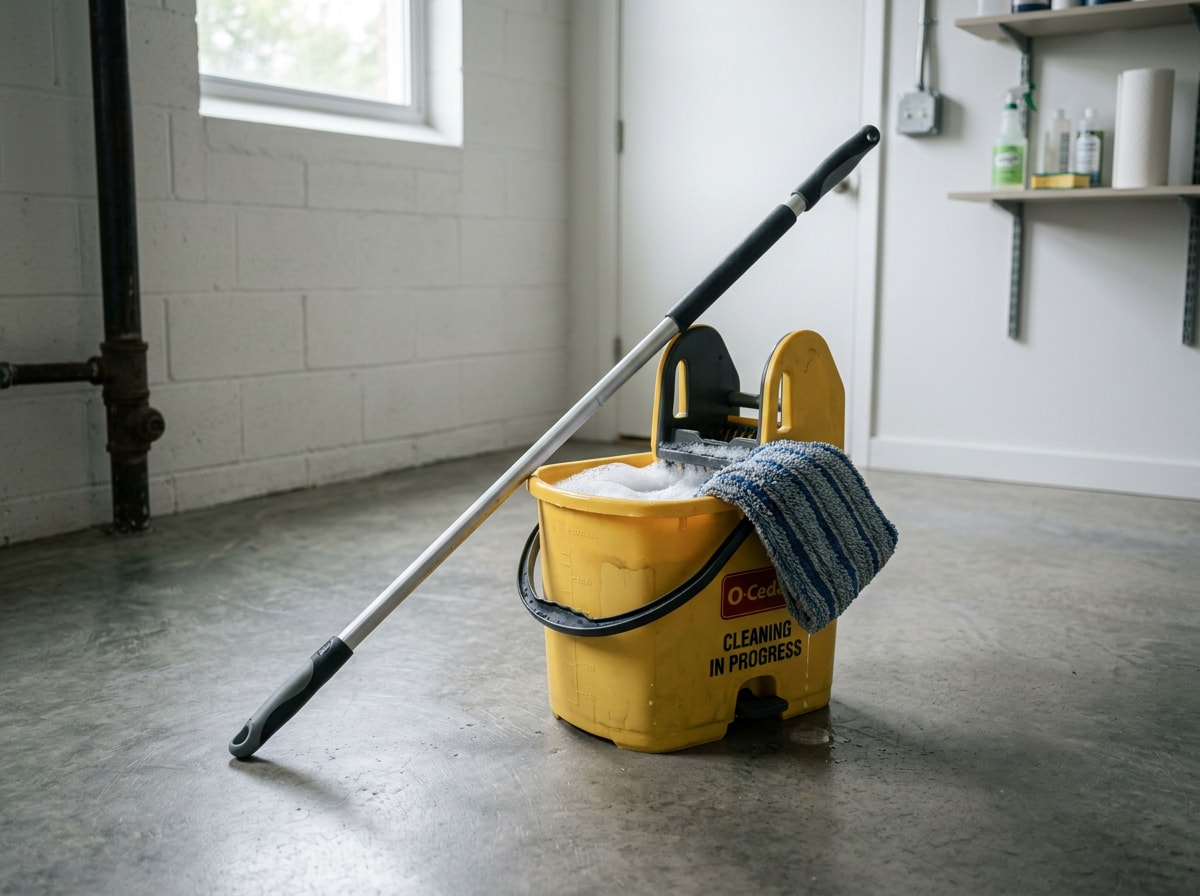
For light indoor cleaning, a manual mop-and-bucket approach is usually enough. It's gentler on sealed finishes and needs no equipment. Mechanical scrubbing with a rotary scrubber or stiff brush makes more sense for heavily soiled garage floors or unsealed concrete with embedded grime.
How to Remove Tough Stains From Concrete Floors
Treat stains before the general mop-down, not after. Scrubbing a dirty floor first just spreads the stain around.
- Oil stains: Apply a concrete-safe degreaser, let it sit per the label, then scrub and rinse.
- Rust stains: Use a dedicated rust remover; degreasers alone won't lift rust.
- General discoloration: A baking soda paste left on overnight often does the trick.
- Painted floors: Skip heavy scrubbing and standing water. Stick to a damp mop and mild cleaner.
Avoid harsh or acidic cleaners on sealed or polished surfaces. They strip the finish and leave dull patches that are tough to fix. When you use ammonia- or bleach-based products indoors, airflow matters more than people assume. OSHA notes that sufficient ventilation when using cleaning chemicals is a basic safety requirement , so crack a window or run a fan before you start scrubbing.
Cleaning Concrete Garage Floors in McCandless Township
Garage floors take the heaviest wear of any concrete in a McCandless Township home. Oil drips, road salt, and tire residue build up fast across a winter.
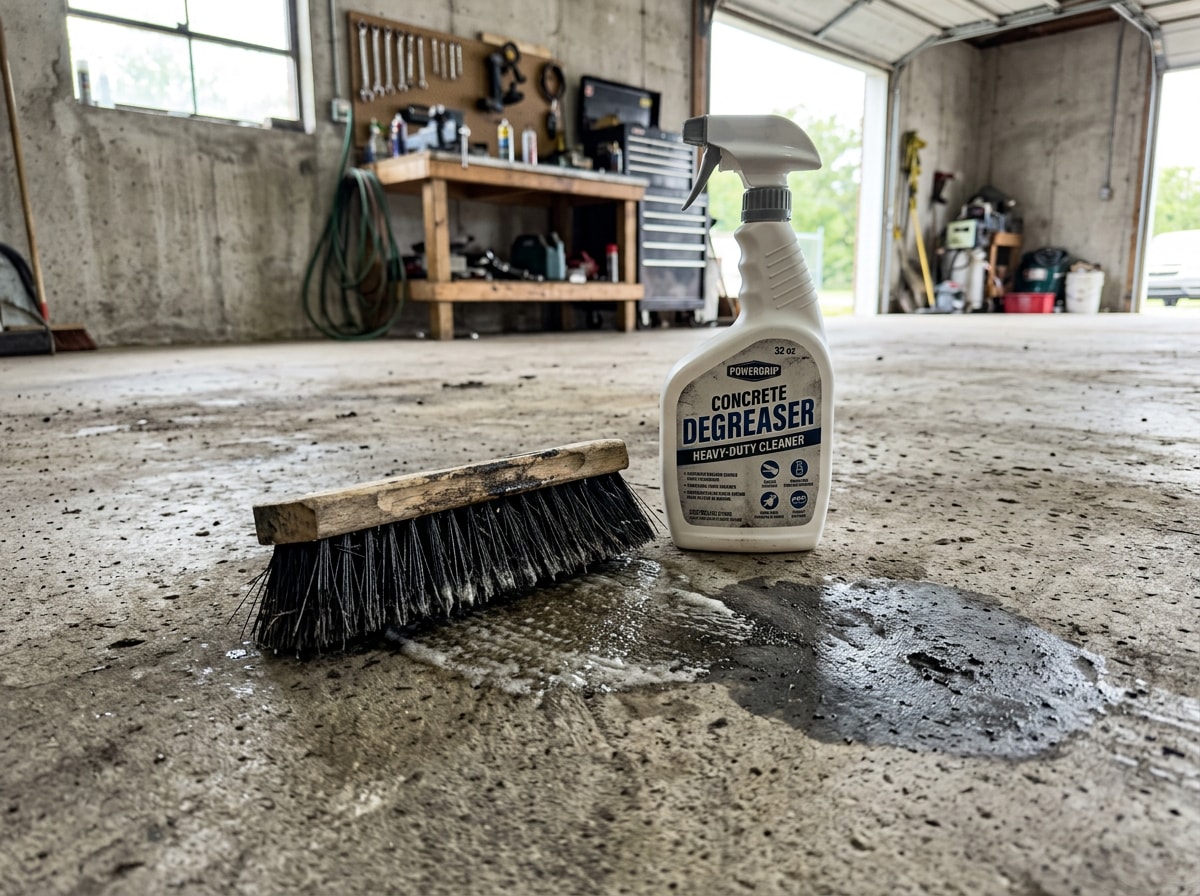
For older, set-in oil stains, apply a concrete-safe degreaser and let it penetrate before scrubbing with a stiff-bristle brush. Rinse thoroughly and let the floor dry completely before pulling vehicles back in.
Cleaning Concrete Basement Floors
Basement floors call for a gentler touch, especially with how much seasonal moisture Western PA basements deal with. A mild detergent or pH-neutral concrete cleaner diluted in water, applied with a mop, handles routine upkeep.
Drying the floor completely afterward is the most important step. Trapped moisture in a basement leads to musty odors and mildew faster than almost anywhere else in the house.
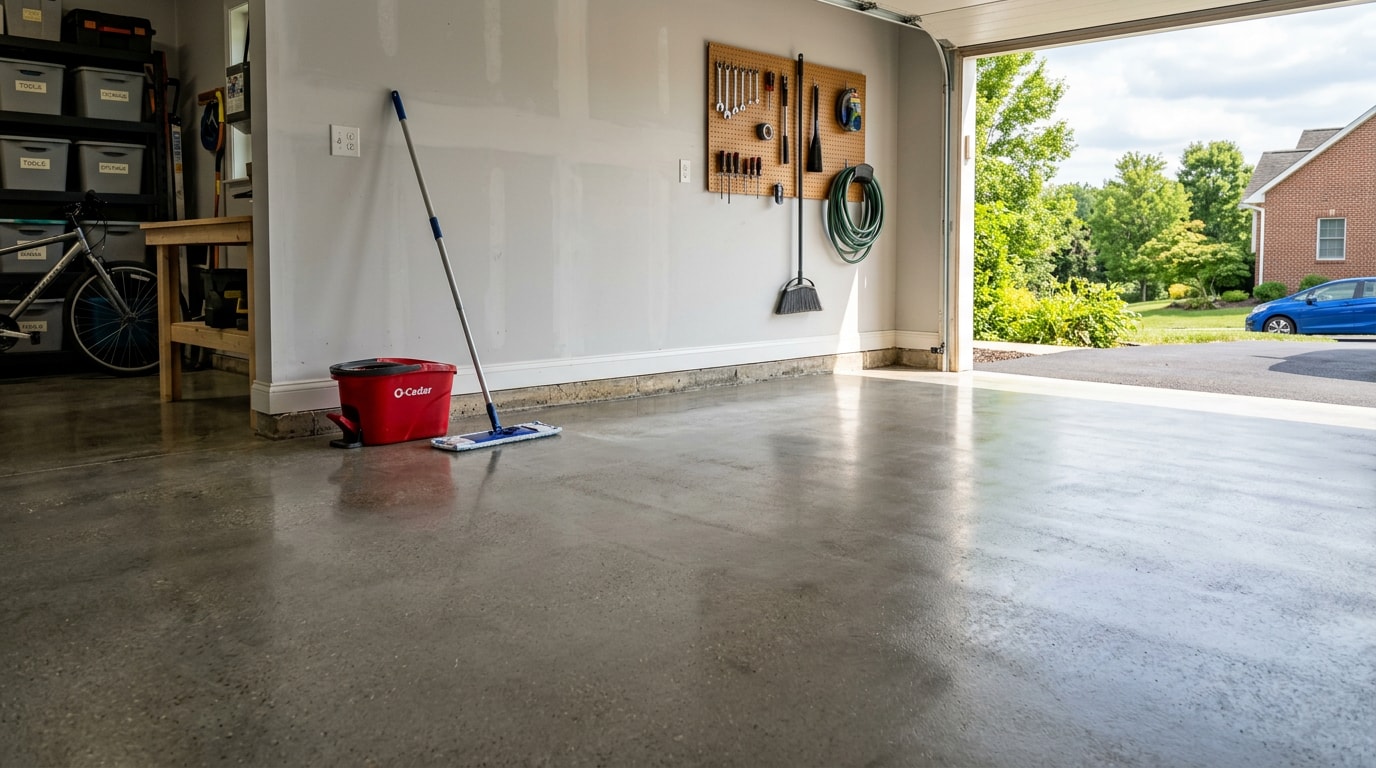
Cleaning Polished or Sealed Interior Concrete Floors
A polished or sealed concrete floor needs a gentle cleaner. A few drops of dish soap diluted in a mop bucket of warm water works well.
Mop in sections, then go over the same area with a second, clean-water mop pass to rinse away residue. This double-mop technique prevents streaking and keeps the polish from dulling over time.
Seasonal Cleaning Schedule for McCandless Township's Climate
A basic weekly sweep and damp mop keeps most interior concrete floors in good shape. McCandless Township's four-season climate adds real demands a generic weekly routine doesn't cover.
Spring brings salt and sand residue tracked in from winter-worn driveways. A deeper clean in March or April clears out months of buildup.
Summer humidity can make sealed floors feel slightly tacky, so more frequent dust mopping helps.
Fall leaf debris and damp mud get walked in constantly, making entryway concrete the priority zone.
Winter is the trickiest season for anything exterior-adjacent. When water sits in concrete's capillary pores and freezes, it expands by roughly 9 percent , and that expansion generates the stress that eventually shows up as surface cracking near garage entries and basement walk-outs. Sweeping and spot treatment, not soaking, is the safer call until temperatures climb back above freezing for good.
In our own work resurfacing driveways and finishing interior slabs across the North Hills, we see the same pattern every spring: homeowners who kept entry points dry and swept through winter have far less surface pitting to deal with than the ones who let slush sit. For a closer look at how installation choices affect long-term upkeep, our concrete floors guide for Wexford homeowners covers the install and coating side of this same question.
How to Keep Concrete Floors Cleaner Between Cleanings
A few habits stretch the time between full cleanings considerably.
- Put entry mats at every exterior door to catch grit before it reaches the slab.
- Wipe up spills promptly, especially oil or anything acidic, before they soak in.
- Skip abrasive tools like steel wool on sealed or polished floors. They scratch the finish and create more work down the line.
- Have sealant checked periodically. Our concrete finishing services cover resealing and resurfacing when a floor's protective coat has worn thin.
If you're weighing whether to clean, reseal, or replace a worn concrete floor, it helps to have someone local walk the slab first. Visit our McCandless Township service area page or head to our homepage to see the full range of concrete and paving work we handle across the North Hills.
This guide was put together by our estimating team at Johnny's Asphalt, who inspect and maintain concrete surfaces across McCandless Township and the surrounding North Hills communities year-round. If you want a second opinion on your specific floor, reach out for a free estimate.
FAQ
What's the right PSI to clean concrete?
Most concrete handles 2,500 to 3,000 PSI, but sealed surfaces need lower settings to avoid stripping the finish. Painted concrete calls for even gentler pressure washer settings or no pressure washer at all.
What's the best way to clean a concrete patio?
Outdoor patios can handle pressure washing and stronger rinsing than indoor floors. Indoor concrete, covered earlier in this guide, generally needs gentler, lower-moisture methods.
Is it safe to pressure wash concrete in cold weather?
Freezing temperatures risk trapping water in cracks, where it expands and causes damage. Winter concrete cleaning in McCandless is best limited to sweeping and spot treatment until temperatures rise.
Can you use vinegar to clean concrete floors?
Vinegar works as a mild acidic cleaner on plain, unsealed concrete. Avoid it on sealed or polished floors, since the acidity can etch the finish, as covered in the "Know Your Floor Type" section above.
Can I use a pressure washer to clean concrete floors?
Indoor floors rarely need pressure washing; a mop and pH-neutral cleaner handle most jobs. Save power washing for garage floors or outdoor slabs, as covered in the garage floor section.
How do you get oil stains out of a concrete garage floor?
Apply a concrete-safe degreaser and let it sit per the label before scrubbing with a stiff-bristle brush. Older, set-in stains may need two applications and a rinse in between.
Can you clean concrete floors with bleach?
Bleach can discolor or dull sealed and polished finishes, so it's best avoided on those surfaces. If you do use it on bare, unsealed concrete, ventilate the area well and never mix it with ammonia-based products.