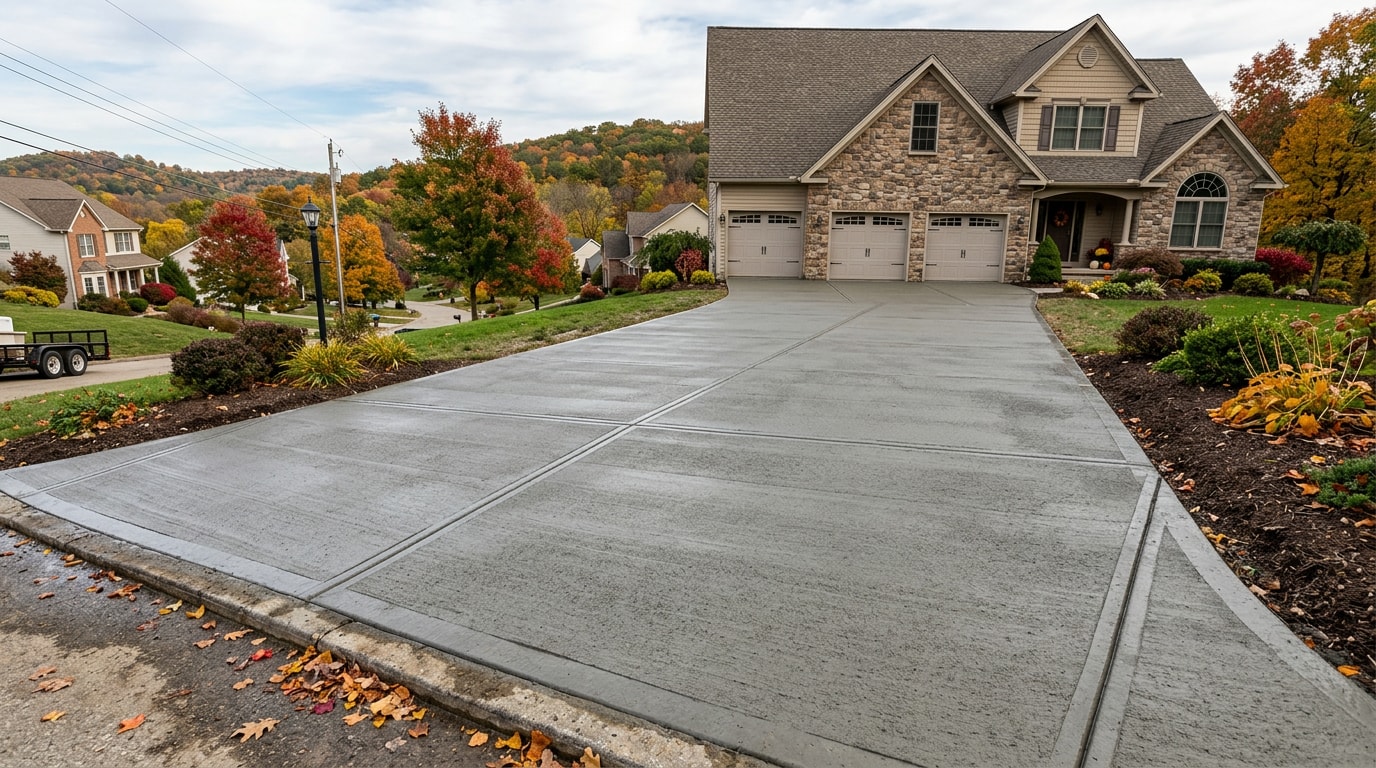
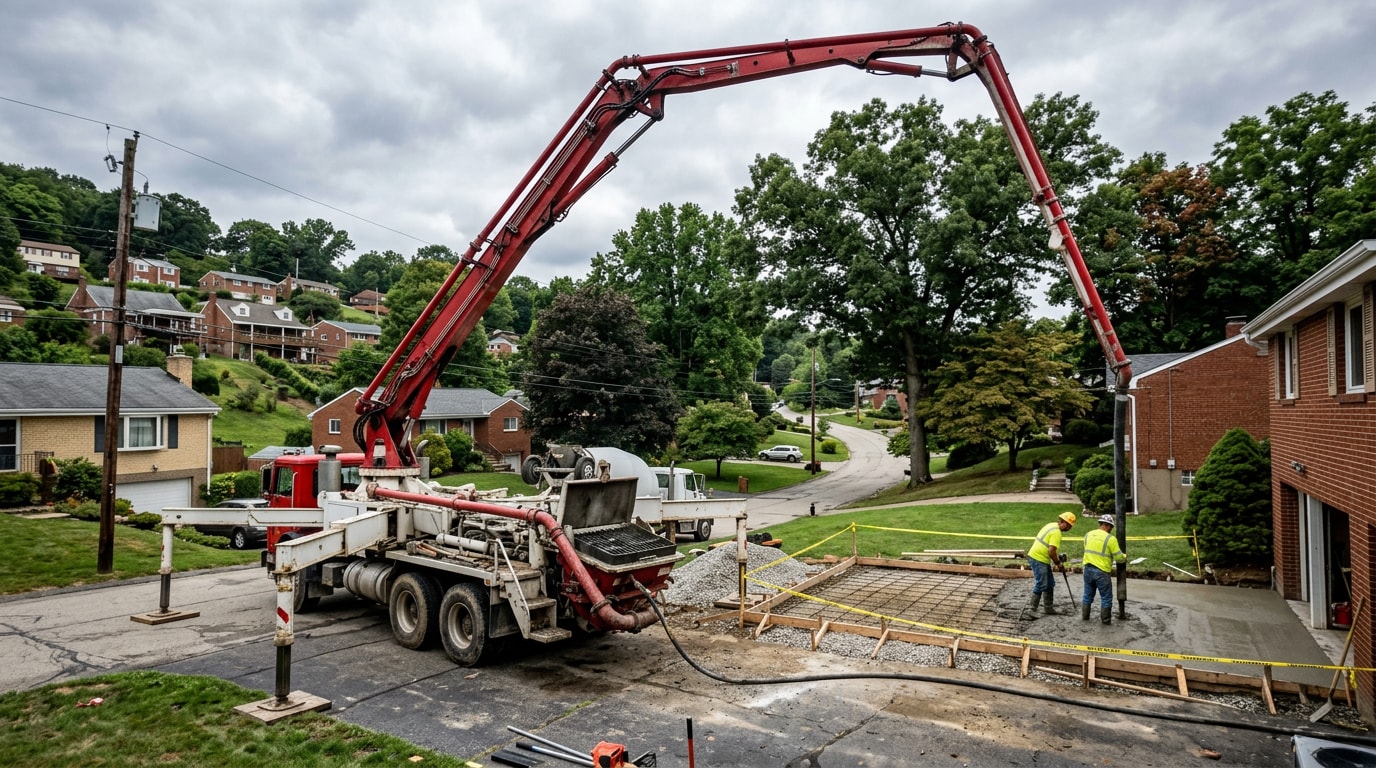
A concrete pump in Cheswick, PA turns a backyard with no truck access, a steep hillside lot, or a slope that stops a chute truck cold into a clean, one-day pour. This guide covers how pumping works, what it costs in 2026, and how to tell whether your project actually needs one.
What Is Concrete Pumping?
Concrete pumping moves concrete from a mixer truck to the pour site using a specialized pump truck instead of wheelbarrows or chutes. A boom or line pump pushes liquid concrete through a hose or articulated arm, placing it accurately even in hard-to-reach or elevated spots.
This has become standard on most modern pours because it saves labor and cuts spillage. For a tight Cheswick lot, pumping also means less cleanup and a faster, more controlled finish. The American Concrete Pumping Association maintains an operator certification program and publishes safety and placement standards the industry uses nationwide.
Boom Pump vs. Line Pump: Which One Fits Your Job?
Concrete pumps split into two main equipment types. Project type (residential or commercial) just determines scale; the equipment choice below is what actually decides how the pour gets done.
| Pump Type | How It Works | Typical Reach | Best For |
|---|---|---|---|
| Line/Trailer Pump | Pushes concrete through flexible hose | Several hundred feet horizontally | Driveways, patios, sidewalks, small slabs, narrow side-yard access |
| Boom Pump | Uses a hydraulic arm to place concrete | Horizontal reach plus well over 100 ft of vertical reach on larger models | Foundations, multi-story pours, large slabs, tight job-site logistics |
A trained operator can tell you in a five-minute site walk which setup your lot actually needs.
When Does a Pour in Cheswick Actually Need a Pump?
Some jobs practically demand it. Here's when a pump earns its cost:
- No truck access — fenced backyards, sloped lots, or sites separated from the street by stairs or landscaping
- Large pours — full driveways, basement slabs, or multi-yard footings that need to go in fast and set evenly
- Tight streets — narrow Cheswick lots where a ready-mix truck can't park close enough for a direct chute pour
- Time-sensitive timing — a pour that has to beat weather or a load that's already starting to set
We've pumped driveway and patio projects on Cheswick's hillside streets where a chute truck simply couldn't back in close enough, running line hose around the house instead of tearing out landscaping for access. That's the kind of job pumping was built for.
How Does Concrete Pumping Work on Pour Day?
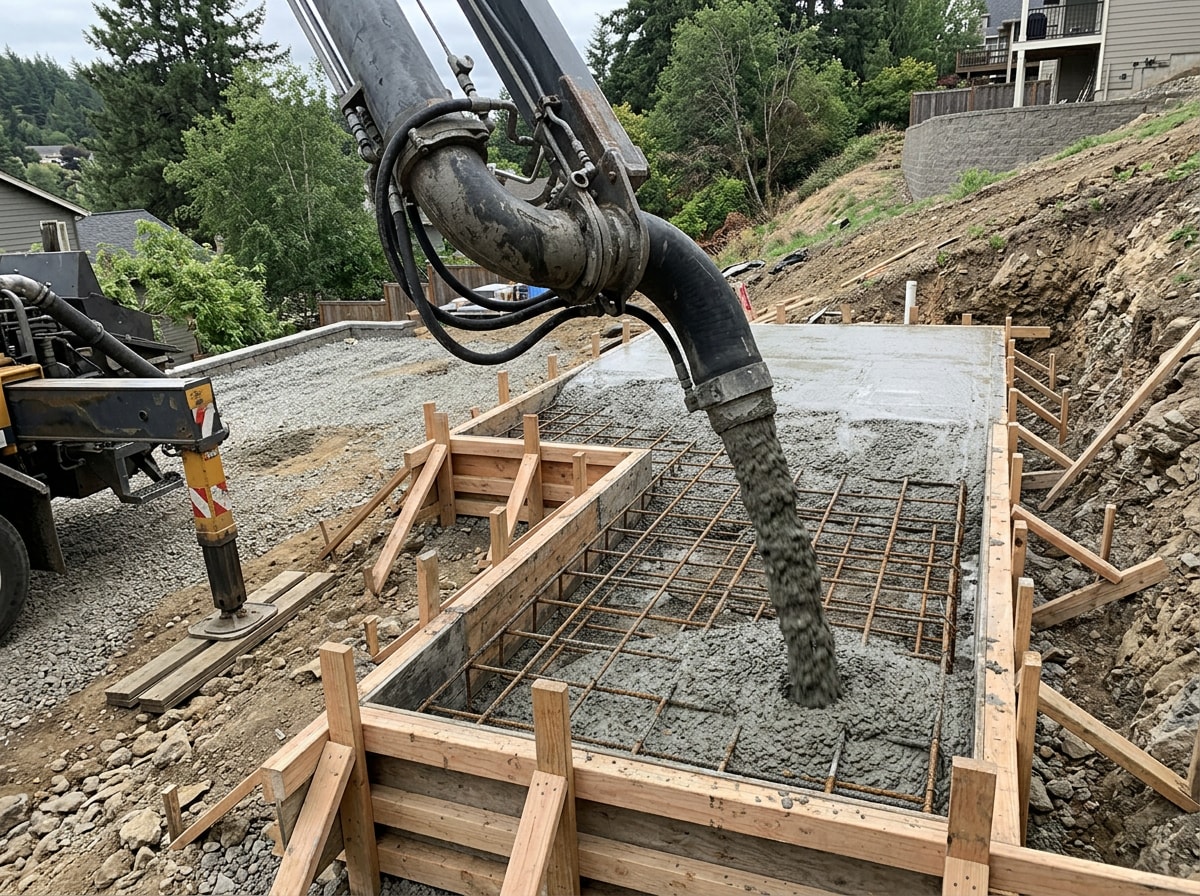
Here's what pour day typically looks like:
- You request an estimate and confirm pour volume, access points, and timing.
- The crew schedules the pump truck alongside your ready-mix delivery so both arrive together.
- The operator sets up outriggers for stability, then positions the boom or line toward the pour area.
- Concrete is pumped steadily while a second crew member spreads and finishes it.
- Once the pour wraps, the line is cleared and the site is cleaned.
Because setup involves outriggers and overhead reach near structures, crews follow OSHA's requirements for concrete pumping systems under 29 CFR 1926.702.
3 Home Projects Where Pumping Pays Off
Driveways, patios, and walkways are where pumping makes the biggest difference for homeowners.
A sloped Cheswick driveway can be filled evenly in one continuous pour instead of several wheelbarrow trips. A backyard patio behind a narrow side yard gets finished without tearing up landscaping to create truck access. Walkways benefit too, since a line pump can snake concrete around a house to spots a chute truck can't reach.
A clean, continuous pour also means fewer cold joints and a stronger finished surface. Our guide to concrete patios in Cheswick covers build process and cost if a patio is the project on your list.
How Much Does Concrete Pumping Cost in 2026?
Cost depends mainly on pump type, pour volume, and site access. Most Western PA residential jobs land between $450 and $1,200 for the pump alone, separate from the concrete itself.
| Pump Type | Typical Hourly Rate | Typical Minimum Charge | Best For |
|---|---|---|---|
| Line/Trailer Pump | $150–$200/hr | $450–$600 | Driveways, patios, small slabs |
| Boom Pump | $200–$300/hr | $800–$1,200 | Large pours, multi-story work, tight access |
Rates shift with crew, travel distance, and demand, so treat this table as a planning reference and confirm current pricing directly with a provider.
What Affects the Price?
- Pump type — boom pumps cost more than line pumps but handle large pours and tight access better
- Pour volume — more cubic yards means more pump time
- Site accessibility — longer hose runs or harder setups add labor
- Travel distance from the yard to your site
- Material costs — ready-mix prices have trended upward in recent years; federal producer price data for ready-mix concrete tracks that broader trend nationally
Additional Costs to Budget For
Extended hose or boom length beyond a standard setup usually adds a surcharge, as do specialty mixes like fiber-reinforced or high-strength concrete. Cold or wet weather can trigger additional fees if setup takes longer than usual. Most companies also charge a minimum fee even for short pours, so ask about that before scheduling.
Ready to get pricing specific to your lot? Get your free estimate and we'll walk the site with you before quoting anything.
Why Hire a Pro Instead of Renting a Pump Yourself
Renting a pump without a trained operator is risky. These machines require precise setup, and mistakes near outriggers or overhead lines can cause real injury. A trained, insured crew also reads pour timing correctly, which matters because concrete starts setting the moment it leaves the mixer.
DIY pumping might look like a cost saver on paper. The equipment rental, learning curve, and safety exposure usually outweigh it. A crew with real pump operator training and proper site preparation protects both the pour and the people working it. If the surface finish matters as much as the placement, our concrete finishing services cover that step too.
Concrete Pump Service Area: Cheswick, PA & Beyond
A crew working Cheswick should understand the Allegheny Valley's mix of hillside lots, older narrow streets, and newer developments with tighter setbacks. That terrain often decides whether a job calls for a line pump or a full boom setup.
Coverage typically extends through nearby communities, including Allison Park, Hampton Township, and Franklin Park, so projects outside Cheswick proper are usually still within reach. Visit our homepage to see current coverage, or head straight to Get My Free Estimate to start a quote.
FAQ
What's the difference between a boom pump and a line pump?
A boom pump uses a hydraulic arm to place concrete over distance and height, which suits large or elevated pours. A line pump (also called a trailer pump) pushes concrete through flexible hose, which works better for smaller jobs or tight-access yards.
Are there any disadvantages to pumping concrete?
Pumping typically costs more than a wheelbarrow pour, and larger boom pumps need adequate truck access and setup space. For small jobs with easy access, a pump may not be worth the added cost. A local provider can help you weigh the tradeoff.
How much does it cost to hire a concrete line pump for a day?
Line pump day rates generally track the hourly figures above, often totaling a few hundred dollars for a half-day residential job once the minimum charge applies. Exact pricing depends on volume and site conditions, so request a project-specific quote.
How far can you pump concrete?
Line pumps typically reach several hundred feet horizontally. Boom pumps cover both horizontal distance and significant vertical reach, often well over 100 feet depending on the model. A provider should confirm specs for your specific pour before quoting.
How long does pour day take with a concrete pump?
Setup usually takes 15–30 minutes for outriggers and boom or line positioning. The pour itself depends on volume, but most residential jobs (driveways, patios, small slabs) finish pumping in 1–3 hours once concrete starts flowing.
Do I need a permit for a concrete pump truck in Cheswick?
The pump itself typically doesn't require a separate permit, but the concrete pour (driveway, patio, slab) may need a municipal building or zoning permit depending on scope. Check with your local building department before scheduling, and confirm with your contractor what they handle versus what falls on you.
About the Author
This guide was written by the Johnny's Asphalt team, led by owner and lead estimator Johnny, who has coordinated residential and commercial concrete and paving pours across the Allegheny Valley, including the hillside lots and narrow streets common in Cheswick. Questions about your project? Contact us directly.