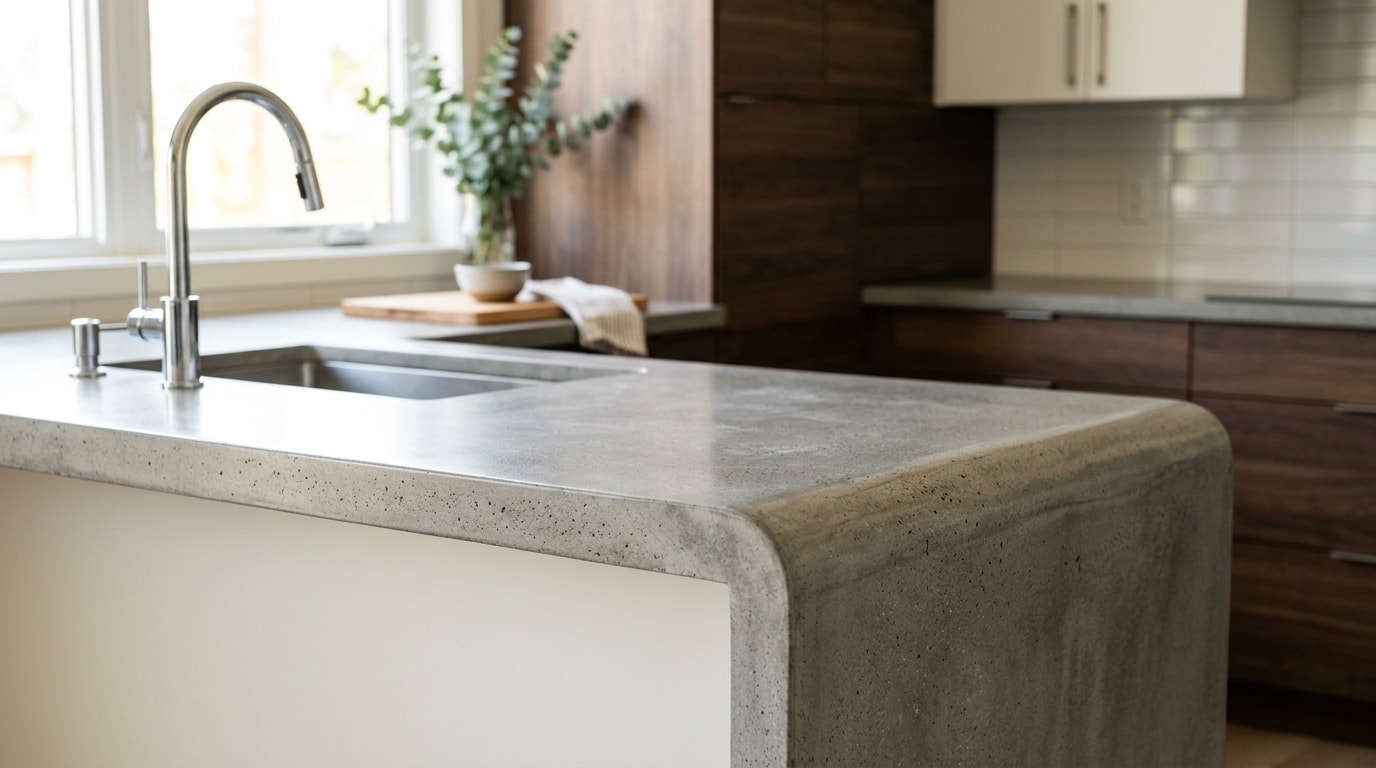
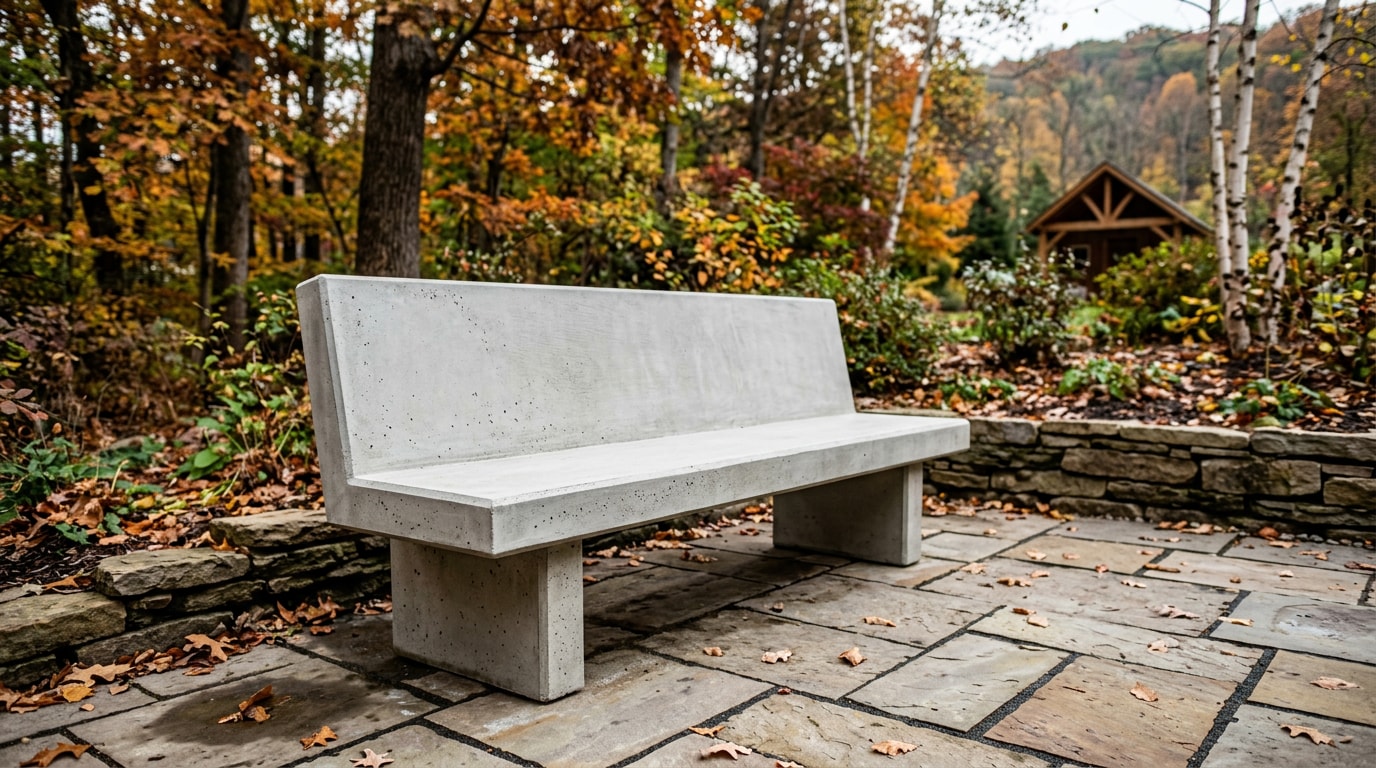
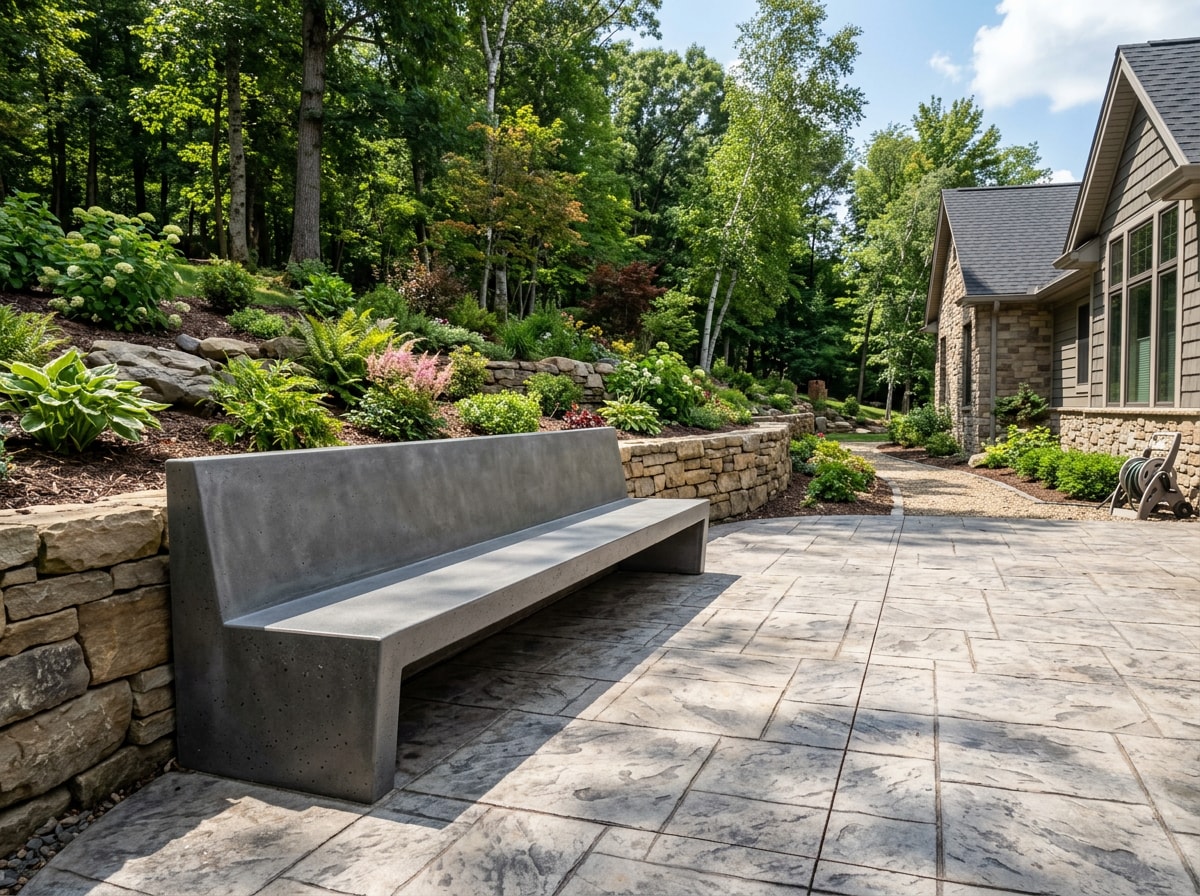
A concrete bench in Cranberry Township, PA is a one-time purchase that can outlast three sets of patio furniture and two re-stained decks. Western Pennsylvania's freeze-thaw winters wreck wood and rust out metal, but a properly built concrete bench just sits there and takes it. Here's what actually separates a bench that lasts 10 years from one that lasts 40.
Why Concrete Outperforms Wood and Metal Here
Wood splits, grays, and rots within a few seasons of Butler County humidity and snow load. Metal rusts, gets scorching hot in direct sun, and is light enough that someone with a truck and bad intentions can haul it off. Concrete does none of that.
A finished concrete bench is heavy enough to stay exactly where it's poured or set. There's no annual staining, no repainting, and no replacing boards that have warped. For a feature meant to anchor a garden, patio, or path for decades, that combination of permanence and low fuss is hard to match.
If you're weighing a concrete bench against other backyard upgrades, it helps to see what concrete finishing actually looks like on a real property before you commit to a catalog piece or a custom pour.

What Actually Makes a Concrete Bench Durable
Durability comes down to two things: steel reinforcement and a mix designed for freeze-thaw exposure. Skip either one and you're gambling on how many winters the bench survives before it cracks.
Butler County sits squarely in a freeze-thaw zone. Water that soaks into the surface pores of unreinforced concrete expands as it freezes, and repeated cycles are what eventually split a slab or bench seat.
Pennsylvania's Uniform Construction Code backs this up at the foundation level. The frost line depth set under the code is 36 inches , which is why contractors footing a bench base dig well below where a typical shovel stops. A bench poured on a shallow, unprepared base is exposed to the same heaving forces as an undersized footing.
The concrete mix matters just as much as the footing. Reputable contractors spec aggregate and cement to industry specifications that define the requirements for grading and quality of fine and coarse aggregate used in concrete , commonly referencing standards published by ASTM International. Cement quality is governed the same way, with Portland cement products typically sorted into five standard types under the ASTM specification for Portland cement depending on how much sulfate or early-strength resistance a project needs.
On pours we've done around Cranberry Township and neighboring Adams Township, the benches that show hairline cracking by the second winter are almost always the ones set on loose backfill instead of compacted, undisturbed soil. Steel rebar through the seat and legs, paired with a dense, properly graded mix, is the difference between a bench that lasts one or two winters and one that lasts for decades.
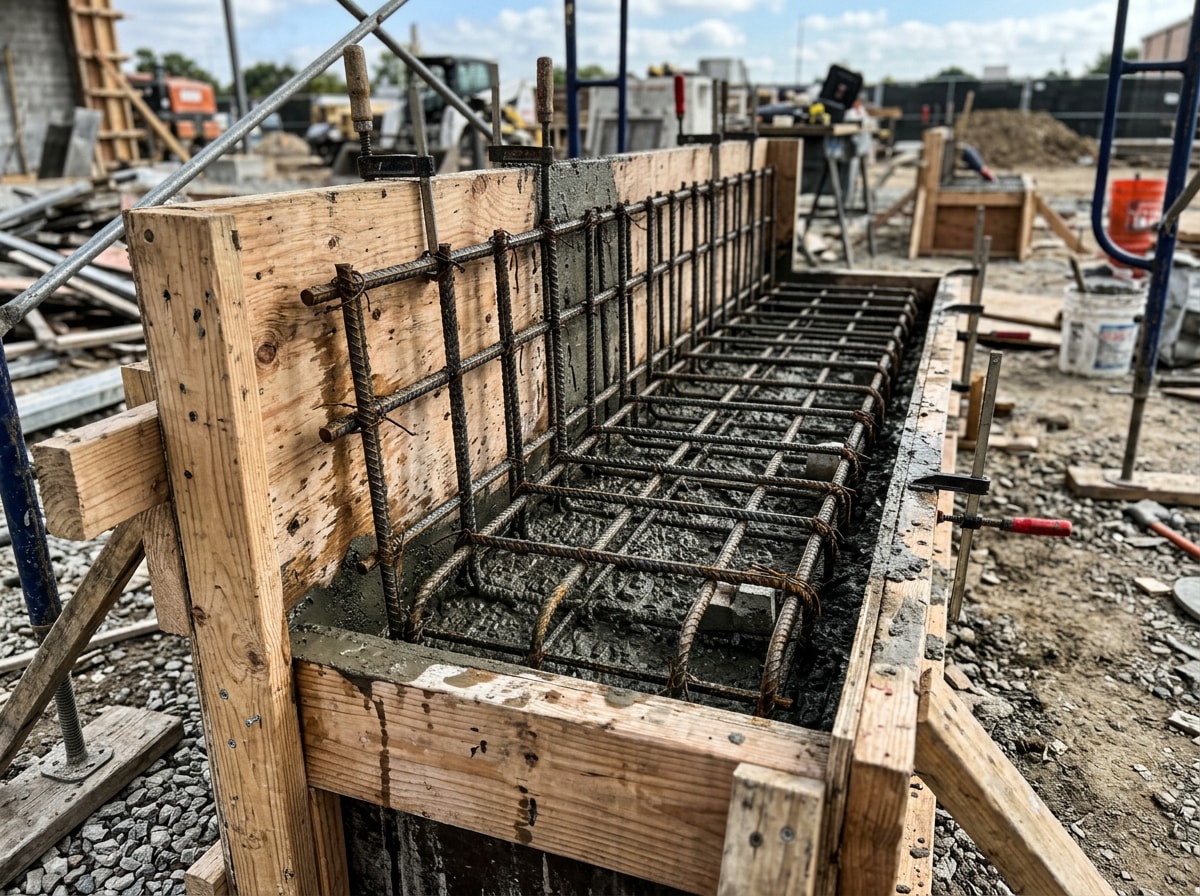
Good site prep isn't optional on a project like this. If you want the footing done right the first time, ask whoever you hire about their site preparation process before they pour anything.
Maintaining a Concrete Bench: A Simple Seasonal Routine
Upkeep is light by design, but it isn't zero. Most of what a bench needs is seasonal attention rather than constant work.
- Spring: Clear winter debris, check for new chips or hairline cracks, and fill minor damage with a concrete patching compound.
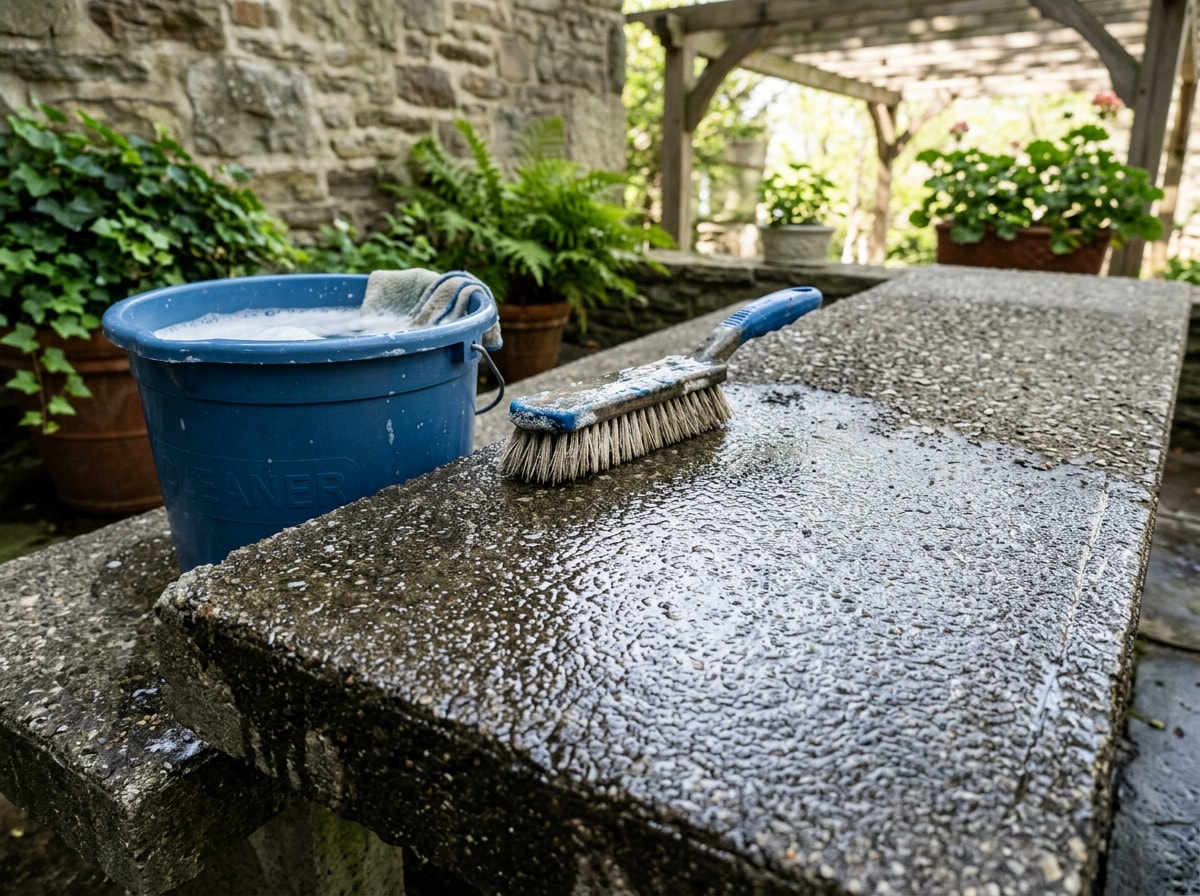
- Summer and fall: Clean the surface with mild soap and water to remove pollen, bird droppings, and algae before they stain the finish.
- Before winter: Apply or refresh a concrete sealer to cut down on water absorption.
That last step matters more here than people expect. Township crews and homeowners alike rely on road salt and de-icers through the winter, and deicing compounds can damage concrete surfaces even when they're doing their job of melting ice. Iowa State University Extension covers this in more depth if you want the full picture on how salt interacts with concrete and nearby plantings.
Sealing every one to three years, depending on sun and salt exposure, is usually enough. Skipping it isn't catastrophic, but it shortens the window before surface etching becomes noticeable.
Precast vs. Custom: Which One Fits Your Yard
Homeowners generally pick one of two paths: a precast bench from a catalog, or a custom-poured bench from a local concrete contractor. The right call depends on your space, timeline, and budget.
| Factor | Precast Catalog Bench | Custom-Poured Bench |
|---|---|---|
| Lead time | Ships fast, often in stock | Several weeks for forming, pouring, and curing |
| Fit to your space | Fixed size and shape | Built to match your exact footprint |
| Finish and color options | Limited to manufacturer stock | Matched to existing patio or hardscape |
| Best for | Simple yards, fast timelines | Unusual footprints, long-term installs |
A precast bench is the quicker, usually cheaper option up front, but it arrives in a fixed size and shape. If your patio or garden has an unusual footprint, it may not sit well against existing hardscape.
A custom bench takes longer, but it's built to match your exact space, color, and finish. For a feature meant to last 30 years or more in your yard, many homeowners find the wait worthwhile.
The Honest Downsides of a Concrete Bench
Most concrete bench content skips this part, so here it is straight. Concrete is heavy, which means it's hard to reposition once it's placed and expensive to ship if you order it from a catalog.
It's also not the most comfortable seat on the market. Concrete can get pretty uncomfortable to sit on for more than a few minutes, and it runs cold in winter and scorching hot under summer sun . A seat cushion or outdoor pad solves most of that, but it's worth knowing before you order one for daily lounging instead of occasional garden seating.
None of that changes the durability math. It just means a concrete bench is the right tool for a permanent accent piece, not a reading chair you plan to move around every season.
Where to Get a Concrete Bench Built in Cranberry Township, PA
Not every "concrete contractor" pours custom benches as part of their regular work. It's worth confirming hands-on experience with this specific product before you hire anyone.
I'm Johnny, owner of Johnny's Asphalt, and our crews handle decorative concrete and seating features alongside our paving and site prep work across Butler and Allegheny Counties. You can see examples of past work on our projects page.
We serve Cranberry Township directly, along with nearby communities like Wexford, PA. Check our Cranberry Township service area page for coverage details, then Get My Free Estimate to talk through sizing, finish, and placement for your yard.
FAQ
What are concrete benches made of?
A concrete bench is cast from a mix of cement, sand, gravel, and water, usually with steel rebar or mesh embedded through the seat and legs for structural strength.
How long do concrete benches last?
A well-made concrete bench can easily last 30 years or more with minimal maintenance required , provided it's reinforced and sealed on a schedule. Exposure to road salt and un-compacted soil both shorten that window.
Can a concrete bench be customized?
Yes. Local contractors and manufacturers offer custom finish, color, and texture options, along with different bench shapes and sizes, so the piece can match an existing patio or garden design instead of looking like a stock park bench.
Does a concrete bench require maintenance?
Upkeep is minimal: occasional cleaning and sealing every one to three years. Most low-maintenance bench designs are steel-reinforced, which adds strength without adding extra care requirements.
Is a concrete bench uncomfortable to sit on?
It can be. Bare concrete runs cold in winter and hot in direct summer sun, and it's firmer than wood or cushioned seating. A weatherproof cushion fixes most of that without affecting the bench's durability.
How much does a custom concrete bench cost in Cranberry Township, PA?
Price depends on size, reinforcement, finish, and how much site prep the location needs. Precast catalog benches typically cost less upfront than a custom pour. Contact us for a free, project-specific estimate.