Wedge anchors for concrete in Allison Park, PA are the fastener most contractors reach for anytime something permanent needs to bite into a slab, from deck ledgers to equipment pads. Pick the wrong diameter, or skip the dust-cleaning step, and that same anchor can pull loose years before it should. This guide covers sizing, tools, torque, and the install habits that actually hold up through a North Hills winter.
What Are Wedge Anchors?
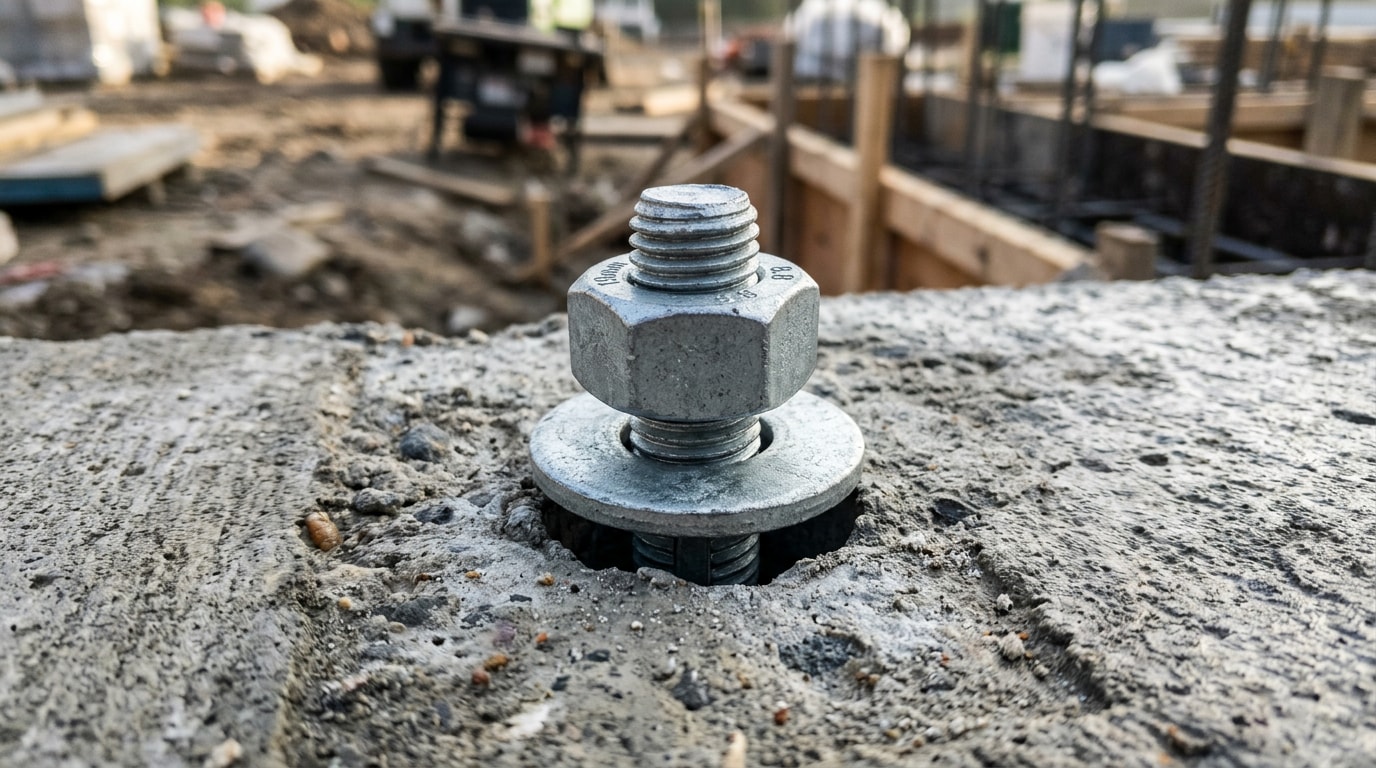
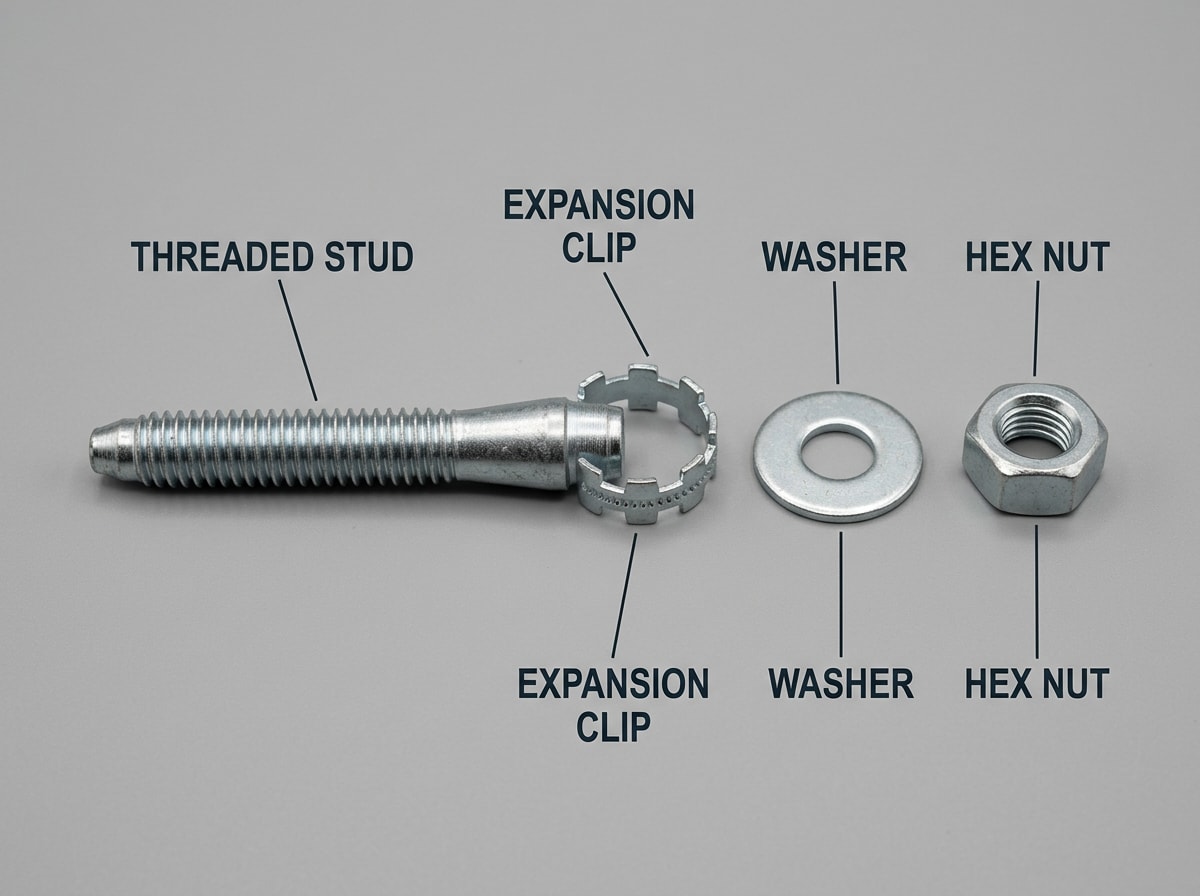
A wedge anchor is a mechanical fastener that creates a permanent hold in solid concrete by expanding a clip against the sides of a drilled hole. As the nut is tightened, the stud pulls up through a cone-shaped clip at the base, forcing the clip outward against the concrete walls.
This is what makes it a true expansion anchor rather than an adhesive or screw-type fastener. Once set, it can't be backed out without damaging the concrete or the anchor itself. That permanence is exactly why a concrete wedge anchor is the go-to choice for mounting ledgers, deck posts, railings, and heavy equipment bases.
Choosing the Right Wedge Anchor for an Allison Park Project
Picking the correct wedge anchor comes down to matching diameter and length to the job, not just grabbing whatever's on the shelf. You can figure out the minimum length of your wedge anchor by adding the thickness of the material you are fastening to the minimum depth needed, allowing space for the nut and washer.
Wedge anchor sizes for residential and light-commercial work typically run from 1/4" up to 3/4" or larger in diameter, with length chosen to suit the fixture and embedment requirement. Thicker ledgers or heavier equipment generally call for a larger anchor diameter to carry the added load.
Material matters just as much as size. Zinc-plated anchors work fine for dry, indoor applications, but anything exposed to moisture, freeze-thaw cycles, or road salt, such as a deck ledger or exterior railing, should use a galvanized or stainless steel wedge anchor for long-term corrosion resistance. We'll come back to why that matters more here than in most parts of the country.
Our crew at Johnny's Asphalt specs anchor material by exposure, not just by what's cheapest at the counter, because we see what three Pittsburgh winters do to the wrong hardware. If you're forming walls or ledgers as part of a bigger pour, our guide to concrete wall forms in Allison Park covers the hardware side of that process in more detail.
Tools You'll Need
Installing a wedge anchor correctly takes a short, specific tool list. A hammer drill is non-negotiable. A standard drill won't bore cleanly into cured concrete and will wear out bits fast.
You'll also need:
- A carbide drill bit sized to match the anchor diameter
- A hammer for setting the anchor
- A wrench or socket to tighten the nut
- A wire brush or compressed air to clear dust from the hole
Clearing dust is one of the most overlooked steps in getting full holding strength, so don't skip it.
Step-by-Step Installation Process
Once you've got the right anchor and tools gathered, the steps are the same whether you're anchoring a ledger board, a railing post, or an equipment pad. Work through layout, drilling, and setting the anchor in order. Skipping ahead is where most installation problems start.
Step 1: Mark the Anchor Locations
Measure and mark each anchor position before you pick up the drill. Confirm your layout against the required edge distance and the spacing between anchors so nothing lands too close to a slab edge or an existing anchor.
Marking locations accurately up front saves you from re-drilling, which weakens the concrete and wastes anchors. A quick dry-fit of the fixture over your marks is worth the extra minute.
Step 2: Drill the Hole to the Correct Depth
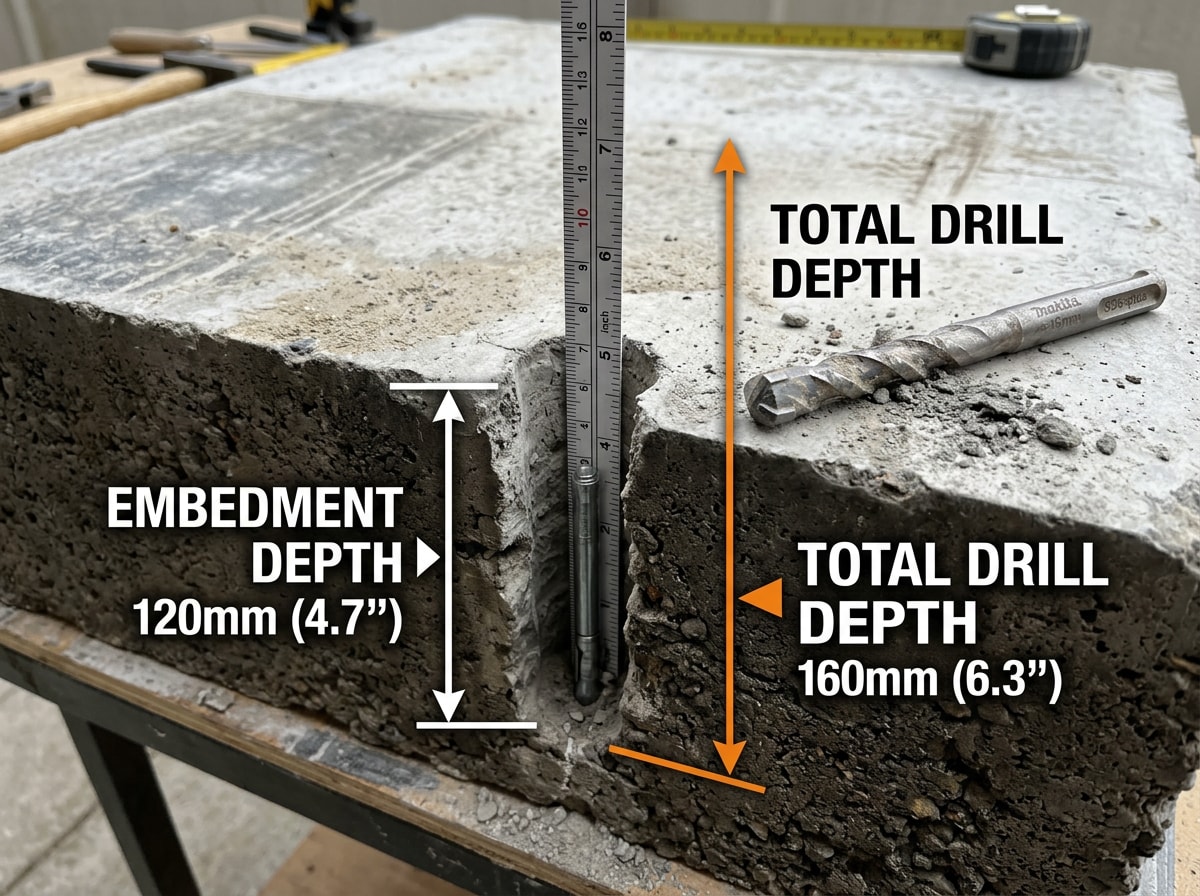
Hole diameter must match the anchor's diameter exactly. Drill the depth of the hole a minimum of 1/2 inch deeper than the concrete wedge anchor will penetrate, or 1/2 inch deeper than the minimum depth of embedment. That extra depth gives dust somewhere to settle below the anchor tip instead of cushioning the clip.
Embedment depth and drill depth get confused constantly. Embedment is how deep the anchor itself needs to sit in solid concrete to reach its rated holding value. Drill depth is the hole you actually bore, which is always a bit deeper.
| Anchor Diameter | Drill Bit Size | Minimum Embedment |
|---|---|---|
| 1/4" | 1/4" | 1"–1 1/4" |
| 3/8" | 3/8" | 1 1/2"–2" |
| 1/2" | 1/2" | 2 1/4"–2 3/4" |
| 5/8" | 5/8" | 2 3/4"–3 1/4" |
| 3/4" | 3/4" | 3 1/4"–4 1/2" |
Always confirm exact figures against the specific manufacturer's spec sheet. Embedment requirements vary slightly by brand and load rating.
On the jobsite, drill in short bursts and back the bit out periodically to clear dust rather than pushing straight through. Drilling concrete also generates fine silica dust, and respirable crystalline silica is created when cutting, sawing, grinding, drilling, and crushing stone, rock, concrete, brick, block, and mortar , so wear a mask and use a vacuum attachment or wet-cutting method when possible. OSHA's respirable crystalline silica overview covers exposure limits and control methods in more detail.
Step 3: Insert and Set the Wedge Anchor
Thread the nut and washer onto the anchor first, flush with the top of the clip. This protects the threads from damage while hammering. Insert the anchor clip-end first into the hole and hammer it down until the specified number of threads sit below the surface, per the manufacturer's spec.
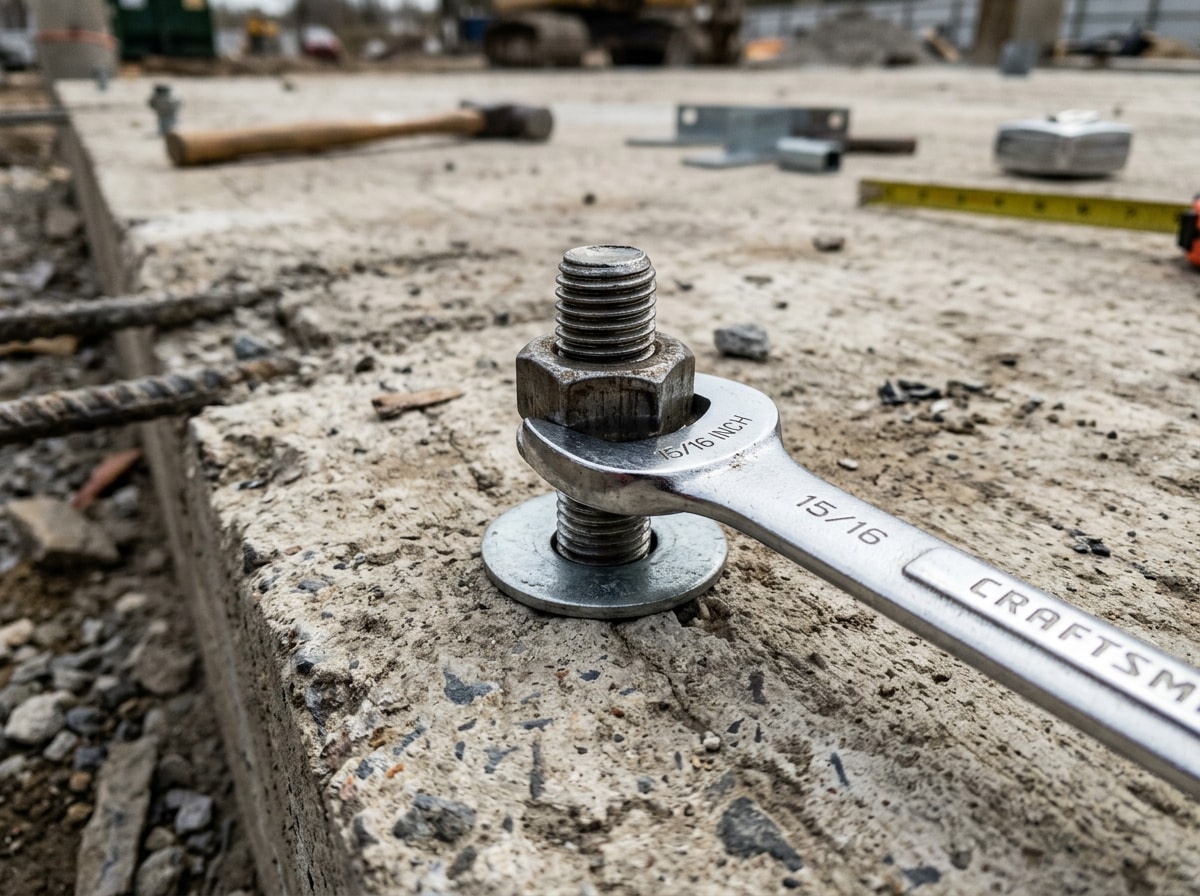
Expand the anchor by tightening the nut 3 to 5 turns past the hand-tight position, or to the specified torque requirement. Avoid over-tightening. Too much torque can shear the stud or crack the surrounding concrete, while under-tightening leaves the clip only partially expanded and the hold weaker than rated.
Need help with the slab itself before the anchors go in? Get My Free Estimate and we'll walk the site with you.
Important Tips for a Successful Installation
A few habits separate a solid installation from a weak one:
- Clean drilled dust out of the hole with compressed air or a brush before inserting the anchor. Leftover dust cushions the clip and cuts holding strength.
- Double-check your layout before drilling. A wedge anchor is permanent once set; removal destroys the anchor or damages the surrounding concrete.
- Match torque to the anchor diameter, not a one-size-fits-all number.
- Never substitute a smaller diameter anchor to save a trip to the store. Undersized anchors don't just hold less weight, they fail differently under load.
Wedge Anchor Holding Values & Spacing Requirements
Published holding values only apply once the anchor reaches its full, specified embedment. Shallow installations won't hit their rated load capacity, regardless of anchor quality. Spacing and edge placement matter just as much as depth.
As a general guideline, manufacturers commonly recommend keeping anchors roughly five anchor diameters away from an unsupported slab edge, with spacing between anchors scaled similarly, to avoid stressing or cracking the surrounding concrete. These are rules of thumb. Always confirm exact edge distance and spacing against the manufacturer's data sheet or an engineer's specification for structural applications, since requirements shift based on concrete strength and anchor size.
For code background, Chapter 17, "Anchoring to Concrete," which covers anchor design, is reformatted to match other chapters initially adopted for ACI 318–14 , and that chapter is the basis most manufacturer evaluation reports build from. You can review the ICC-ES evaluation report directory for load data and code-compliance documentation on specific anchor products before specifying one for a structural application, and the ICC's technical summary of ACI 318 anchoring provisions is a useful plain-language reference.
Why Allison Park's Winters Change the Anchor You Should Choose
This part gets skipped in most generic anchor guides, and it's the single biggest reason exterior anchors fail early around here. Pittsburgh experiences roughly 55 freeze-thaw cycles per year, with a frost line depth of 36 inches . Every one of those cycles pushes moisture into any gap between a zinc-plated anchor and the surrounding concrete, and over several winters that cycle corrodes the clip long before the anchor reaches its rated service life.
That's why we treat exterior and below-grade anchor specs differently from interior ones on every Allison Park job. If a fixture is outdoors, on a patio, deck ledger, or exterior equipment pad, galvanized or stainless hardware isn't an upgrade, it's the baseline. Zinc-plated anchors are fine for a basement shelf bracket. They're a callback waiting to happen on a north-facing exterior ledger.
If you're planning a new slab or pad that anchors will eventually tie into, our site preparation services and concrete finishing work are built around this climate, not a generic national spec sheet. Homeowners and contractors working anywhere in the Allison Park area run into this same freeze-thaw math regardless of which fastener brand they choose.
FAQ
How deep do you drill for a wedge anchor, and how deep should embedment be?
Drill the hole at least 1/2" deeper than the anchor's required embedment depth, which allows room for dust without blocking full insertion. Embedment depth itself depends on anchor diameter, so check the manufacturer's chart for the specific anchor you're using.
What's the difference between a wedge anchor and a sleeve anchor?
Wedge anchors are designed specifically for solid concrete and offer higher holding strength, while sleeve anchors are more versatile and can be used in concrete, brick, or block. If your base material is solid poured concrete, a wedge anchor will generally give you a stronger, more predictable hold.
Can wedge anchors be installed in brick or block?
Wedge anchors are engineered for solid concrete and aren't rated for hollow block or standard brick. If you're fastening into block, you'll need solid, grout-filled material or a different anchor system rated for that base.
What torque should be used for a wedge anchor?
General guidance is finger-tight plus 3 to 5 full turns on the nut, which fully expands the clip without overstressing the anchor. For structural or critical loads, follow the manufacturer's specific torque spec instead of the general rule.
Can a wedge anchor be removed after installation?
No. A wedge anchor is a permanent fastener by design. Attempting to remove one typically destroys the anchor or damages the surrounding concrete, so installation should be treated as a one-way step.
Do I need a permit to install wedge anchors for a deck ledger in Allison Park?
Anchoring a ledger board into an existing slab is usually part of a larger deck or structure permit, not a standalone anchor permit. Check with your local building department before you drill, especially for load-bearing attachments.
Getting the sizing, drilling, and torque right the first time saves a callback and a second trip to the hardware store. If your project also involves pouring, resurfacing, or prepping a slab that these anchors will tie into, Get My Free Estimate and we'll scope the concrete work alongside the anchor layout.