How long should concrete cure before putting weight on it in Hampton Township, PA? It depends entirely on what "weight" means to you. A toddler's tricycle and a loaded pickup truck are on two completely different clocks, and guessing wrong on either one can crack a slab you just paid good money to pour.
Below is the exact timeline professional crews use, plus the local weather factors that can add days to any of these numbers.
The Quick Answer: Concrete Curing Timeline at a Glance
Concrete strength doesn't arrive all at once. It builds in a predictable curve, and most of that strength shows up faster than people expect, then tapers off slowly over the following weeks.
| Use | Minimum Wait | Approx. Strength Reached |
|---|---|---|
| Light foot traffic | 24–48 hours | ~20–35% |
| Patio furniture, grills, light equipment | 3–7 days | ~40–65% |
| Passenger vehicles | 7 days | ~65–70% |
| Pickups, RVs, heavy delivery trucks | 10–14 days | ~75–90% |
| Full structural load (foundations, footers) | 28 days | ~100% design strength |
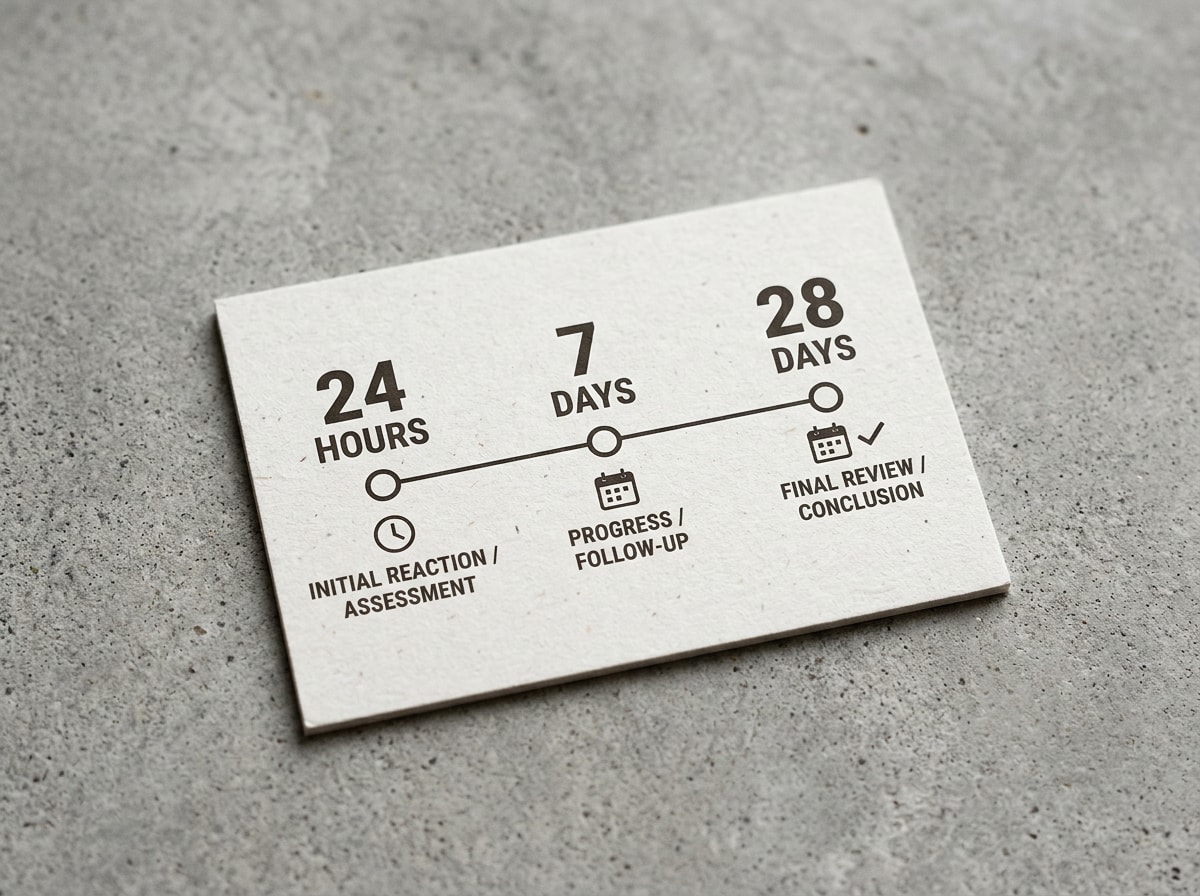
Those 24-hour, 7-day, and 28-day marks are the backbone of nearly every curing question, so keep this table handy as you read the rest of the guide.
For more on how we approach pours and schedules in your neighborhood, visit our homepage or check out the work we've done around Hampton Township.
How Long Before You Can Walk on New Concrete?
Most slabs are safe for light foot traffic after 24 hours. Many contractors still recommend waiting closer to 48 hours for extra margin.
The first day is the riskiest window. The surface looks solid, but the concrete underneath is still soft.
During that first 24 hours, even careful steps can leave footprints, scuffs, or small dents that never smooth out. Pets, kids, and delivery foot traffic are the usual culprits.
Once you're past 48 hours, a new slab can typically handle normal walking without issue. It's still far from full strength, so treat it gently for another week.
How Long Before You Can Drive on New Concrete?
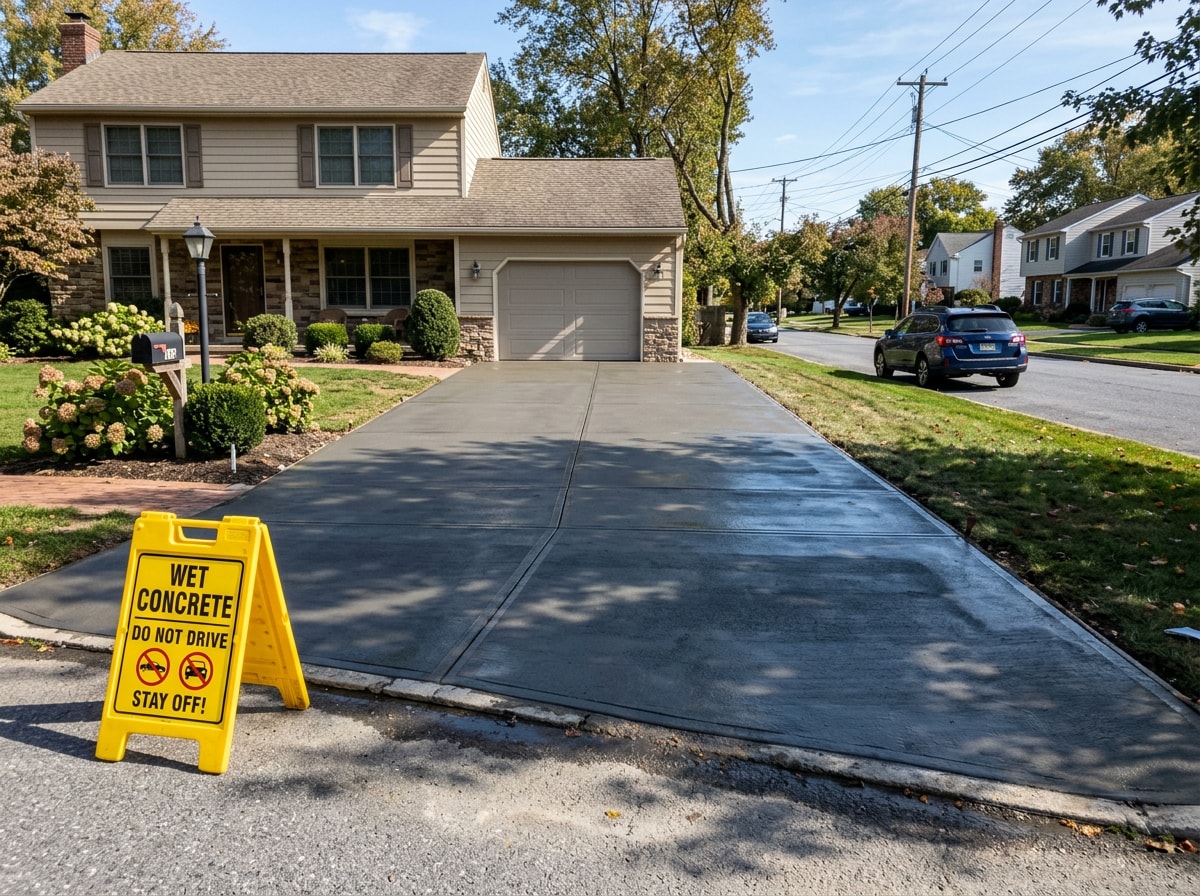
Passenger vehicles should generally stay off new concrete for at least 7 days. By then the slab has reached roughly 65-70% of its design strength, which is enough to support a car without surface damage.
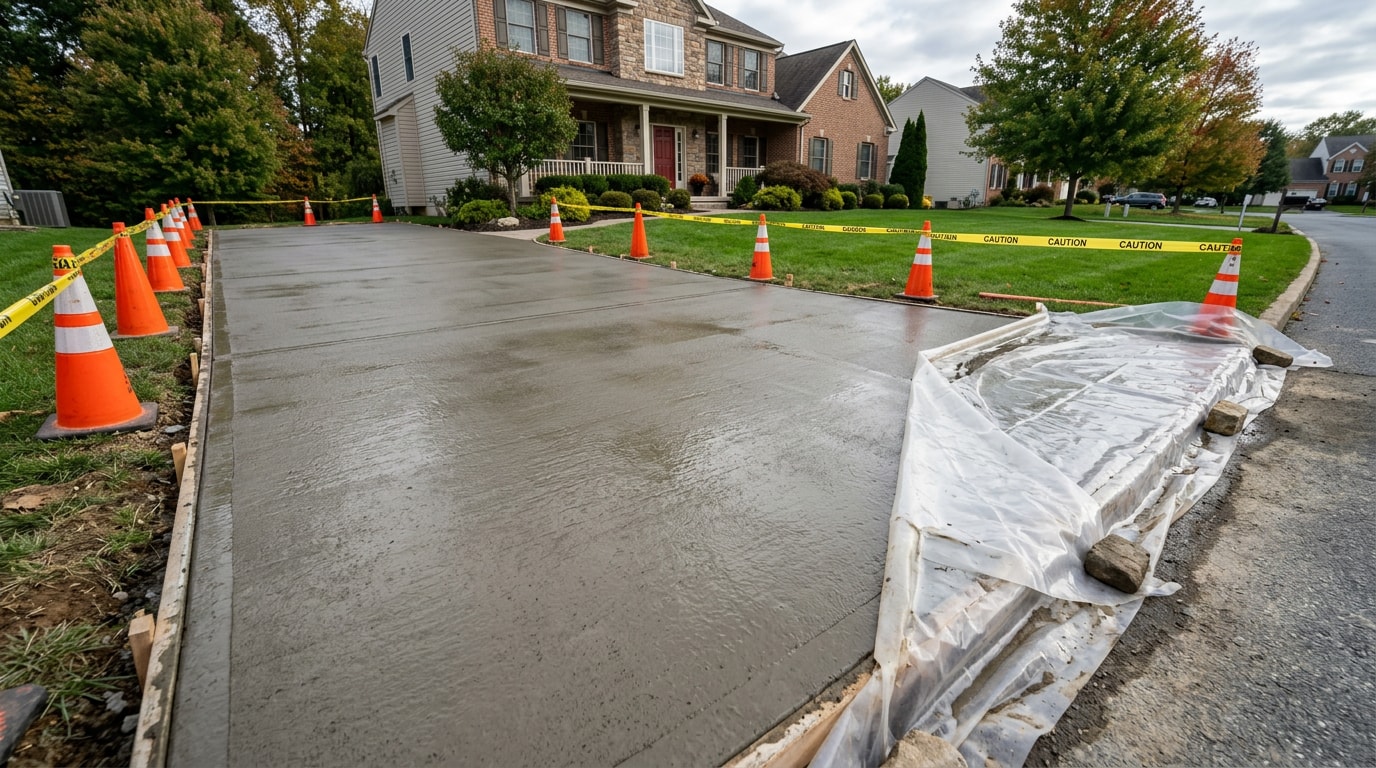
Driveway edges and areas that will see delivery trucks, RVs, or trailers often need longer, sometimes 10 to 14 days depending on the mix and thickness. Driving on a curing driveway too early can cause cracking, tire tracking, or a permanently weakened surface.
If you're not sure whether your specific driveway has cured long enough for a particular vehicle, it's worth checking with whoever poured it before parking anything heavy on it. Our team can walk you through the timeline for your pour, free of charge. Get your free estimate.
What Affects Concrete Cure Time in Hampton Township?
Temperature, humidity, mix design, and slab thickness all influence how fast concrete gains strength, and Western Pennsylvania's seasonal swings can shift that timeline by several days in either direction. A slab poured in July behaves very differently than one poured in late November.
Warmer temperatures speed up the chemical reaction that hardens concrete, while cold weather slows it dramatically. According to the National Ready Mixed Concrete Association, concrete temperature generally needs to stay above 50°F for an adequate rate of strength development, and curing surfaces need to stay above freezing for the full curing duration.
That matters locally. Average lows in the Hampton Township area drop into the low 30s by November and the high 20s by December, which is well below the range concrete needs to cure on schedule. In our own pours around Hampton Township's clay-heavy soil, late-fall slabs routinely need a few extra days past the standard 7-day mark before we'll sign off on vehicle traffic, simply because overnight temperatures slow the hydration process even when the daytime high looks fine.
Here's a rough comparison of how long it takes a standard mix to reach roughly 70% strength under different conditions:
| Conditions | Estimated Time to ~70% Strength |
|---|---|
| Warm (70–85°F), moderate humidity | 5–7 days |
| Mild (50–70°F), average humidity | 7–10 days |
| Cold (below 45°F), low humidity | 10–14+ days |
Thicker slabs and denser mix designs also take longer to cure all the way through, even if the surface feels solid sooner. Proper curing, keeping the slab moist and protected from early drying, is what actually gives concrete its long-term durability according to the American Cement Association's curing guidance.
Concrete Cure Time by Project Type
General curing rules are a good starting point, but the real-world timeline shifts depending on what you poured. A driveway and a patio face very different loads, so their practical "ready to use" dates aren't the same.
Driveway Curing Time
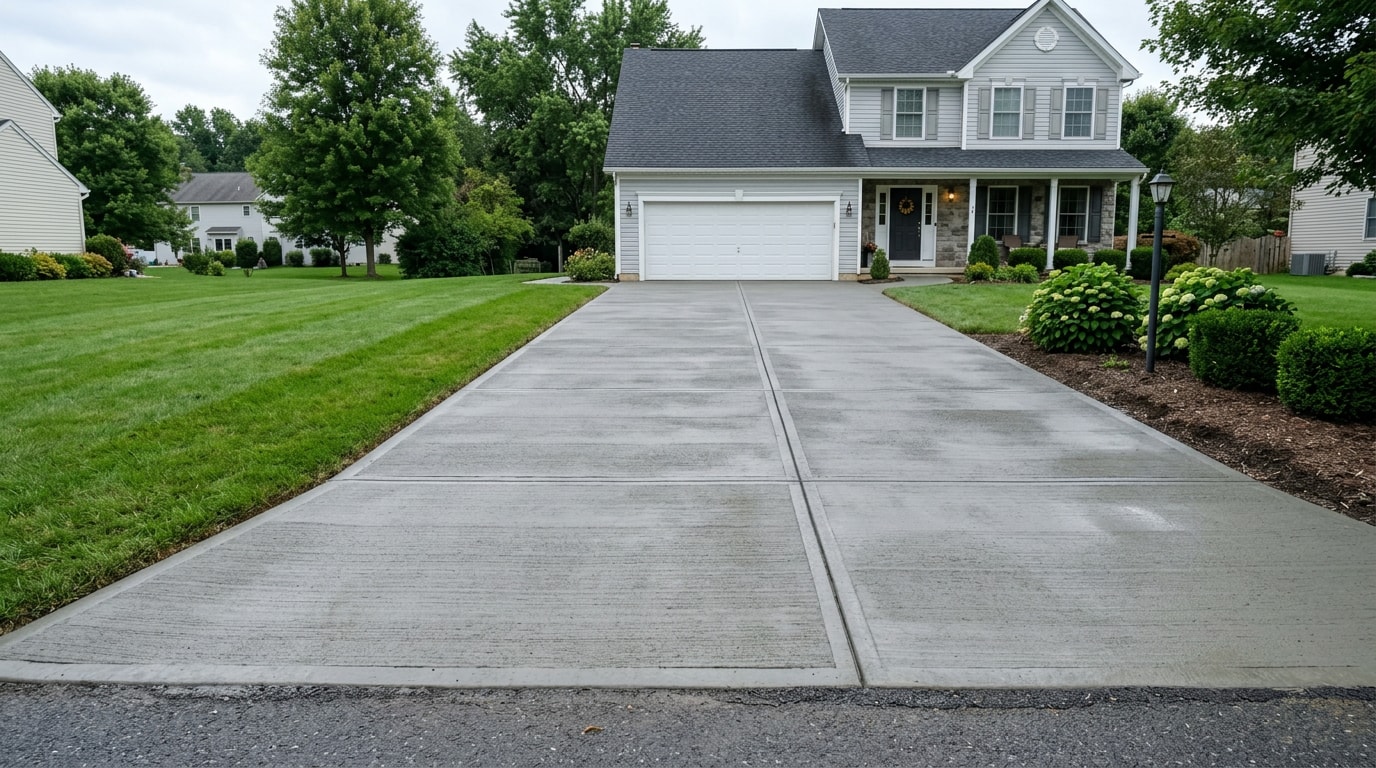
Driveways carry the heaviest everyday load of any residential slab, which is why driveway curing time follows the full 7-day and 28-day benchmarks closely.
- Passenger vehicles: wait at least 7 days
- Heavier vehicles, trailers, or RVs: wait 10–14 days
- Full daily use without concern: closer to 28 days
Rushing this process is one of the most common reasons driveways develop early cracks or surface wear. See our concrete finishing services for more on how we approach pours and curing schedules for new and replacement driveways.
Patio Curing Time
Patio curing is generally more forgiving than a driveway's, since patios typically only need to support people, furniture, and light equipment.
Light foot traffic is usually fine after 24–48 hours, similar to any other slab. Heavy patio furniture, grills, or hot tubs should wait closer to the full 7-day mark, since moving heavy items too early can leave permanent indentations.
If a patio does develop cracks despite waiting the recommended cure time, the cause is usually something other than early weight, such as soil movement or a weak base. Our guide on cracked concrete patios in Hampton Township walks through the most common causes and repair options.
Foundations and Structural Slabs
Foundations are held to the strictest standard because they bear constant, significant weight for the life of the structure. Builders and inspectors typically won't sign off on load-bearing concrete until it has hit the 28-day mark, confirmed through strength testing rather than guesswork.
Proper site prep before the pour matters just as much as curing time after it. Uneven or poorly compacted soil under a foundation can undo weeks of careful curing. Our site preparation services cover exactly that groundwork.
When Is Concrete Ready for Full Use?
"Ready for use" isn't one fixed date. It depends entirely on the load involved.
A walkway might only need a couple of days before it's genuinely ready. A foundation or heavy equipment pad needs the complete 28-day cure to reach its full structural load capacity.
That 28-day benchmark isn't arbitrary. It's the age at which standard compressive-strength tests are run on concrete cylinders under ASTM and ACI guidelines, which is why it became the industry's default marker for "fully cured" concrete.
FAQ
Is Concrete Fully Cured After 7 Days?
No. At 7 days, concrete has typically reached only about 65-70% of its design strength, not its full cure. It's strong enough for passenger vehicles and normal use, but it keeps gaining strength until around the 28-day mark.
How Long Should I Wait Before Driving on New Concrete?
Wait at least 7 days before driving a passenger vehicle on new concrete. Trucks, trailers, or heavy machinery should wait closer to 10-14 days, and ideally 28 days, to avoid cracking or long-term surface damage.
Can I Put Weight on Concrete After 3 Days?
At 3 days, concrete is still in an early curing stage and well short of its 7-day strength. Very light, careful use may be fine, but vehicles, heavy furniture, and equipment should wait longer.
How Long Before Concrete Can Handle Heavy Loads?
Plan on the full 28 days before concrete reliably handles heavy loads like structural weight, trucks, or machinery. This is the benchmark most contractors and inspectors use for full-strength readiness.
How Long Does Concrete Need to Cure Before Placing Furniture on It?
Light furniture is typically fine after 24-48 hours, once the surface has hardened enough to resist marring. Heavier items like grills, hot tubs, or stone furniture should wait closer to 7 days so they don't leave permanent indentations.
Does Cold Weather Change the Curing Timeline?
Yes. Concrete needs to stay above roughly 50°F to cure at a normal rate, and curing surfaces need to stay above freezing throughout the curing period. Pours done in Hampton Township's late fall or winter months often need several extra days before hitting the same strength a summer pour reaches on schedule.
If you're planning a pour and want a schedule built around your project's actual conditions, not just a generic rule of thumb, get your free estimate and we'll walk you through it. You can also browse recent projects to see how we've handled curing on driveways, patios, and foundations across the North Hills.