A concrete grinder rental in Sewickley, PA turns a weekend garage floor project into a two-day headache if you grab the wrong size machine or skip the dust vacuum. Pricing, grit sequence, and the Borough's own work-hour rules all change what "just renting a grinder" ends up costing you by the time the job is done. Here's what actually matters before you reserve one, plus when hiring a concrete pro costs less than doing it yourself.
Visit Johnny's Asphalt to see our services and request a free estimate.
How Much Does a Concrete Grinder Rental Cost in 2026?
Pricing depends on machine class far more than brand. Across Pennsylvania rental yards, a basic single-head electric grinder commonly lists around $75 for 4hrs/ $94 a day , while an 11-inch single-head electric unit runs closer to $108 for 5 hours and $144 for a full day . Compact edge grinders made for tight spots sit a little lower, often around $93 for 5 hours or $124 for a day .
Here's a realistic 2026 pricing range based on current Pennsylvania rental listings:
| Grinder Class | Typical Daily Rate | Typical Weekly Rate |
|---|---|---|
| Handheld / edge grinder (4-9") | $90 - $130 | $350 - $400 |
| Walk-behind single-disc (10-20") | $140 - $280 | $830 - $900 |
| Walk-behind planetary / polisher (20-25"+) | $250 - $450+ | $1,000 - $2,500+ |
Delivery, a deposit, and diamond tooling are usually separate line items, so get a full quote before you compare one shop's "day rate" against another's.
Which Concrete Grinder Size Do You Actually Need?
Job size and surface condition decide the machine, not personal preference.
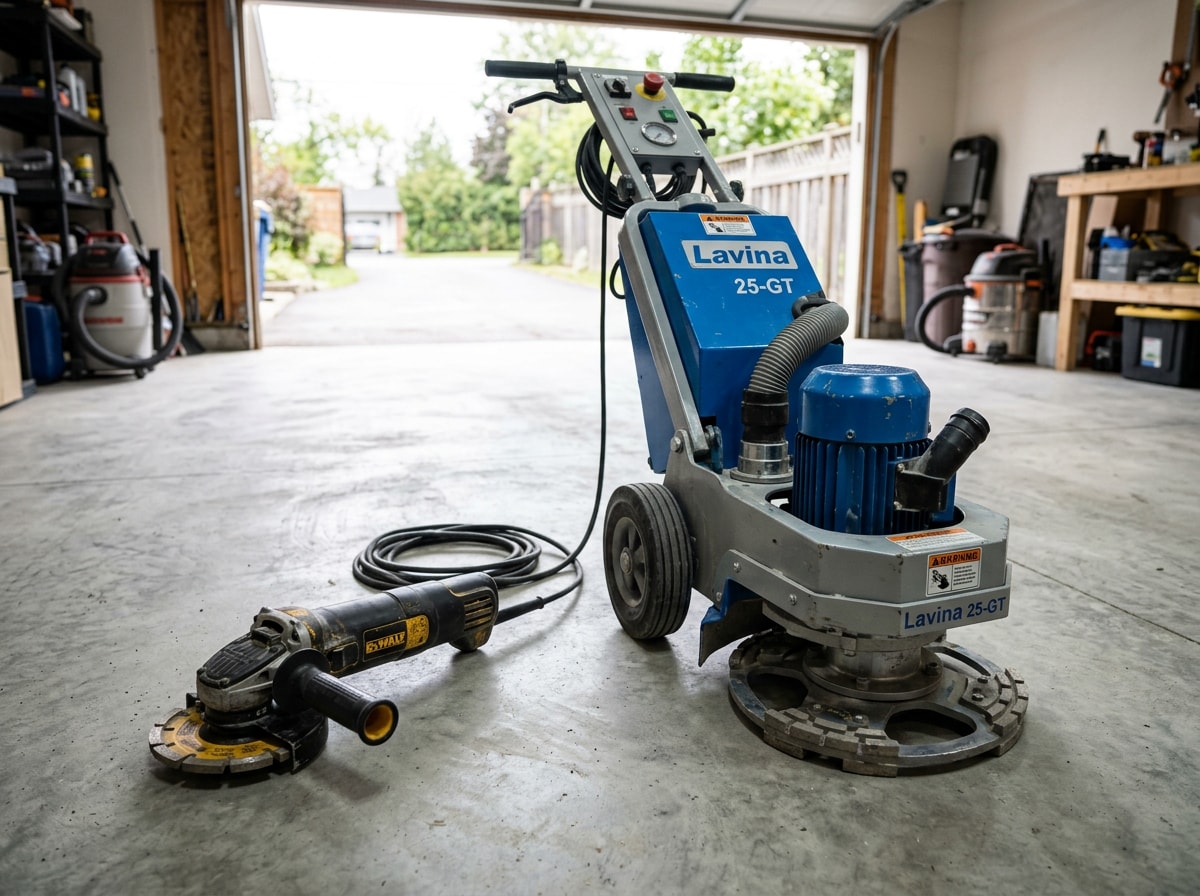
- Edges, corners, stair treads, tight closets: handheld grinder, 4-9 inch disc
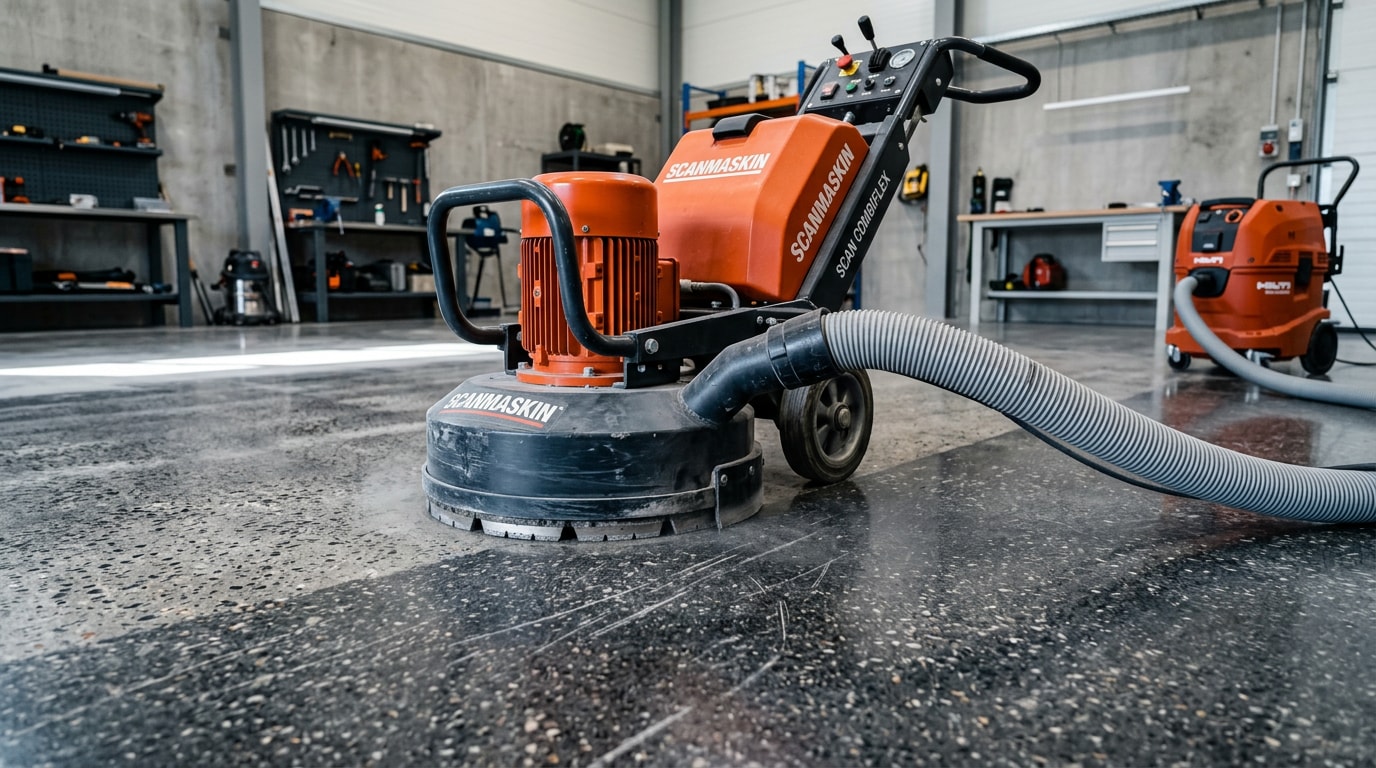
- Garage floors, basements, small commercial slabs (200-1,500 sq ft): walk-behind single-disc, 11-20 inch
- Large shop floors, full polishing jobs (1,500+ sq ft): walk-behind planetary, 20-25 inch
A 400-square-foot garage typically needs a half-day with a single-disc walk-behind. A 2,000-square-foot shop floor calls for a planetary grinder and usually a full day or two, depending on coating thickness and how many grit steps the polish schedule needs.
Power Requirements: What Outlet Does a Rented Grinder Need?
Handheld grinders typically run on a standard household outlet. Bigger walk-behind units are a different story. Many 20-25 inch walk-behind grinders need a 220V single-phase hookup, and some models are built to run off the same outlet type as a clothes dryer, which is a 700-pound grinder that can be run off the dryer outlet in most homes . Check your panel and outlet type before booking. A machine that needs 220V won't run off a standard garage circuit, and that's a common surprise on pickup day.
What a Concrete Grinder Is Actually Used For
Concrete grinders do two different jobs, and mixing them up wastes tooling and time.
Surface prep opens the slab's pores and strips old paint, epoxy, or mastic ahead of a new coating. This starts with a coarse metal-bond diamond segment and works to remove material quickly.
Polishing moves through a sequence of resin-bond pads, coarse to fine, to create a smooth, glossy finish with no coating at all. Skipping grit steps in that sequence leaves visible swirl marks, which is one of the most common DIY mistakes we see when homeowners bring us in to fix a rental job gone sideways. If you're weighing a polished look against a stamped or textured finish instead, our stamped concrete patio guide for Sewickley breaks down pattern and cost tradeoffs for outdoor slabs.
Dust Control and Silica Safety Rules
Grinding concrete releases fine respirable silica dust. This isn't a minor nuisance. Workplace exposure to small particles of silica dust, also known as respirable crystalline silica, can lead to serious diseases, including silicosis, a progressive lung disease marked by scarring and thickening of the lung tissue, lung cancer, chronic obstructive pulmonary disease, and kidney disease .
That risk is why rental counters push a shroud and vacuum setup instead of treating it as an upsell. Respirable crystalline silica is a fine dust generated when workers cut, grind, drill, or crush materials containing silica, including concrete, brick, block, mortar, stone, sand, and asphalt , and OSHA's construction standard spells out the engineering controls expected for grinding work, including dust shrouds and HEPA-filtered vacuums, under 29 CFR 1926.1153.
Pair your rented grinder with a HEPA vacuum every time, even for a "quick" job. One hour of unshrouded grinding can put more dust in the air of an attached garage than most homeowners expect, and that dust settles into HVAC returns and gets tracked through the house for weeks.
Sewickley's Construction Hours Matter More Than You'd Think
Here's something most rental-counter pricing pages won't tell you: Sewickley Borough regulates when you can actually run a grinder. Under the Borough's code, public and private construction, demolition, and grading work performed under a building permit must happen between 7:00 a.m. and 7:00 p.m., Monday through Saturday, with no such work on Sundays unless the Borough Manager grants written consent . The same ordinance also addresses dust control, street cleaning, and prevention of noise injurious to the neighborhood .
If you're renting a walk-behind grinder for a weekend garage project in Sewickley proper, plan your rental window around those hours, not just the rental counter's open sign. Our crews working jobs in the Sewickley, PA service area build this into scheduling by default; DIY renters often don't find out until a neighbor calls it in.
Renting a Grinder vs. Hiring a Concrete Pro
Rental shops will tell you renting is always cheaper. It isn't, once you count everything.
| Cost Factor | DIY Rental | Hiring a Pro |
|---|---|---|
| Machine + tooling + vacuum | $200 - $450+ for 1-2 days | Included in quote |
| Truck/trailer to haul 150-400+ lb machine | $0 - $75 | Included |
| Your time (half to full day, plus learning curve) | Unpaid | None |
| Risk of swirl marks, uneven grind, redo | Real, especially on first attempt | Covered by workmanship |
| Deposit and return inspection | Required | N/A |
For a one-time edge touch-up, renting a handheld grinder is the right call. For a full garage floor, a coating removal job, or anything headed toward a polished or stamped finish, the math shifts fast once you add a missed grit step or a gouged slab to the list. We've picked up more than a few jobs where a homeowner's rental weekend turned into a bigger repair than the original project. Our concrete finishing services and site preparation work cover the grinding step as part of the job, not as a separate rental gamble. You can browse recent concrete and paving projects to see the finish quality before you decide which route to take.
If you'd rather skip the rental counter altogether, Get My Free Estimate and we'll tell you honestly whether your project is a weekend DIY job or one worth handing off.
How Long Should You Rent a Concrete Grinder For?
Daily and weekly windows are standard. A one-day rental works for small jobs, but once a project stretches past three or four days, the weekly rate almost always beats stacking daily charges, sometimes by a wide margin. Ask about the weekly rate before you commit to the shorter option, especially on a planetary grinder where daily rates climb fast.
Finding a Concrete Grinder Rental Near Sewickley
Searching from Sewickley typically pulls in rental options across the broader Pittsburgh area, including Edgeworth, Ambridge, and Moon Township. Confirm the location actually stocks the grinder class you need. Availability for planetary walk-behinds is tighter than for handhelds, especially on weekends.
Delivery is worth considering for heavier walk-behind units, given Sewickley's hilly streets and tight downtown parking. Hauling a 300-plus-pound grinder up a steep driveway or through a narrow alley is harder than it looks on the rental counter's website.
FAQ
How much does it cost to rent a concrete grinder?
Handheld grinders typically run $90 to $130 per day, walk-behind single-disc units $140 to $280 per day, and planetary polishing grinders $250 to $450 per day in 2026, with weekly rates offering a meaningful discount over stacking daily charges.
What size concrete grinder do I need?
Use a handheld grinder under 200 square feet, a single-disc walk-behind for 200 to 1,500 square feet, and a planetary grinder for larger floors or full polishing jobs. Match grinder size to total square footage before booking, not just budget.
What's included in a grinder rental, and what costs extra?
Rentals typically include the machine, power cord, and a dust shroud. Diamond tooling, a vacuum add-on, and fuel or propane for gas units usually cost extra, and deposits are standard.
Do you need a license or certification to operate a concrete grinder?
No formal license is typically required for homeowner use, but commercial and multi-unit jobs often require documented silica safety training under OSHA's construction standard. Review the requirements before operating a rented unit for the first time.
Can I rent a concrete grinder for just one day?
Yes, most providers offer daily rentals. For anything bigger than a single-room touch-up, compare the weekly rate first since it usually beats renting day-by-day past three or four days.
Is it cheaper to rent a grinder or hire a concrete contractor?
For small edge or touch-up work, renting is usually cheaper. For whole-floor grinding, coating removal, or a polished finish, the rental cost plus your time and redo risk often lands close to a contractor quote, without the workmanship guarantee.
Does Sewickley Borough restrict when I can run a grinder?
Yes. Construction and grading work under a building permit is limited to 7:00 a.m. to 7:00 p.m., Monday through Saturday, with no work on Sundays without written consent from the Borough Manager.