Roman concrete in Hampton Township, PA keeps coming up whenever people ask why 2,000-year-old harbors are still standing while driveways poured in the 1990s are already cracking apart. The difference comes down to chemistry, not luck or legend. Here's what the Romans actually did differently, and what it realistically means for the concrete in front of your own house.
What Was Roman Concrete?
Roman concrete, known to its builders as opus caementicium, was made from three core ingredients: lime, volcanic ash (pozzolana), and rock or rubble aggregate. It's the ancient ancestor of the concrete used in modern construction.
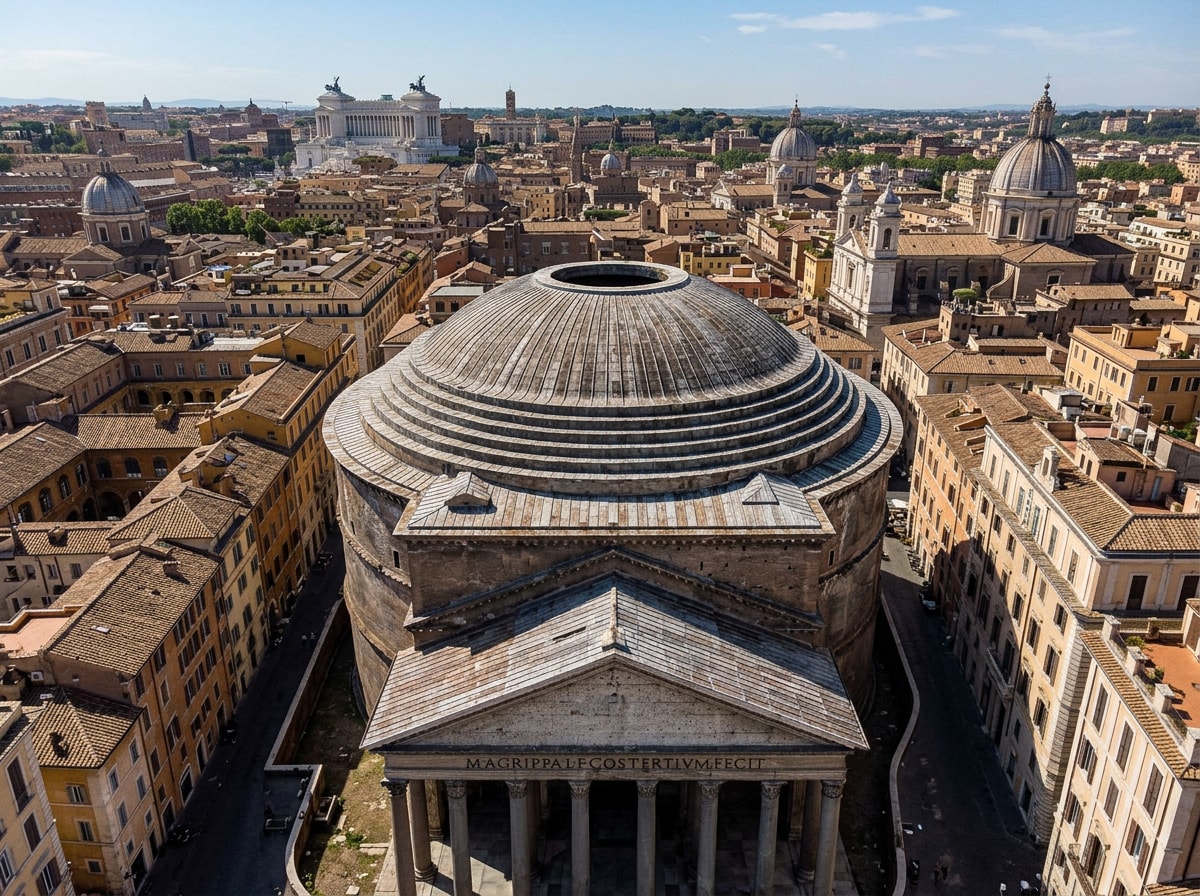
Some structures built with it have survived roughly two millennia without major structural failure. The Pantheon's unreinforced dome, Roman aqueducts stretching across entire provinces, and harbor structures submerged in seawater for centuries are all physical proof of this material's staying power.
That said, it's a mistake to just call Roman concrete "stronger" than what we use now. The real story involves composition, chemistry, and construction methods working together in ways engineers are only now fully appreciating.
How Roman Concrete Was Made
Understanding what Roman concrete was made of starts with how it was mixed. The process differed sharply from how a concrete truck batches material today.
Roman builders used hot mixing, combining quicklime directly with water and volcanic ash rather than pre-slaking the lime first. This created intense heat during mixing, which researchers now believe contributed to the material's long-term resilience.
Pozzolana, a reactive volcanic ash abundant near Naples, gave the mixture its hydraulic properties. That meant it could cure and harden even underwater, without needing to stay dry. According to the U.S. Geological Survey, Roman builders favored a specific volcanic ash from Pozzuoli for exactly this reason, which is where the term "pozzolan" comes from.
Modern concrete typically reaches most of its design strength within 28 days. Roman concrete cured far more slowly, gaining density over months or years as chemical reactions kept working inside the mix.
Why Roman Concrete Was So Durable
The durability of ancient Roman concrete traces back to a chemical process called the pozzolanic reaction, a reaction between lime and volcanic ash that produces strong, water-resistant mineral bonds over time. This reaction is the primary reason so many Roman structures have outlasted their builders by two thousand years.
A long-overlooked detail turned out to matter enormously: small white mineral deposits scattered through old Roman concrete samples, called lime clasts. For years, historians assumed these were simply mixing flaws.
Recent research suggests the opposite. They're a built-in repair mechanism, a form of self-healing concrete that activates when the material cracks.
The Crystallization Process That Modern Concrete Misses
When water seeps into a crack in Roman concrete, it dissolves nearby lime clasts. That triggers crystallization that fills the gap with calcium carbonate and seals the damage before it spreads.
Modern Portland-cement concrete doesn't have this property. When it cracks, water gets in, accelerates freeze-thaw damage, and corrodes internal steel rebar, a problem Roman builders never had to worry about since their mixes used no reinforcement at all.
Researchers from MIT and Harvard were the ones who connected lime clasts to this self-healing behavior. Their lab testing showed that concrete mixed with the Roman hot-mixing method repaired its own cracks within weeks, while identical samples without lime clasts never healed. Newer replication work is still testing the theory across different Roman sites, so it's worth treating it as the leading explanation rather than a fully settled fact.
What This Ancient Chemistry Means for Concrete in Hampton Township, PA
Here's the part most articles on this topic skip entirely. Western Pennsylvania doesn't have a seawater problem, but it has something arguably harder on concrete: dozens of freeze-thaw cycles every winter.
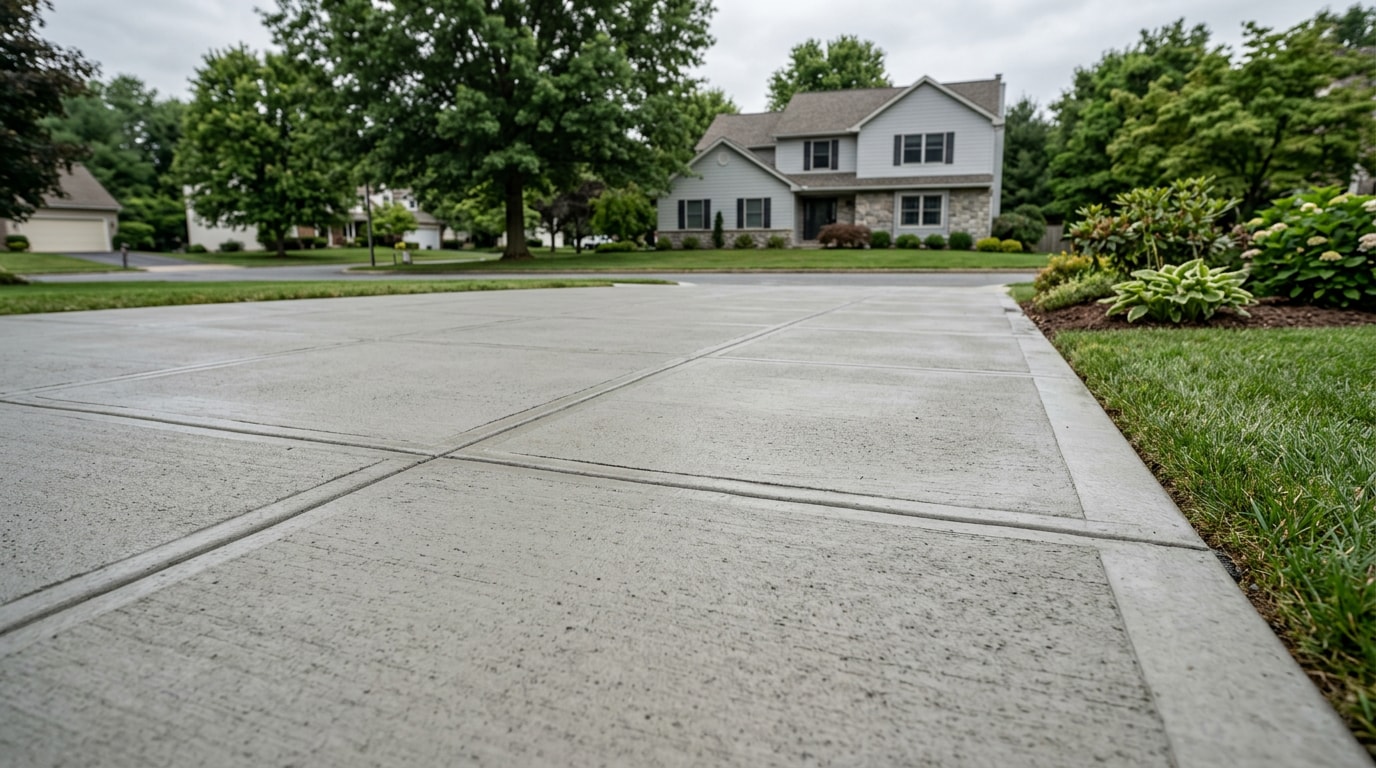
After years of pouring and repairing driveways, patios, and parking lots around Hampton Township and the North Hills, the failure pattern we see most often isn't the concrete itself falling apart. It's water finding a hairline crack, freezing, expanding, and turning a small flaw into a spalled, crumbling mess by spring. Roman concrete's self-healing trick doesn't exist in a standard residential mix, which is exactly why proper joint placement, air entrainment, and finishing technique matter more here than the chemistry lecture suggests.
If you're seeing early cracking on a slab poured in the last few years, it's rarely a mystery of ancient chemistry. It's almost always drainage, base prep, or curing. Our guide on concrete density, mix types, and codes used in Hampton Township walks through how local mix specs are supposed to handle this climate.
If your driveway or patio is already past the point of small cracks, get a free estimate from our team before another winter does more damage.
Roman Construction Techniques: The Opus Facing Styles
Romans rarely left poured concrete cores exposed. Instead, they finished structures with distinct facing styles, each suited to different buildings and budgets:
- Opus incertum: irregular stone pieces set in a rough pattern, common in earlier Republican-era construction.
- Opus reticulatum: small pyramid-shaped stones arranged in a diagonal net pattern for a more refined look.
- Opus latericium: fired brick facing.
- Opus mixtum: brick and stonework combined in the same wall.
These were decorative and protective layers applied over the structural concrete core, not the concrete itself. The underlying material did the structural work; the facing handled appearance and weather protection. Modern equivalents exist too. Our concrete finishing services cover the current-day versions of that same idea: surface treatments that protect and dress up a structural slab.
Roman Concrete vs. Modern Concrete: Side-by-Side
| Feature | Roman Concrete | Modern Portland Cement Concrete |
|---|---|---|
| Core binder | Lime + volcanic ash | Portland cement |
| Curing time | Months to years | About 28 days to full strength |
| Reinforcement | None (unreinforced, compression-only) | Steel rebar (tension + compression) |
| Self-repair | Yes (lime clast mechanism) | No |
| Typical lifespan | 1,000+ years (select structures) | 50 to 100 years (design life) |
Cement production is also a notable source of U.S. industrial emissions. The EPA's Greenhouse Gas Reporting Program tracks cement as the largest-emitting subsector within the minerals industry, which has pushed researchers toward lower-carbon, Roman-inspired binder alternatives.
For homeowners, "more durable concrete" doesn't mean a driveway should last two thousand years. It means fewer cracks, less water damage, and a longer service life before replacement is needed.
It's also worth being clear that Roman concrete was unreinforced mass concrete, used almost entirely in compression. It was never designed to handle the tension loads that modern reinforced concrete manages in bridges, high-rises, and foundations today.
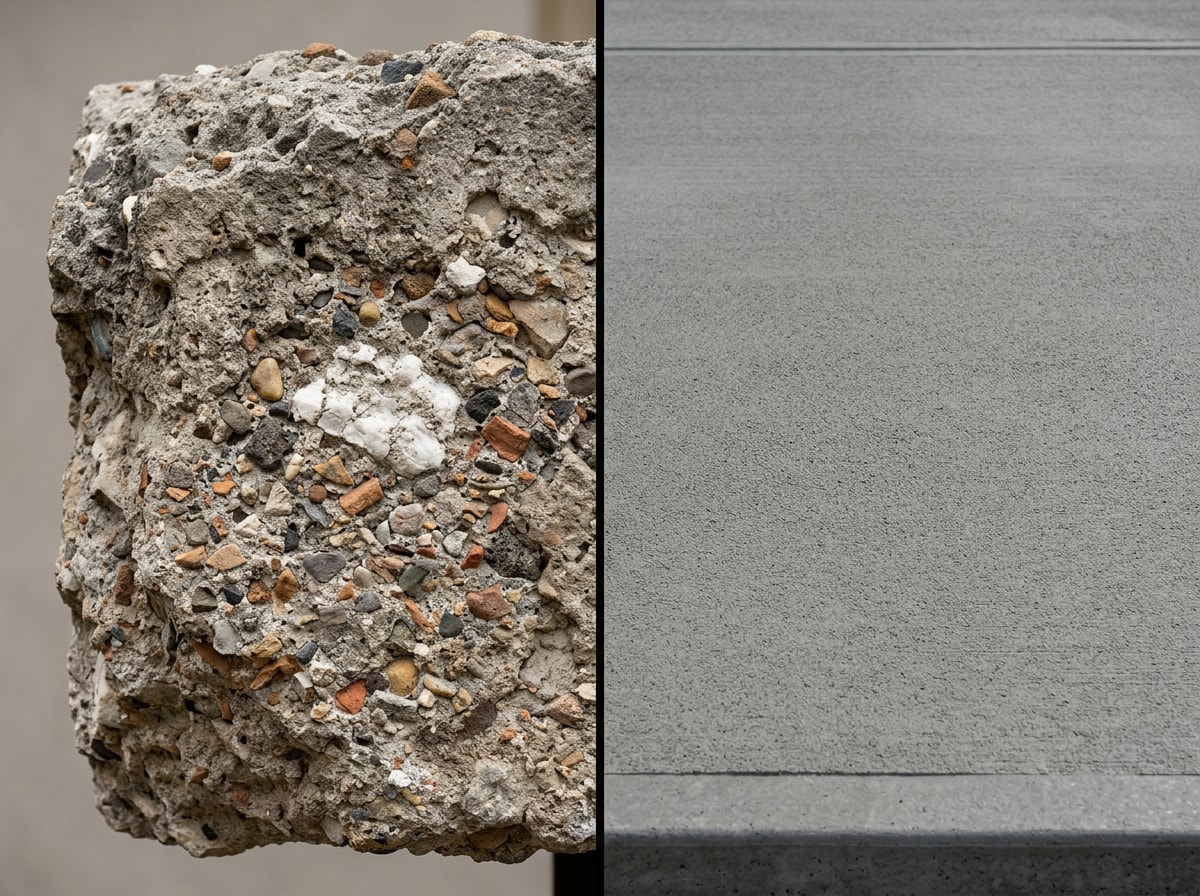
Why Modern Concrete Replaced Roman Concrete
Roman concrete's mix composition varied batch to batch, depending on local volcanic ash supply and builder skill. That unpredictability doesn't meet modern structural concrete standards, which demand consistent, testable performance.
Modern construction also needs materials that cure fast and support steel reinforcement for tensile strength, something Roman mixes were never designed for. The shift to Portland cement reflects engineering needs, not necessarily inferior ancient materials.
Can We Replicate Roman Concrete Today?
Full-scale replication faces real limits. Naturally reactive volcanic ash isn't available everywhere, and Roman concrete's slow curing timeline doesn't fit modern construction schedules or budgets.
That hasn't stopped targeted research. Scientists are testing Roman-inspired concrete and lime-based additives for specific uses like seawalls, dam linings, and experimental 3D-printed concrete, where long-term durability matters more than speed. You can see examples of durable, properly finished concrete and asphalt work closer to home on our projects page.
Roman Concrete Was Not Always Better
Roman concrete wasn't universally superior to what we build with now. Its compressive strength often falls below many modern mixes, batch quality varied widely depending on materials on hand, and it had essentially no tensile capability without steel reinforcement.
Durability and strength aren't the same property, and that distinction matters here. Roman concrete excelled specifically in compression-heavy, often marine environments where its self-healing chemistry had time to work. It wasn't built to span long distances or resist bending forces the way modern reinforced concrete does in bridges and skyscrapers today.
For a driveway, patio, or parking lot in Hampton Township, the real lesson from Rome isn't "use ancient recipes." It's that mix design, curing time, and crack prevention determine how long concrete actually lasts, which is exactly what a properly specified modern mix and finishing process are built to handle. See how we approach that work on our Hampton Township, PA service area page, or visit Johnny's Asphalt to see our full range of paving and concrete services.
FAQ
What Is Pozzolana, and Why Was It So Important?
Pozzolana is a reactive volcanic ash the Romans mixed with lime to create hydraulic cement. This binder was the key ingredient that let Roman structures cure underwater and resist weathering for centuries.
Did Roman Concrete Really Set Underwater?
Yes. The hydraulic-setting properties of pozzolana allowed Roman concrete to cure in direct contact with seawater, making it possible to build durable harbors, piers, and breakwaters throughout the empire.
What Did the Romans Call Concrete?
Romans called it opus caementicium. The term "caementa" referred to the rubble and rock fragments used as aggregate, mixed into the lime-and-ash binder to form the final material.
Is Roman Concrete Stronger Than Modern Concrete?
No, not in compressive strength. Modern Portland cement concrete typically tests stronger under compression and, with steel reinforcement, handles tension loads Roman concrete was never designed for. Roman concrete's advantage is long-term durability and self-healing, not raw strength.
Why Don't We Build With Roman Concrete Today?
Because it doesn't meet modern construction demands. Its mix varied batch to batch, it cured over months or years instead of weeks, and it couldn't support steel reinforcement, which modern buildings, bridges, and driveways all rely on.
Can a Modern Driveway or Patio Self-Heal Like Roman Concrete?
Not with a standard residential mix. Self-healing concrete products exist, but they're specialty formulations, not what's typically poured for a home driveway. The practical fix for a long-lasting slab is still correct base prep, joint spacing, and finishing.
About the Author
This guide was written by the team at Johnny's Asphalt, a paving and concrete contractor serving Hampton Township and the greater North Hills and Pittsburgh area. We've poured, repaired, and resurfaced driveways, patios, and parking lots across the region long enough to know exactly where freeze-thaw cycles cause the most damage. Questions about a cracking slab or a new pour? Contact us for a straight answer and a free estimate.