Concrete patios in Cheswick, PA need to do more than look good for one summer. They need to survive clay soil that holds water and a freeze-thaw cycle that runs from November into April. This guide covers real 2026 pricing, the build steps that actually matter, and the contractor questions worth asking before you sign anything.
Concrete Patio Cost in Cheswick, PA (2026)
Price depends on finish, mix strength, and how hard your yard is to access. A plain broom finish costs less per square foot than stamped concrete, and thicker, higher-strength mixes built for freeze-thaw exposure cost more than a standard interior slab mix.
| Finish Type | Cost per Sq Ft | Typical Total (200–300 sq ft) |
|---|---|---|
| Plain/broom finish | $8–$12 | $1,600–$3,600 |
| Exposed aggregate | $11–$16 | $2,200–$4,800 |
| Stamped concrete | $13–$19 | $2,600–$5,700 |
Site access pushes costs higher before a single yard of concrete gets poured. Narrow side yards, retaining walls, or fenced-in backyards in Cheswick's older neighborhoods often mean pump trucks or wheelbarrow relays instead of a direct chute pour, and that labor shows up on the invoice. Higher-strength mixes (3,000–4,500 psi) built for freeze-thaw exposure and patio furniture loads also cost more per cubic yard than a standard mix.
Why Base Work Comes Before Anything Else
Everything you see on a finished patio, flatness, crack resistance, how it ages, comes from prep work buried below the surface. A patio built to survive a Western Pennsylvania winter starts with excavation to proper depth, a compacted granular base, and forms set with a roughly 2% slope away from the house so water never pools against the foundation.
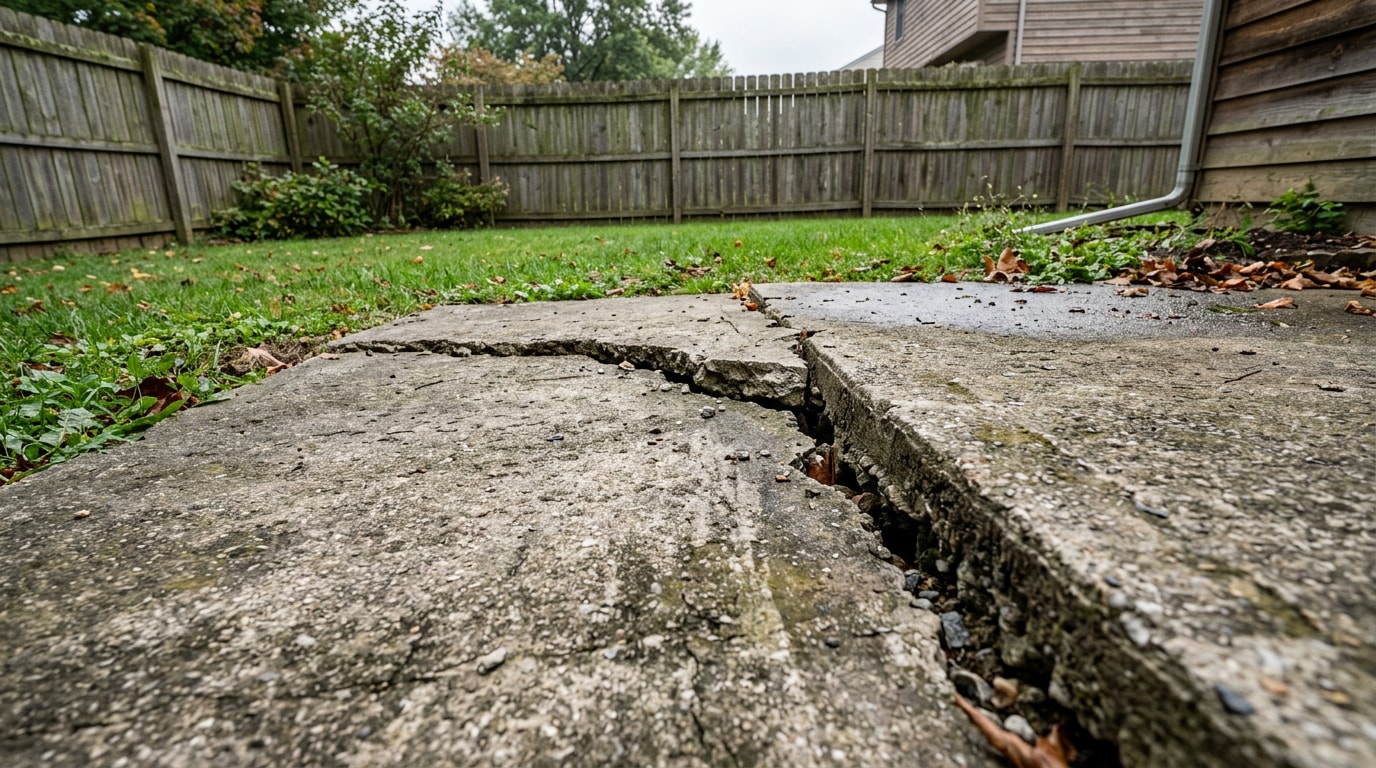
We see the same failure pattern on repair calls across Allegheny County: a slab poured over soft, uncompacted fill cracks within two or three winters, while one poured over a properly compacted base on the same street is still flat a decade later. Base work is invisible on install day and obvious five years later.
Cheswick's clay-heavy soil holds moisture longer than sandier regional soils, which makes compaction and drainage slope even more critical here. The concrete mix matters too: air-entrained concrete, with microscopic air voids engineered into the mix, resists the freeze-thaw cycles that crack ordinary slabs by giving trapped water room to expand without fracturing the paste. The American Concrete Institute notes that air entrainment improves resistance to freeze-thaw damage by several hundred percent compared with concrete that has no entrained air, which is why it's standard practice for Pennsylvania exterior flatwork.
How a Concrete Patio Gets Built
The installation process runs in four stages:
- Site visit and layout — measuring access, slope, and drainage before anything is scheduled.
- Excavation and base prep — removing topsoil, compacting a granular base, and setting forms.
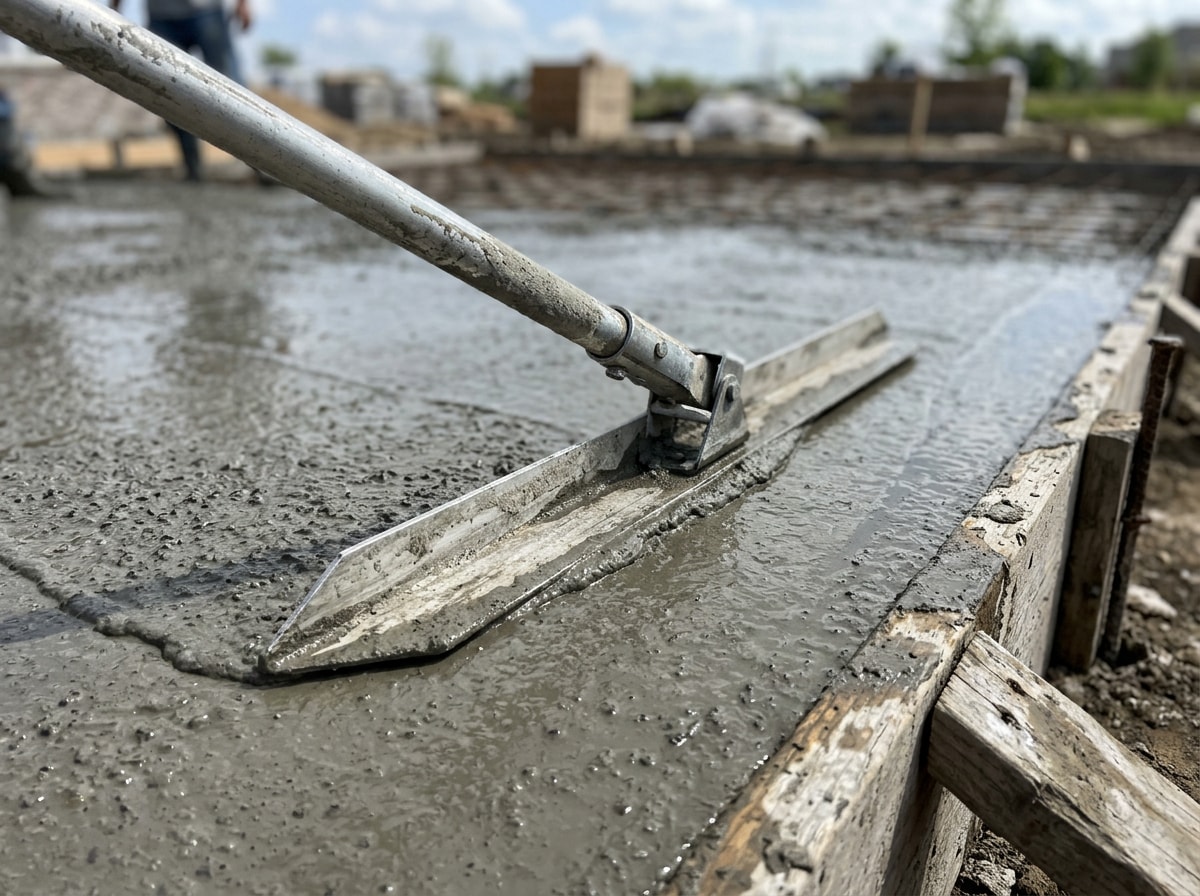
- Pour, screed, and finish — placing the concrete, striking it level, and applying the chosen surface finish.
- Control joints and curing — cutting joints to control where cracks form, then letting the slab cure.
Most residential patios move from site visit to a pourable schedule within one to two weeks. Curing takes another 5–7 days before light foot traffic, and up to 28 days before the slab reaches full strength.
If your site preparation isn't done right, no amount of finishing work on the surface will fix it later. That's the stage worth scrutinizing most when you're comparing quotes.
Popular Concrete Patio Styles for Cheswick Backyards
Patio styles break down mainly by finish and shape.
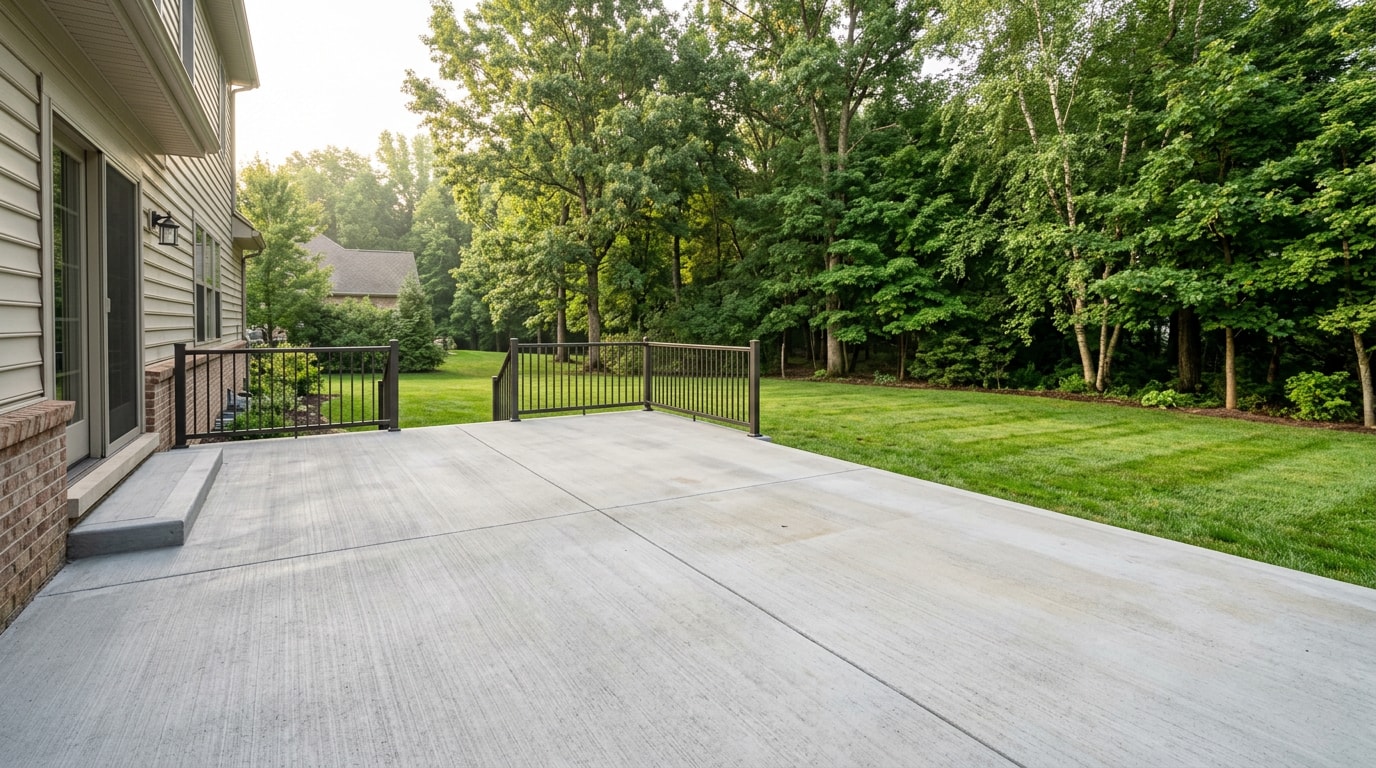
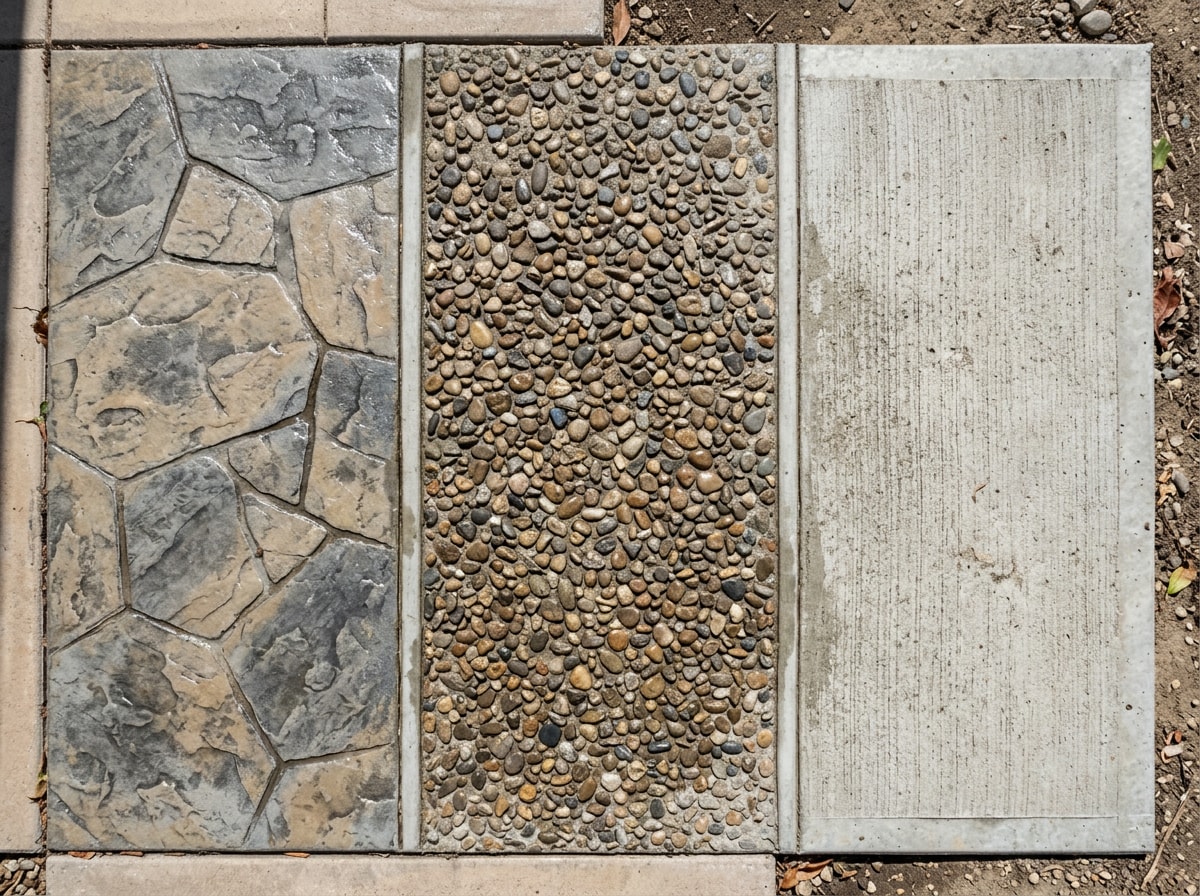
- Broom finish — the most budget-friendly option, with good slip resistance for a plain backyard slab.
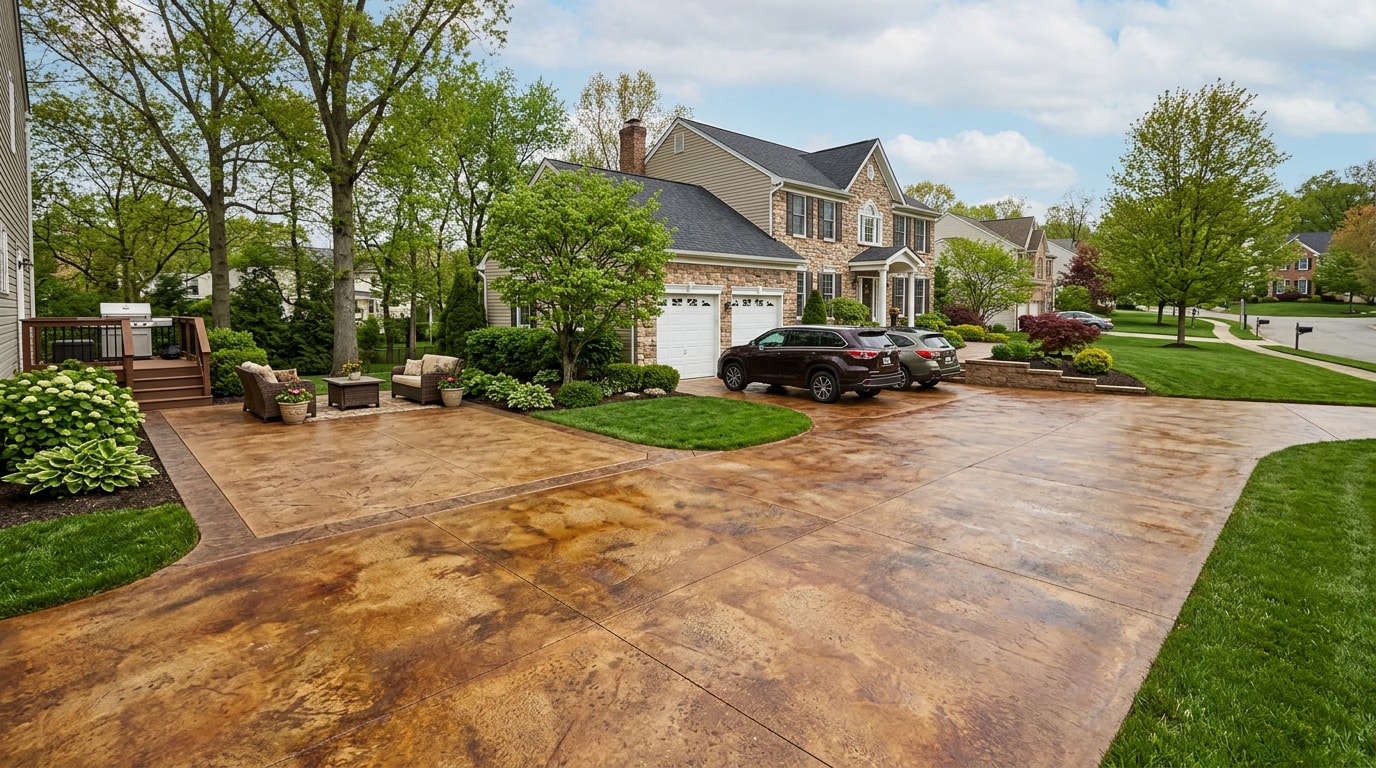
- Stamped concrete — mimics brick, slate, or stone at a lower cost than real masonry, good for homeowners who want a dressier look without the masonry price tag.
- Exposed aggregate — exposes the stone within the mix for a textured, natural surface that holds up well in high-traffic areas.
Beyond rectangles, concrete patio shapes can include curved or circular layouts and wrap-around designs that follow a home's footprint, which helps if your backyard isn't a perfect square. A concrete finishing crew that handles all three finish types in-house is usually a better bet than one that subcontracts stamping or aggregate work out.
Concrete Patio vs. Deck vs. Pavers
Choosing between a patio, a deck, and pavers isn't only about looks, it's structural and it's about what you want to deal with over the next twenty years.
A flat or gently sloping yard usually suits a concrete patio well, while a sloped yard or walkout basement is often better served by a raised deck. Compared with pavers, a poured slab also skips the seams and joint-sand gaps that pavers can develop as they settle.
| Factor | Concrete Patio | Wood Deck | Pavers |
|---|---|---|---|
| Upfront cost | Low–moderate | Moderate–high | Moderate–high |
| Annual maintenance | Minimal | Staining/sealing yearly | Joint sand, occasional releveling |
| Resealing interval | Every 2–3 years | Every 1–2 years | N/A (joint refill as needed) |
| Lifespan | 25–30+ years | 10–15 years (structure) | 20–25 years |
| Best for | Flat yards, long-term owners | Sloped lots, walkouts | Mixed textures, phased repairs |
That maintenance gap adds up fast. Concrete patio upkeep is mostly a periodic sealing schedule rather than the yearly staining and sealing a wood deck usually demands, which is why concrete tends to win out for owners planning to stay long-term.
What to Look for in a Concrete Patio Contractor
Not every "concrete guy" in the Cheswick area is set up to handle freeze-thaw-rated flatwork correctly. Before you sign, check for:
- A documented workmanship warranty in writing, not just a verbal promise.
- A turnkey process covering everything from site prep through final finishing, so you're not coordinating three separate subs.
- Current, verifiable contractor registration or licensing.
- Local project photos from Allegheny County, not just stock imagery.
Local experience with Allegheny County soil and climate conditions matters more here than a national franchise with no regional track record. You can see examples of completed concrete and paving work on our projects page, and we also cover drainage and soil-related patio problems in more detail in our guide to a cracked concrete patio in Hampton Township, which walks through what causes cracking after the fact and what repair actually costs.
If you're ready to get numbers for your own yard, request a free estimate and we'll walk the site with you before quoting anything.
FAQ
How much does a concrete patio cost in Cheswick, PA?
Most residential concrete patios run $8–$19 per square foot installed in 2026, depending on finish. A 200–300 sq ft broom-finish patio typically lands between $1,600 and $3,600, while stamped concrete of the same size runs $2,600–$5,700.
How long does a concrete patio take to install?
Most projects run one to two weeks from the initial site visit to the pour, with curing adding another 5–7 days before light use. Full structural strength is typically reached around 28 days, though the patio is usable well before that.
Is a concrete patio cheaper than a deck?
Generally, yes. A basic concrete patio often costs less upfront than a comparable wood deck, and ongoing maintenance costs stay lower over time. Stamped or decorative finishes can close that gap, but even then concrete usually matches or beats long-term deck ownership costs.
How thick should a concrete patio slab be?
Most residential patios are poured 4 inches thick. Areas that will support a hot tub, heavy planters, or vehicle traffic typically need 5–6 inches with reinforcement.
How long does a concrete patio last?
A properly built concrete patio typically lasts 25–30 years or more. Lifespan depends heavily on base quality, sealing schedule, and how much freeze-thaw exposure the slab sees each winter.
Do I need a permit for a concrete patio in Pennsylvania?
Ground-level, uncovered patios are often exempt from a building permit under Pennsylvania's Uniform Construction Code, but zoning and setback rules still apply. Allegheny County alone has 130 separate municipalities, and each one enforces its own local zoning and stormwater rules on top of the statewide code. Confirm details with your local municipality before starting, or reach out for a quote and we can flag likely permit questions for your address.
Looking for patio or paving work outside Cheswick? We also serve Hampton Township, Allison Park, and nearby communities throughout the North Hills, or start from our homepage to see the full range of services we offer.
For technical background on why air-entrained mixes matter in freeze-thaw climates, see the American Concrete Institute's guidance on freeze-thaw resistance. For the state code governing patio permit exemptions, see Pennsylvania's Uniform Construction Code, Chapter 403. Municipal counts for Allegheny County are confirmed on the county's own economic development page.