Concrete stain colors Franklin Park, PA homeowners request most often run from warm earth-tone browns to bold charcoal and blue-green accents, depending on whether the surface takes an acid stain or a water-based one. The right pick comes down to your slab's age, how much color range you want, and how well the finish needs to perform through a North Hills winter. This guide breaks down both stain types, the shades we install most, and what a realistic reseal schedule looks like once the color's down.
Most Popular Concrete Stain Colors in Franklin Park
Across the driveways, patios, and basement floors we've stained around Franklin Park and the surrounding North Hills, a handful of shades get requested over and over.
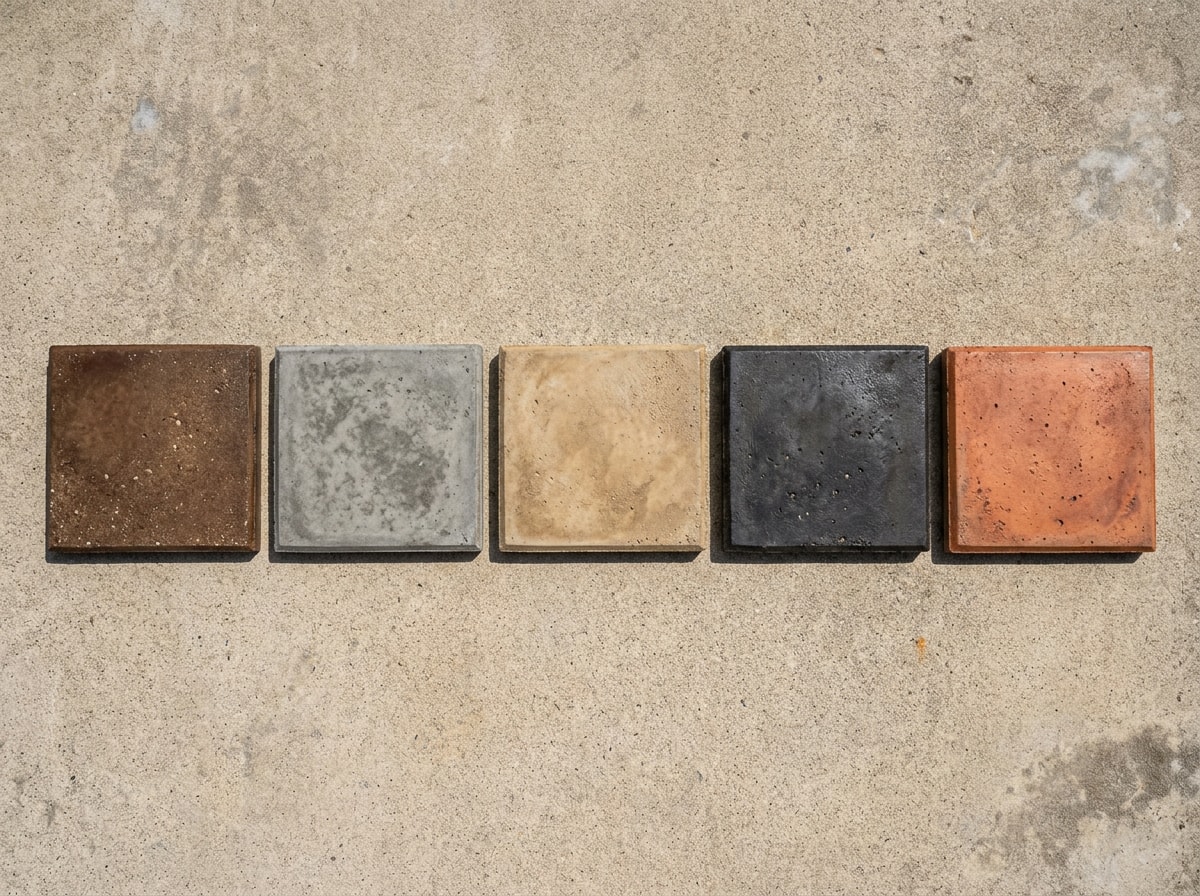
- Brown – the default pick for driveways and patios;
popular concrete stain colors include earth tones like brown, tan, and terra cotta, with gray, green or blue hues also possible .
- Gray – reads modern and clean, a favorite for contemporary exteriors and garage floors.
- Tan/Beige – a neutral, sun-friendly tone that shows up often around pool decks.
- Black – bold and dramatic, mostly requested for interior floors and accent borders.
- Terra Cotta – a warm, reddish clay tone that pairs well with brick or stone exteriors.
- Blue-Green – less common but striking as an accent;
azure blue acid stain is turquoise or aqua and stands out on indoor floors .
Acid Stain vs. Water-Based Stain Colors
Not every stain behaves the same way, and the two main product families produce very different palettes.
Acid Stain Colors: Earth-Tone Depth
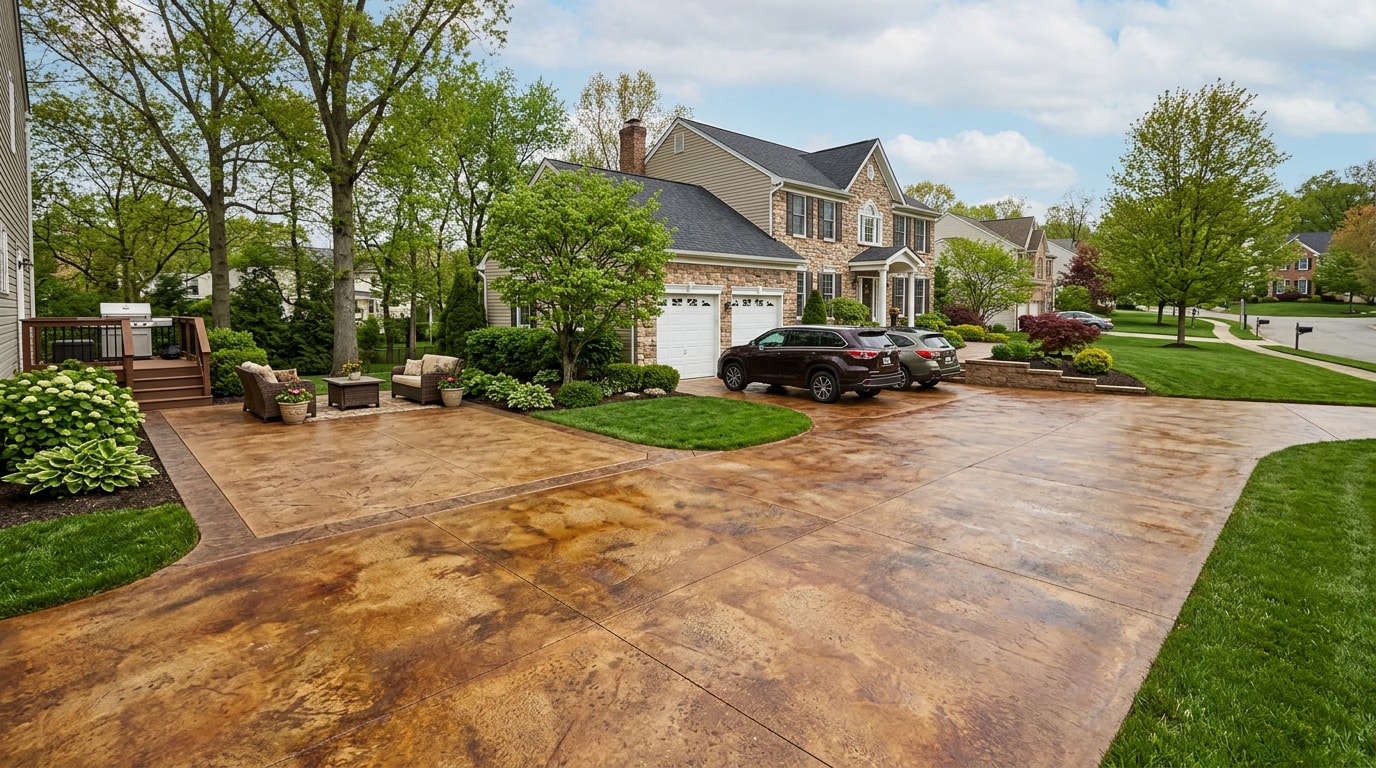
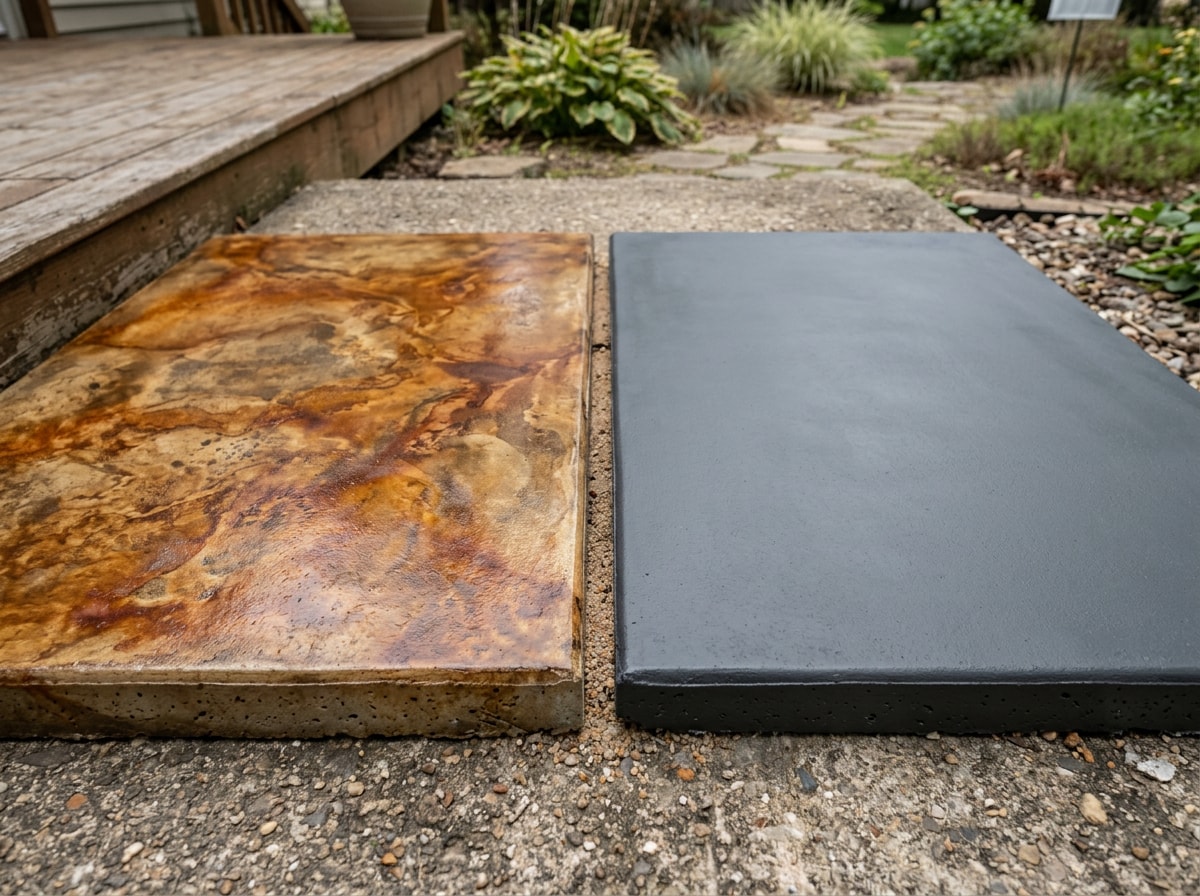
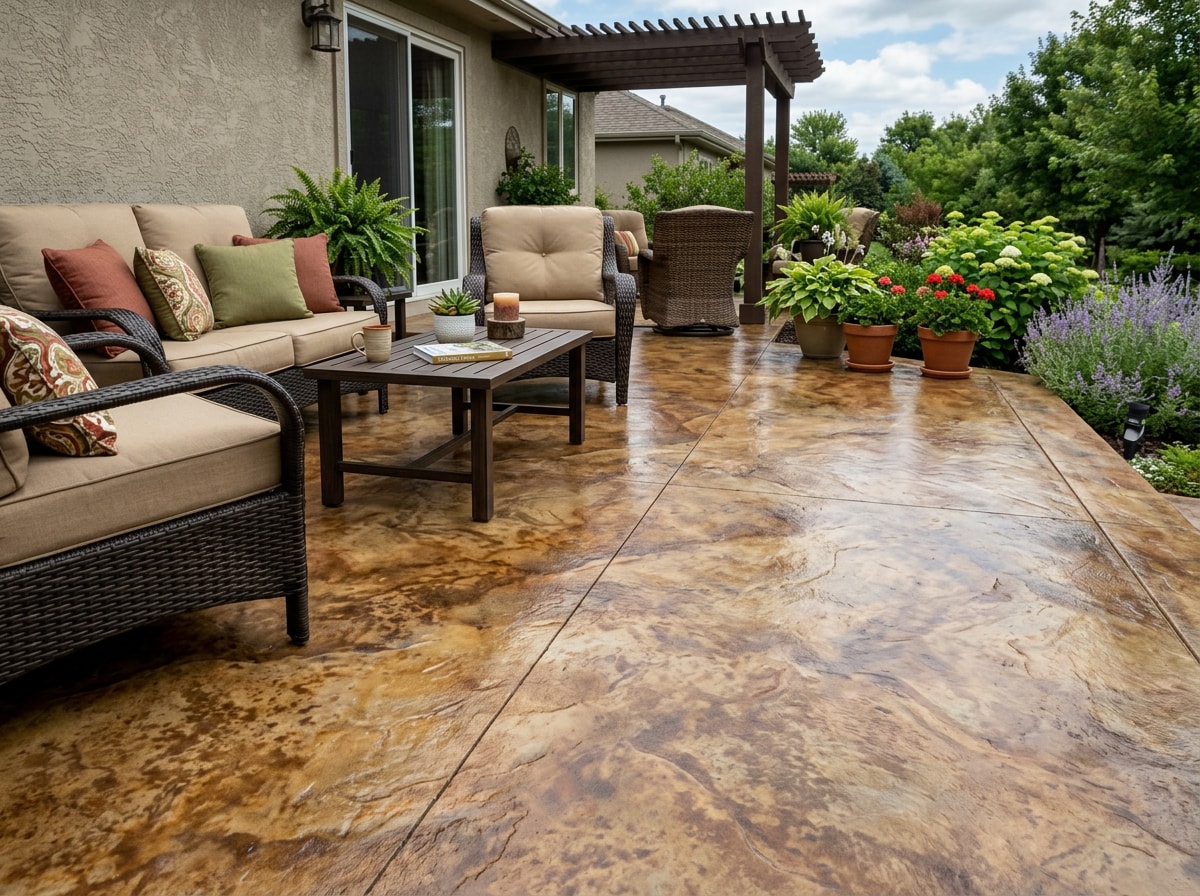
Acid-based stains result from a chemical reaction with the concrete, producing rich, translucent tones that often resemble natural stone or marble, though color options are typically limited to earthy tones like browns, tans, and terra cottas . Because the reaction depends on the slab's own mineral makeup, the final color varies from slab to slab, with the same product reading bold, subtle, marbled, earthy, or muted depending on the concrete's age, porosity, and prep .
Water-Based Stain Colors: Bold, Consistent Hues
Water-based stains deposit pigments into the concrete's pores for a more uniform appearance, offering subtle earth tones and vibrant blues and reds for more creative freedom . They also tend to be friendlier to work with: water-based stains are more eco-friendly than acid stains, don't produce harmful fumes, and are generally easier to apply .
| Factor | Acid Stain | Water-Based Stain |
|---|---|---|
| Color range | Earth tones only | Broad, including vivid hues |
| Finish | Translucent, variegated | More uniform, opaque to translucent |
| Fumes / prep | Needs neutralizing | Low-VOC, fewer fumes |
| Best surface | Older, porous concrete | New or smooth slabs |
| Coverage |
200–400 sq ft per gallon
|
250–450 sq ft per gallon
|
What Is Stained Concrete, and How Does It Hold Up?
Staining is a coloring method, not a coating. The color soaks into the slab rather than sitting on top, so it won't peel the way paint eventually does. That's part of why the American Concrete Institute treats staining as a recognized flatwork finish: the ACI's guide to decorative concrete covers best practices for common decorative finishes, including coloring, and makes recommendations for decorative stains alongside mixture design, placement, curing, and sealing . In practice, that means a properly stained slab shrugs off foot traffic and vehicle weight for years, provided the sealer on top is maintained.
Custom Colors & Design Options
Standard swatches aren't the ceiling. If none of the off-the-shelf stain colors match what you pictured, many contractors can layer stains or adjust concentration to land on a more exact shade. Custom blending adds time and cost, and because acid stain's final color depends on the concrete's own chemistry, it's worth testing any custom mix on a small, inconspicuous section first.
Choosing Stain Colors for Franklin Park's Winters
Picking a color is only half the decision. In the North Hills, the sealer protecting that color has to survive a real winter. NWS Pittsburgh climate records show the normal freeze season in this area runs from around early November through late April , which means a lot of freeze-thaw cycling on any exposed slab. A quality penetrating sealer matters more here than the stain color itself: concrete sealers provide increased protection for exterior concrete, and silane or siloxane-based penetrating sealers offer the highest level of resistance to deicers and to freezing and thawing .
If you're staining an interior floor instead, ventilation is the bigger concern with acid products. Household coating products can release organic compounds while you're using them, and to some degree while stored , per the EPA, which is one reason water-based stains are often the better call for finished basements. For most exterior jobs around Franklin Park, we recommend resealing every two to three years rather than treating it as a one-time step.
What Concrete Staining Costs in the Pittsburgh Area (2026)
National cost data gives a useful starting range, though your final number depends on slab condition, color complexity, and access.
| Stain Type | Basic (1 color) | Complex / Multi-Color |
|---|---|---|
| Acid stain |
$2–$6 per sq ft
|
$12–$25 per sq ft
| Water-based stain |
About $2 per sq ft
material cost | Varies with number of colors |
Surface prep, crack repair, and sealer application are usually priced separately from the stain itself. The fastest way to get a number that actually fits your driveway or patio is a free estimate rather than a generic online calculator.
Nearby Service Areas
We stain and finish concrete throughout the North Hills, not just in Franklin Park. If you're comparing notes with neighbors, you can see examples from similar jobs on our projects page or check our Franklin Park, PA area page for local project photos. We also regularly work in Wexford, Allison Park, and Cranberry Township. If staining is part of a larger concrete finishing project, our concrete finishing service page covers prep, pours, and sealing in more detail. Homeowners weighing stain against a different decorative option sometimes also read our guide to concrete countertops in Wexford, PA for cost and color comparisons.
FAQ
What are the most popular concrete stain colors?
Brown, gray, and tan lead the list for driveways and patios, with black and terra cotta common on interior floors. Blue-green shades show up less often but work well as accents.
What's the difference between acid stain and water-based stain colors?
Acid stain reacts chemically with the concrete and is limited to earth tones with a marbled, variegated look. Water-based stain deposits pigment into the surface and opens up a much wider color range, including bold blues, reds, and black, with a more uniform finish.
How much does concrete staining cost in Franklin Park, PA?
Basic single-color jobs typically run $2–$6 per square foot for acid stain and around $2 per square foot in material cost for water-based stain, before labor, prep, and sealer. Multi-color or decorative patterns cost more. Request a free estimate for an exact number on your slab.
Does staining affect concrete texture?
No. Staining changes color, not texture, since it soaks into the existing surface instead of building up a layer on top. Pair it with polishing for a smoother feel or a non-slip additive for outdoor grip.
How long does concrete stain last?
The stain itself won't fade, chip, or peel under normal use. The sealer protecting it wears out faster, so most contractors recommend resealing every two to three years, especially on exterior surfaces exposed to winter weather.
Can all concrete be stained?
Most concrete can be stained, new or decades old, plain gray or already colored. Badly cracked, heavily sealed, or spalling slabs usually need repair first so the stain absorbs evenly instead of blotching.
About the Author
This guide was written by the team at Johnny's Asphalt, a Pittsburgh-area paving and concrete contractor serving Franklin Park and the North Hills. Our crews handle concrete finishing, sealing, and resurfacing projects across Allegheny County and have firsthand experience prepping and sealing stained slabs through multiple Western Pennsylvania winters. Questions about a specific project? Contact us for a free estimate.