Concrete countertops in Wexford, PA cost more and demand more upkeep than most homeowners expect, but they also outlast almost every material on the market when they're installed right. This guide breaks down real 2026 pricing, the honest pros and cons, and whether a DIY pour is worth the mess and the silica dust. By the end, you'll know whether concrete belongs in your kitchen, or on your patio instead.
What Are Concrete Countertops?
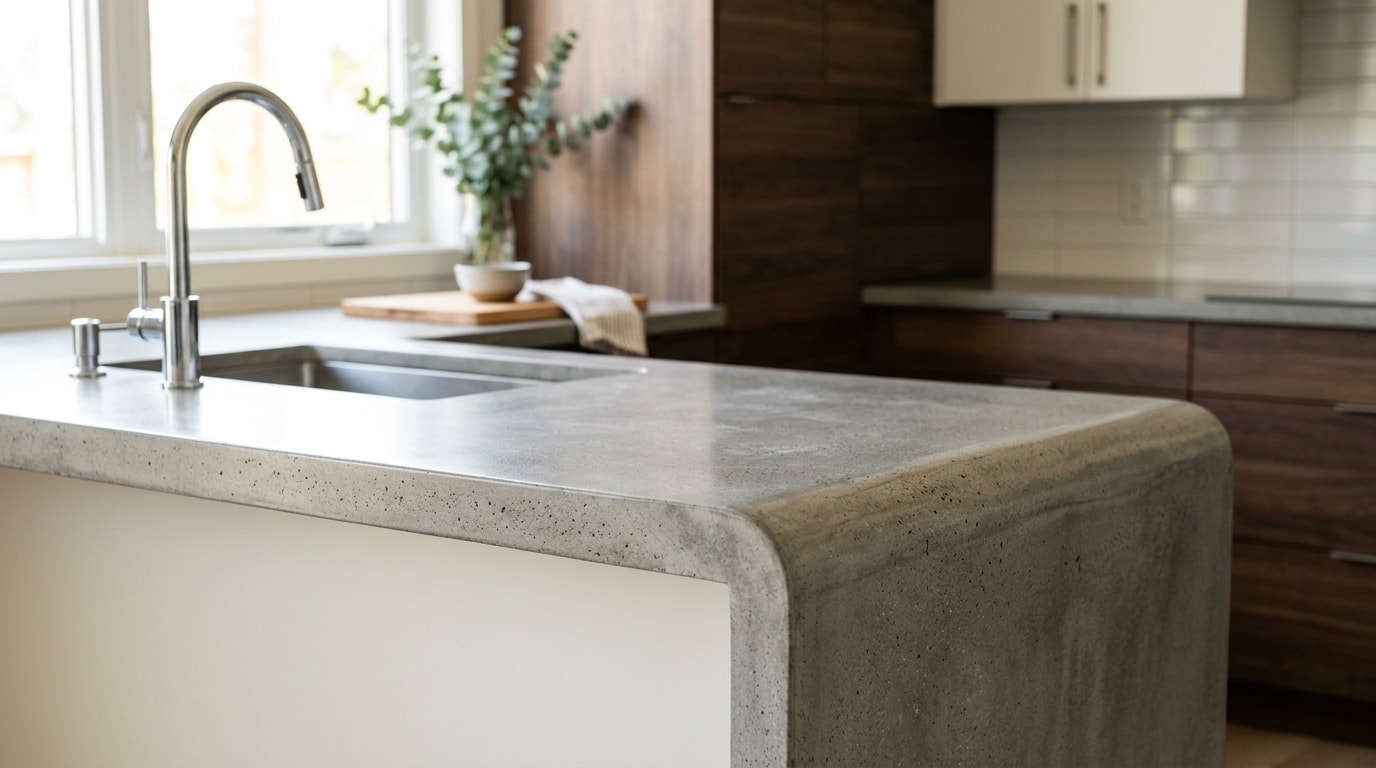
Concrete countertops are custom-poured or precast slabs that get ground, polished, and sealed until they look closer to quarried stone than a sidewalk. They give a kitchen a handmade, industrial look that a factory-made slab can't copy, but they take more skill to build and more care to keep looking good than quartz or laminate.
Contractors build them two ways, and the method you pick changes your timeline, your budget, and how the finished slab performs for years afterward.
Cast-in-Place Concrete Countertops
Cast-in-place slabs are poured right on top of your cabinets using forms built inside your kitchen. The concrete cures where it will live, so there's no truck ride to crack it before installation.
The trade-off is mess. Expect dust, wet forms, and noise for several days while the pour cures and gets ground smooth. Concrete takes about 28 days to fully cure , even though it's walkable and usable well before that. Curing is the process of maintaining satisfactory temperature and moisture conditions in concrete long enough for hydration to develop the desired concrete properties, and the potential strength and durability of concrete will be fully developed only if it's properly cured . A fabricator who rushes that schedule to hit your remodel deadline is cutting a corner that shows up later.
Precast Concrete Countertops
Precast slabs are built in a shop on precision forms, cured under controlled conditions, then delivered and set in place as finished pieces. You get tighter quality control and a smoother finish, with far less mess in your kitchen during installation.
The downside is seams where pieces meet, plus a small risk of cracking in transit. For most straightforward Wexford kitchen layouts, precast is the cleaner option, but it leaves little room for last-minute changes once the template is cut.
Pros of Concrete Countertops
- Nearly unlimited color, shape, and texture options
- Extremely hard, long-wearing surface
- Handles hot pans without scorching
- Chips and scratches are usually repairable, not fatal
Built to Last
Concrete is hard enough to shrug off the daily abuse a kitchen counter takes. With proper sealing and reasonable care, it can last for decades, unlike laminate, which usually needs full replacement once it's visibly damaged.
Minor chips and scratches are typically a repair job, not a replacement job. A fabricator can patch, re-grind, and reseal a damaged section without tearing out the whole slab, which keeps long-term repair costs lower than materials that require a full swap.
Heat Resistant Enough for Hot Pans
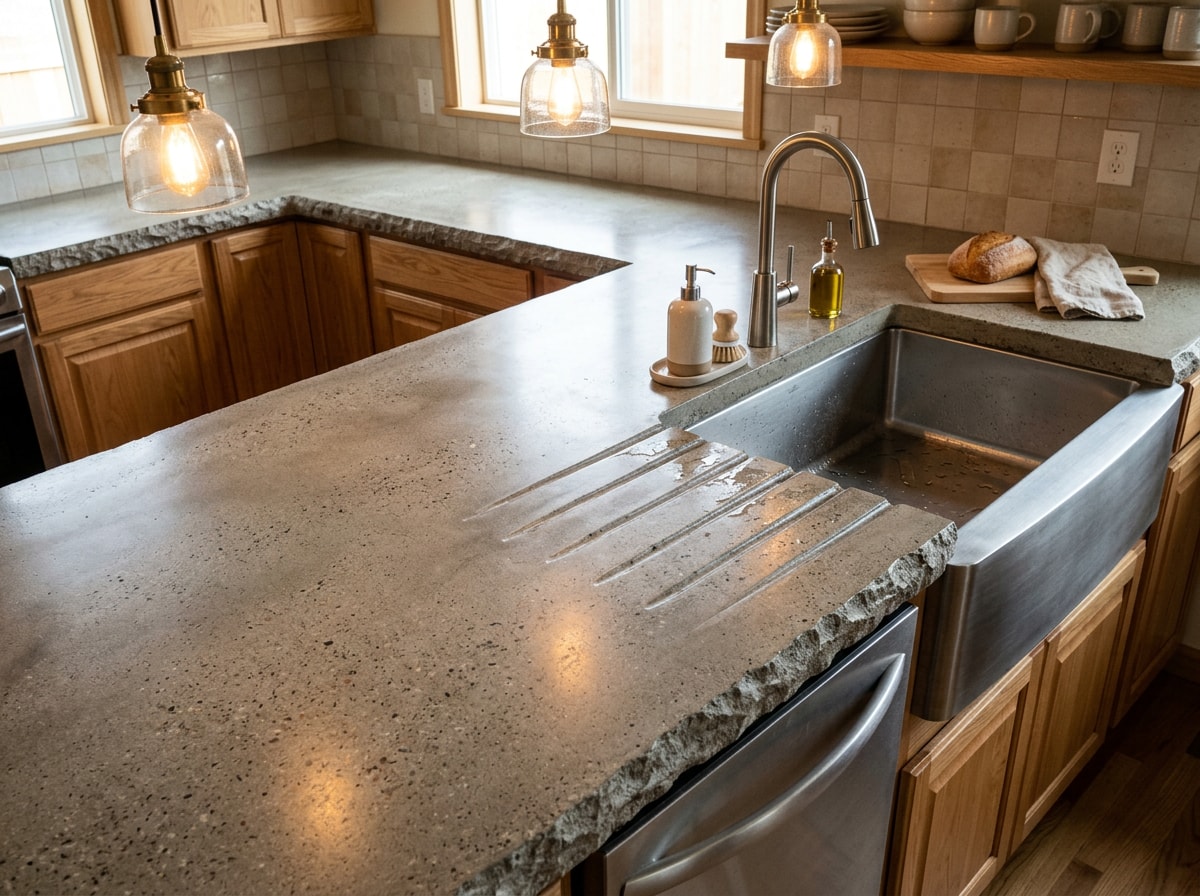
You can set a pan straight from the stove onto concrete without scorching it, something laminate and butcher block can't handle. It's the sealer, not the concrete itself, that takes the heat damage, so using a trivet for anything sitting out more than a minute or two protects your seal coat and stretches the time between resealing jobs.
Cons of Concrete Countertops
- Costs more than laminate; similar territory to marble and quartzite
- Needs resealing at least once a year
- Can develop hairline cracks as it cures and settles
- Heavy enough that cabinets sometimes need reinforcement
Pretty Pricey
Concrete countertops sound like they'd be cheap, but they're not. Concrete can cost between $65 and $135 per square foot on average, plus labor that runs $40 to $50 an hour per person . That lands it in the same range as marble and quartzite, not laminate or acrylic.
Pricing swings hard on customization. A plain gray slab costs far less than one with an integrated sink, embedded objects, or an elaborate edge profile. Get a quote based on your actual kitchen layout, not a generic per-square-foot number.
Higher Maintenance Than Most Materials
Concrete is porous, so it needs resealing at least once a year with a water-based wax sealant to keep its protective layer intact , more often in a heavy-use kitchen.
Skipping that step isn't a small thing. Wine, citrus, and oil can etch or stain unsealed concrete within hours, and once a stain sets into the pores, it's difficult to pull back out.
Hairline Cracks Can Happen
Hairline cracks are a normal part of how concrete cures and shrinks, not automatically a sign of bad workmanship. Concrete can also chip or scratch if it isn't cared for, and because it's porous it can absorb spills and even support bacteria growth if it isn't sealed properly .
Most fabricators add fiber, rebar, or wire mesh to cut crack risk. Ask exactly how your installer reinforces their mix before you sign anything, since reinforcement quality varies a lot between shops.
How Much Do Concrete Countertops Cost in Wexford, PA in 2026?
Pricing depends on whether you DIY it, hire a pro for a cast-in-place pour, or buy a precast slab. Pittsburgh-area labor and delivery costs tend to push totals toward the higher end of the national range. Professional concrete countertops run $65 to $135 per square foot installed, or $10 to $30 per square foot in materials for a DIY project, which works out to roughly $2,600 to $5,400 professionally installed or $400 to $1,200 for a DIY pour on a 40 square foot kitchen .
| Approach | Cost per sq ft | 40 sq ft kitchen total |
|---|---|---|
| DIY (materials only) | $10-$30 | $400-$1,200 |
| Professional cast-in-place | $65-$110 | $2,600-$4,400 |
| Professional precast | $75-$135 | $3,000-$5,400 |
Cost Breakdown: Professional Installation
Professionally installed concrete typically runs $65 to $135 per square foot, including materials and professional installation , which lands most 40 square foot kitchens between $2,600 and $5,400. Cast-in-place jobs usually sit at the lower end of that range since there's no slab delivery or shop overhead built in.
Precast runs higher because of shop time and delivery logistics, but you're paying for tighter quality control and a smoother finish. Get my free estimate with your layout and finish preferences for a number that isn't just a generic range.
Cost Breakdown: DIY
Many homeowners turn to DIY concrete as a budget-friendly countertop idea, since the material itself is affordable. It's the labor that drives up the cost difference, and that labor is expensive for a reason .
A DIY pour runs roughly $10 to $30 per square foot in materials, or $400 to $1,200 for a 40 square foot kitchen. That's a real discount, but it assumes your mix, forms, cure schedule, and grinding all go right the first time, and mistakes on a load-bearing countertop aren't cheap to redo.
Should You DIY or Call a Pro?
If you're patient, detail-oriented, and willing to research mix ratios and cure schedules, a DIY pour can save real money. Curing takes days, forms have to be dead level, and shortcuts tend to show up later as uneven color, trapped air bubbles, or cracks that appear months after you thought the job was finished.
There's a safety angle most buying guides skip. Cutting, grinding, and polishing cured concrete throws off crystalline silica dust, a serious lung hazard if you breathe enough of it over time. OSHA's construction standard for respirable crystalline silica, 29 CFR 1926.1153, became enforceable in 2017 and establishes an 8-hour time-weighted exposure limit of 50 micrograms per cubic meter along with a host of ancillary requirements . Wet-cutting and a properly rated respirator aren't optional extras. They're the difference between a weekend project and a long-term health problem.
If that list feels like more than you want to manage alone, our concrete finishing crew at Johnny's Asphalt handles forming, pouring, and finishing for driveways, patios, and walkways across the North Hills, and we can walk you through what a safe, code-compliant pour looks like before you decide to DIY. For an indoor kitchen slab specifically, we'll point you toward a fabricator who specializes in that trade. For the flatwork and outdoor finishing side of a project, get my free estimate.
Outdoor Concrete Countertops: A Local Angle for Wexford Patios
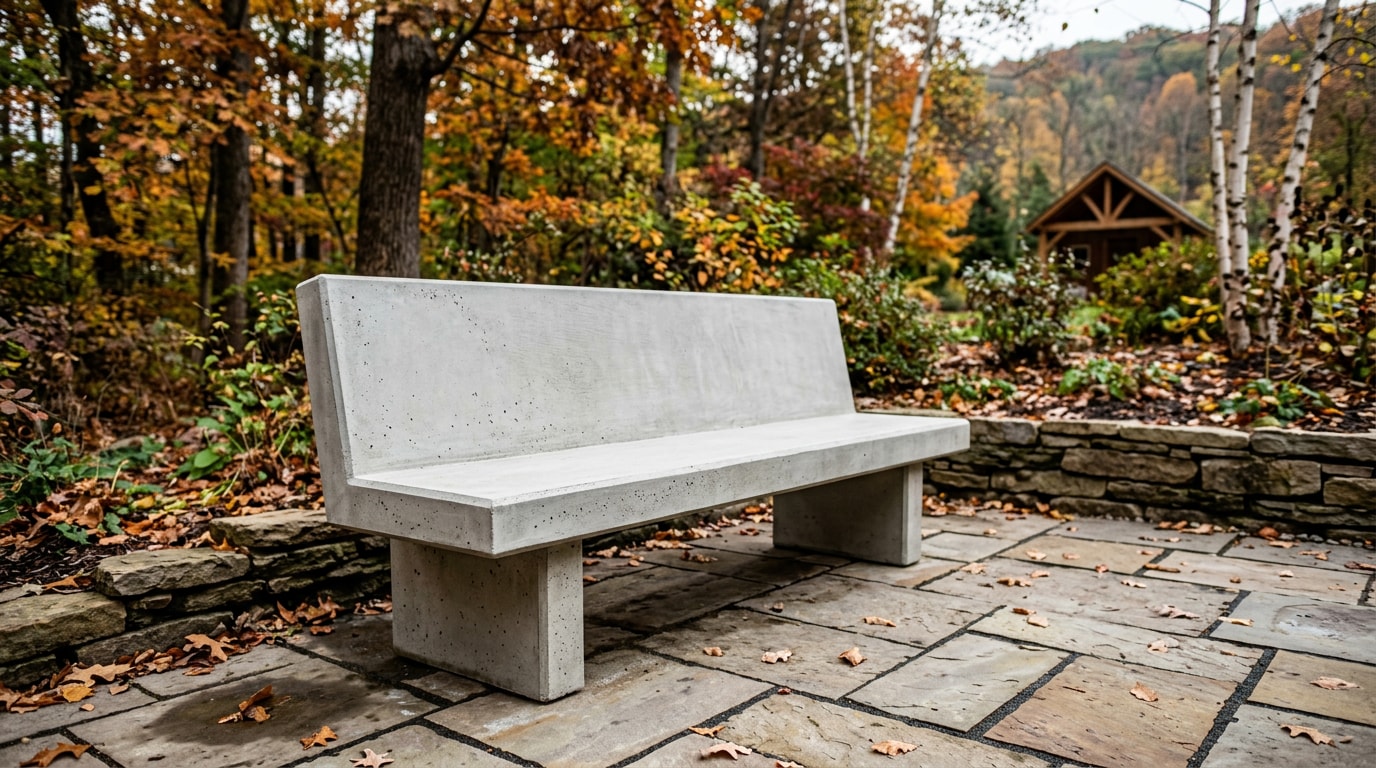
Most concrete countertop guides only talk about kitchens. In the North Hills, we see just as much demand for outdoor concrete countertops, a bar top for a patio kitchen, a grill surround, or a poured bench like the ones covered in our concrete bench guide for Cranberry Township.
Outdoor concrete has to deal with something an indoor kitchen slab never faces: Western Pennsylvania's freeze-thaw cycle. Water that gets into a hairline crack or an under-sealed surface expands when it freezes, and that's how small cracks turn into big ones over a single winter. A mix with proper air entrainment and a sealer rated for exterior exposure matters more outdoors than it ever does on a kitchen island.
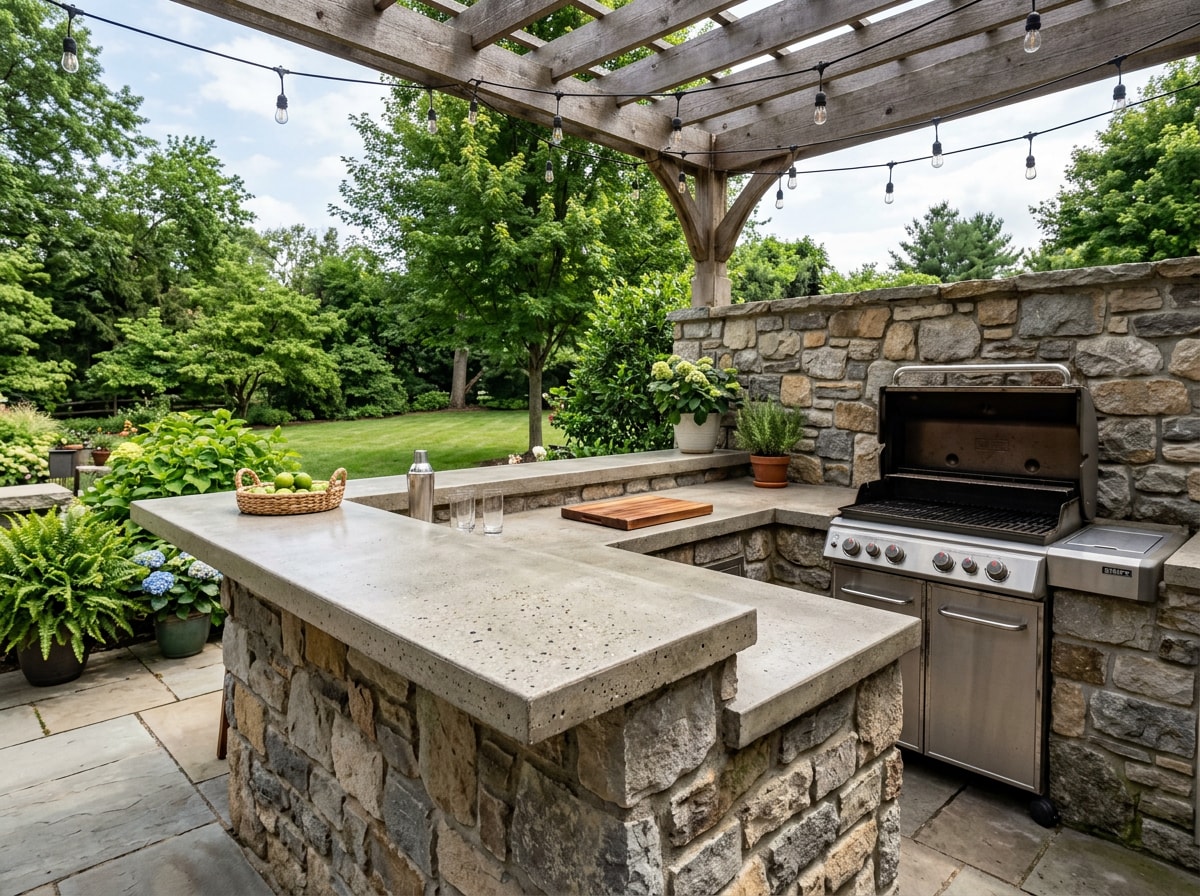
This is the kind of concrete work that overlaps directly with what our crew handles in concrete finishing for patios, walkways, and parking areas throughout Wexford, PA and the surrounding panhandle. You can browse finished patio and driveway work in our project gallery. If you're weighing an outdoor concrete countertop or bar top alongside a patio or driveway project, price them together. Get my free estimate and we'll look at the whole job, not just one piece of it.
A note from our crew: I'm John Boswell, owner of Johnny's Asphalt. My family has placed and finished concrete across Wexford and the North Hills for more than 40 years, from driveways to patios to the occasional outdoor kitchen slab poured as a side project. Concrete rewards good prep and punishes shortcuts, whether it's a driveway or a countertop. If you want a second opinion on a concrete project before you sign a contract, call us at (888) 233-1646.
FAQ
How Long Do Concrete Countertops Last?
With proper sealing and reasonable care, a concrete countertop can last for decades. Actual lifespan comes down to mix quality, reinforcement, sealer type, and how consistently someone keeps up with resealing, not the material alone.
Are Concrete Countertops Durable?
Yes, when they're fabricated, sealed, supported, and maintained correctly. They can still chip, scratch, crack, or stain if the sealer fails or the surface takes heavy abuse , so durability depends as much on upkeep as on the concrete itself.
How Often Do You Need to Reseal a Concrete Countertop?
Plan on resealing at least once a year with a water-based wax sealant , and more often, closer to monthly, in a kitchen that sees heavy daily cooking. Skipping a cycle is how wine and oil stains become permanent.
Do Concrete Countertops Increase Home Value?
They can, but probably not as much as quartz or granite in a resale-focused kitchen. Industry Cost vs. Value data shows a minor kitchen remodel nationally recoups around 113% of its cost at resale, while a major remodel recoups closer to 51% , and that data covers typical countertop upgrades generally, not concrete specifically. Concrete's custom look appeals to a specific buyer, which can help or hurt resale more than a neutral material like quartz would.
Is a Concrete Countertop Cheaper Than Granite?
Not reliably. Concrete and granite both run roughly $50 to $150 per square foot installed , so the bigger swing factor is finish complexity and local labor, not the base material. Compare quotes for your specific Wexford kitchen before assuming either one is the budget pick.
What Is the Biggest Downside of Concrete Countertops?
Cost is the first one. Labor to install concrete runs $40 to $50 an hour per person, and the material is heavy enough that cabinets sometimes need extra support before installation . Add in annual resealing and the occasional hairline crack, and it's a material that rewards homeowners who go in with realistic expectations.
Concrete or Quartz: Which Should You Choose?
Quartz wins if you want a low-maintenance, stain-resistant surface with no sealing required. Kitchen designers keep tracking strong, steady demand for engineered surfaces each year, so quartz is the easier sell if you're remodeling to sell soon. Concrete wins if you want a one-of-a-kind look, an integrated sink or drainboard, and don't mind the yearly sealing routine.