How many yards of concrete in a truck McCandless Township, PA suppliers send out usually comes down to one number: 8 to 10 cubic yards. That range holds for most residential driveways, patios, and footers, but the exact figure depends on the truck, the road, and how your supplier fills the drum. Get the math wrong and you're either paying short-load fees or waiting on a second delivery mid-pour.
How Many Yards of Concrete Fit in a Standard Truck?
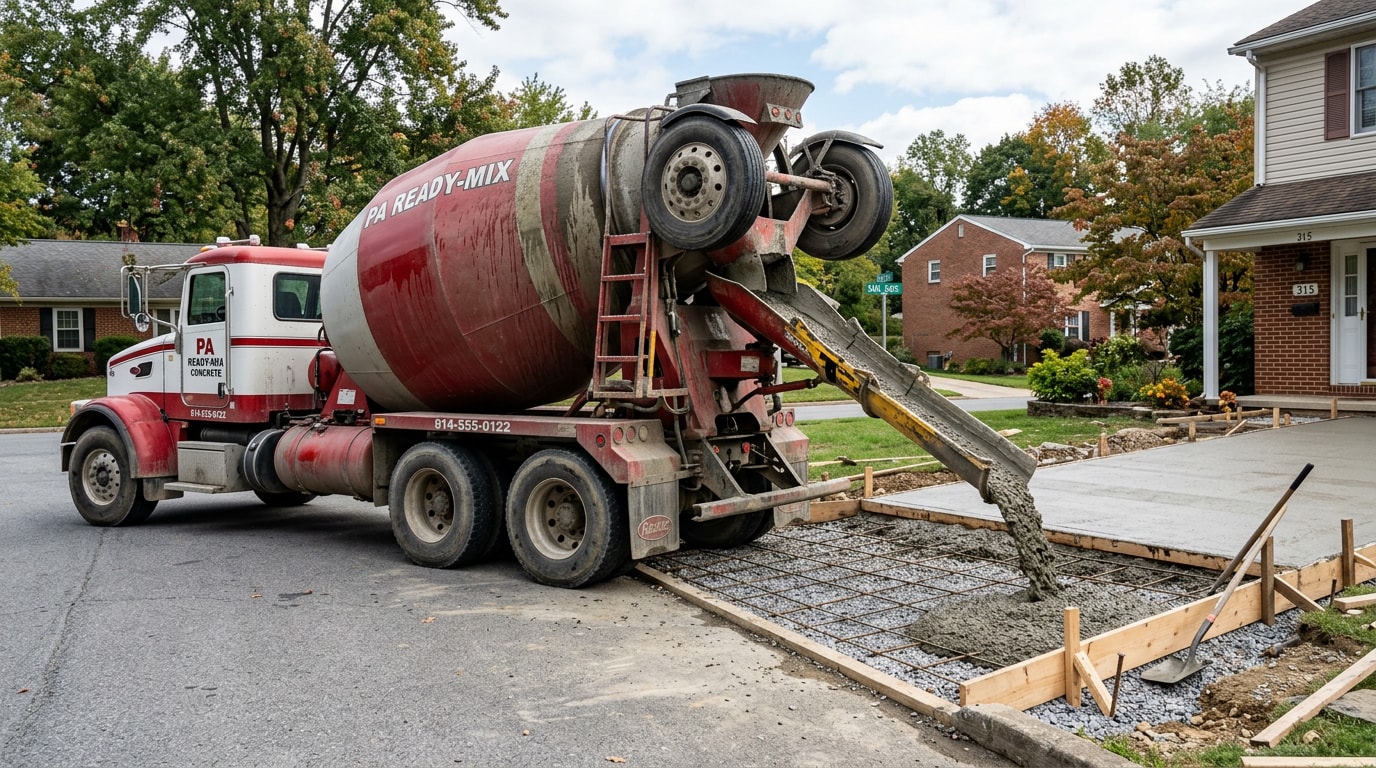
A standard concrete mixer truck carries 8 to 10 cubic yards of ready-mix concrete per load. The capacity of truck mixers varies between 8 to 12 cubic yards (5 to 9 m³) , according to the National Ready Mixed Concrete Association's guidance for buyers.
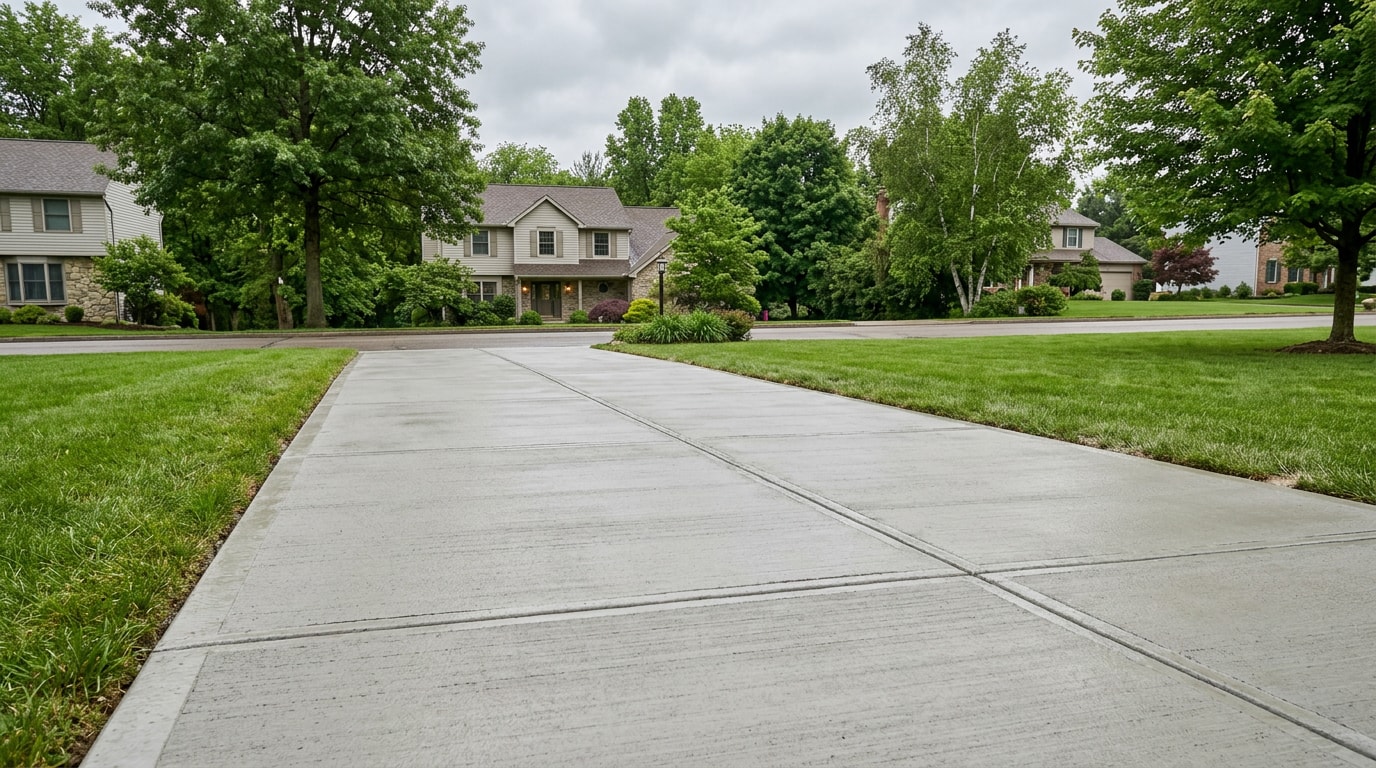
For McCandless Township homeowners, that 8-to-10-yard range is the practical number to plan a driveway, patio, or foundation pour around. A standard residential driveway slab, for example, often falls well under a full load.
Not every supplier fills a truck to its limit, either. A smaller job might only need a partial load, while a larger pour could require more than one trip. Checking service options for the McCandless Township area before you call a supplier helps you compare what local crews actually offer.
Types of Concrete Trucks and Their Capacities
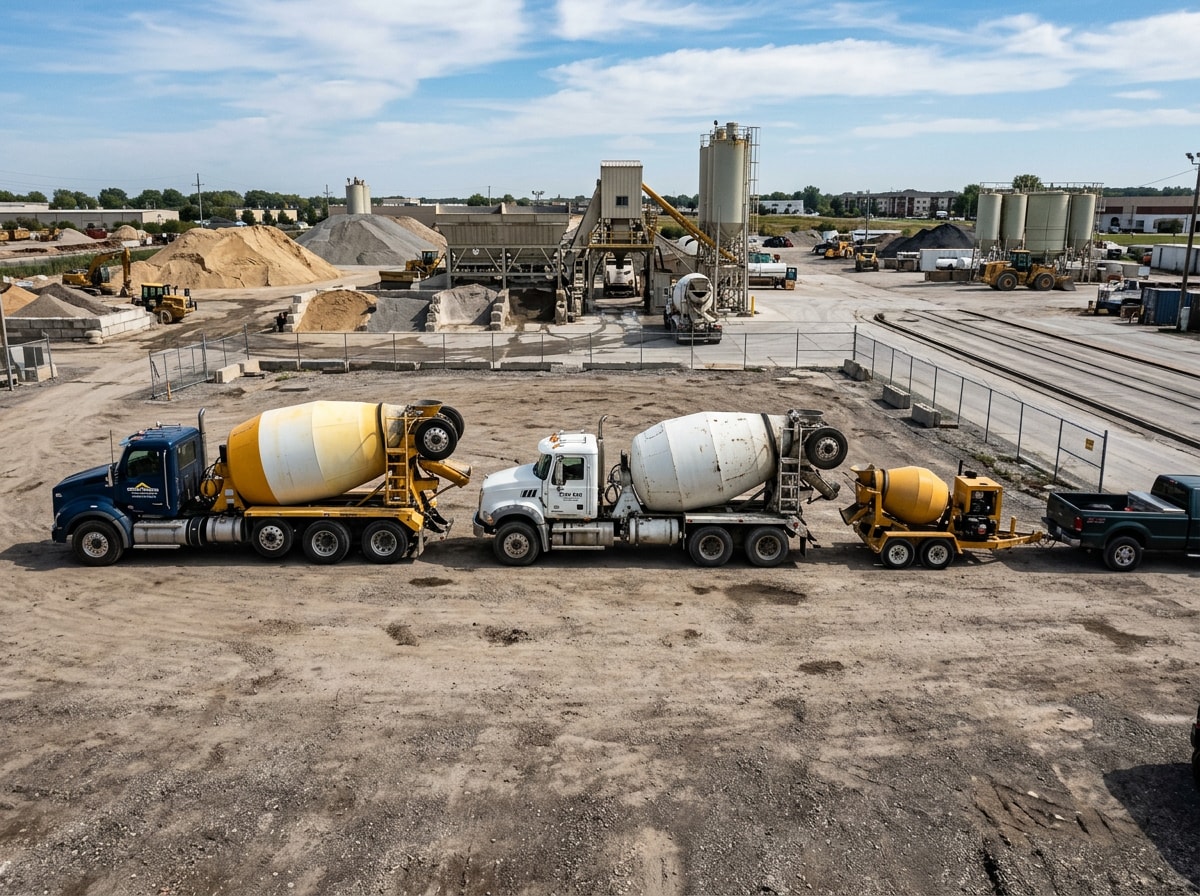
Not every concrete truck on the road is built the same size. Standard, mini, and large-capacity trucks all use a rotating drum mixer, but they're suited to very different jobs.
| Truck Type | Typical Capacity | Best For |
|---|---|---|
| Standard mixer truck | 8–10 cubic yards | Driveways, patios, foundations |
| Mini-mix / portable truck | Up to 2 cubic yards | Fence posts, small repairs |
| Large-capacity truck | Up to 12 cubic yards | Commercial slabs, large foundations |
Standard Concrete Trucks
Standard concrete trucks are the ones you'll see most often on McCandless Township job sites. They're the workhorse of the industry, and they're sized to match typical residential and commercial pours.
Small Concrete Trucks
Smaller projects don't need a full-size load. For smaller projects, like pouring a few fence posts or fixing a small concrete pad, you might use a portable concrete mixer or a mini-mix truck. These mixers hold up to 2 cubic yards and are easy to transport to tight spaces. Ordering this way avoids paying for concrete you won't use.
Large Concrete Trucks
For large projects, like massive foundations or industrial concrete pours, some trucks can carry up to 12 cubic yards. However, these large trucks are less common due to road weight restrictions. Projects requiring more than 10 cubic yards typically involve multiple deliveries or the use of a concrete pump truck to spread the material efficiently.
Most sizable McCandless Township projects end up needing multiple truckloads instead of relying on one oversized delivery.
What Affects How Much a Concrete Truck Can Legally Carry
The 8-to-10-yard rule isn't fixed. Weight law and ordering policy can shift the real number you'll be quoted.
Weight Limits and Road Restrictions
A single cubic yard of concrete weighs about 4,056 pounds, so you can imagine the strain this places on a mixer truck. That weight is why trucks have to stay within commercial vehicle regulations, not just mechanical drum capacity.
At the federal level, single axles are limited to 20,000 pounds, and axles spaced more than 40 inches and not more than 96 inches apart (tandem axles) are limited to 34,000 pounds, while gross vehicle weight is limited to 80,000 pounds under 23 U.S.C. 127 . A fully loaded standard mixer truck sits close to that gross limit before it even leaves the plant.
Pennsylvania adds its own layer on top of the federal baseline. A permit is required for movement on a Commonwealth highway of a mobile home, oversize or overweight vehicle, or combination of vehicles, including the load or loads carried thereon , per state code. That's part of why a "full load" from a McCandless Township supplier can look different from a national average figure.
Over-Ordering and Short-Load Costs
When you place an order, the truck's legal load capacity is the only number that matters. A supplier can't deliver 14 cubic yards just because a drum's rated capacity suggests it's possible.
Most suppliers also set a minimum order size tied to that legal capacity. If your project needs less than the minimum, expect a short-load fee added to the price. Partially filled trucks or "short loads" cost $53 per cubic yard more, or about $172 per yard , on top of standard per-yard pricing, because the truck still has to run a full trip for a partial load.
How to Calculate How Much Concrete You Need
Once you know what a truck can carry, the next step is figuring out how much your own project needs, and how many truckloads that translates to.
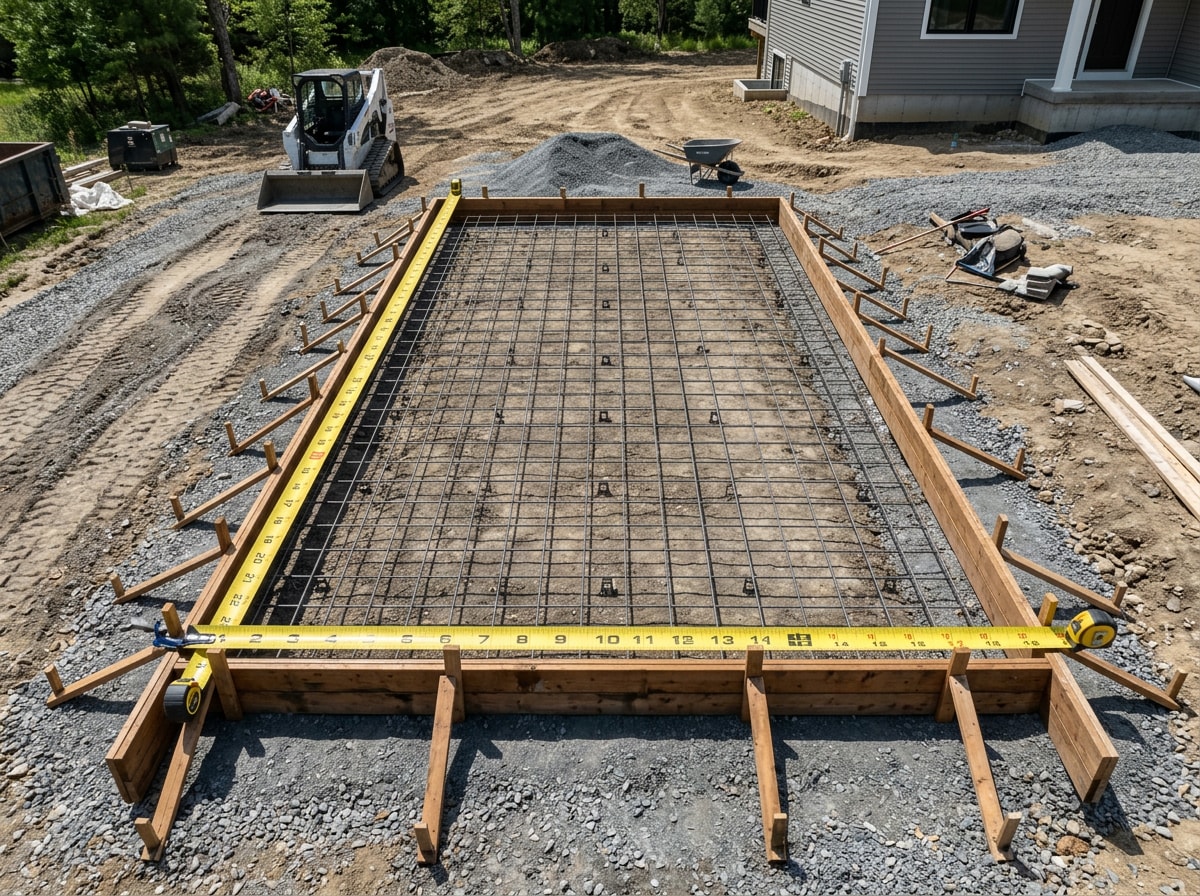
Measure the length, width, and depth of your project area in feet. Multiply those three numbers together, then divide the total by 27 to convert cubic feet into cubic yards.
| Common Project | Typical Size | Approx. Cubic Yards |
|---|---|---|
| Single-car driveway slab | 10' x 20' x 4" | ~2.5 yards |
| Double-wide driveway | 20' x 24' x 4" | 8.88 yards |
| Patio slab | 12' x 16' x 4" | ~2.4 yards |
| Small footer | 1' x 1' x 50' | ~1.9 yards |
A full truckload of around 10 cubic yards is enough to pour a 20' x 24' concrete driveway that is 8.88 cubic yards and not have to pay for two deliveries. That's a useful benchmark for most McCandless Township driveway pours.
What the Ready-Mix Industry Actually Delivers
Most online guides quote the same truck-capacity range without showing why it matters at scale. Here's the bigger picture.
The ready-mix industry is a $64 billion business across the U.S., delivering about 400 million cubic yards in 2023 at an average selling price of $160 per cubic yard, through roughly 7,500 plants and 70,000 mixer trucks.
That volume is why suppliers are strict about minimum orders and short-load fees. A fleet running 70,000 trucks can't profitably send a full rig out for a 2-yard patch job without charging extra for it.
Ordering Concrete for Your McCandless Township Project
After years of scheduling pours across McCandless Township, Wexford, and the surrounding North Hills, our crews at Johnny's Asphalt order in half-yard increments specifically to avoid short-load fees on smaller jobs. That habit alone has saved clients real money on patios and walkway projects that didn't need a full truck.
If your project touches subgrade work before the pour, our site preparation crews handle compaction and grading first. Once concrete is placed, our concrete finishing team handles the float, edge, and cure work that determines how the slab holds up through Pennsylvania winters.
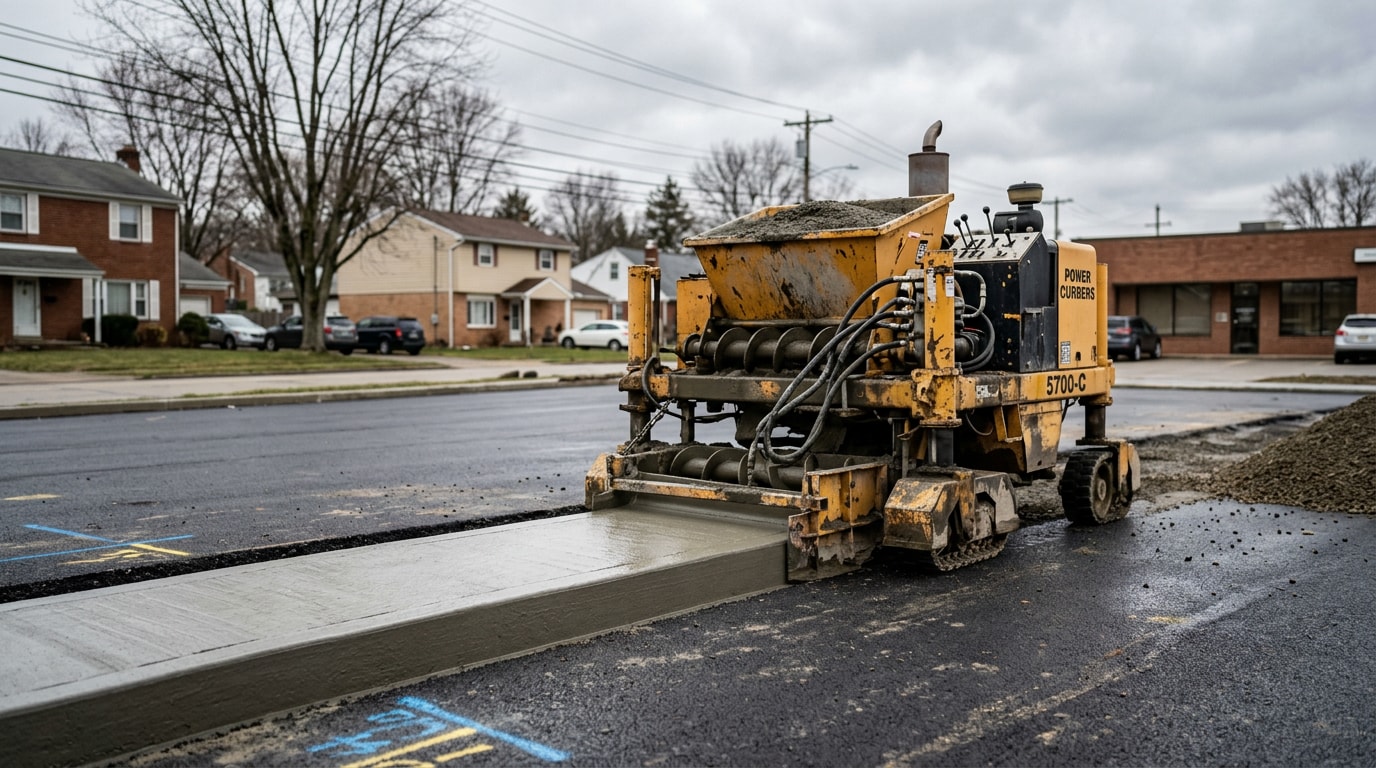
If you're also comparing screed methods for your pour, our concrete screed guide for McCandless Township covers types, costs, and local code requirements in more depth.
Not sure how many yards your project actually needs? Get your free estimate from Johnny's Asphalt and we'll calculate the exact yardage, truck count, and timeline before you order anything.
FAQ
How many yards of concrete are in a standard truck?
A standard truck holds 8 to 10 cubic yards. Some suppliers run trucks rated up to 12 cubic yards, but road weight limits keep most legal loads in the 8-to-10 range.
How many cubic meters is a concrete truck?
A standard truck holds roughly 9 cubic meters, which lines up with the 8-to-10 cubic yard range used in the U.S.
What is a short-load fee and when do I pay one?
A short-load fee applies when your order falls below the supplier's minimum, usually a full or near-full truck. Short loads typically cost about $53 more per cubic yard because the truck still runs a full trip for a partial delivery.
How much does a full truckload of concrete cost?
Concrete generally costs $119 to $147 per cubic yard delivered , though the national average has climbed toward $160 per yard in recent industry data. Local pricing in McCandless Township will vary by mix design and distance from the plant.
How many yards does a mini-mix truck hold?
Mini-mix trucks hold up to 2 cubic yards and work well for fence posts, small pads, and patch repairs where a full truck isn't practical.
What types of concrete trucks are there?
Standard mixer trucks (8–10 cubic yards), mini-mix or portable trucks (up to 2 cubic yards), and large-capacity trucks (up to 12 cubic yards) cover most residential and commercial jobs. Large trucks are less common because of road weight restrictions.
How do I calculate the cubic yards I need for my project?
Measure length, width, and depth in feet, multiply them together to get cubic feet, then divide by 27. Round up slightly to cover spillage and uneven subgrade before you place your order.
Ready to move forward? Visit Johnny's Asphalt to see our full range of paving and concrete services, or browse recent projects completed across the North Hills.