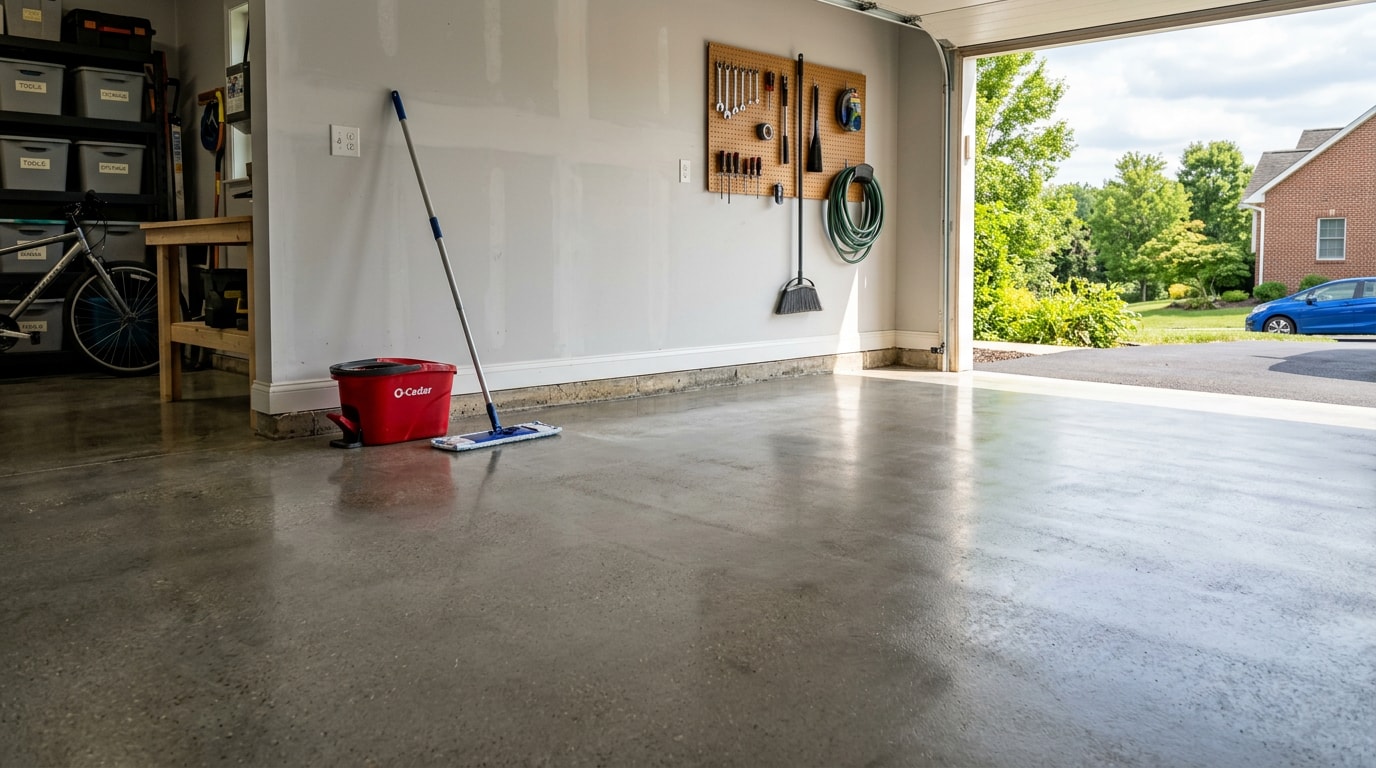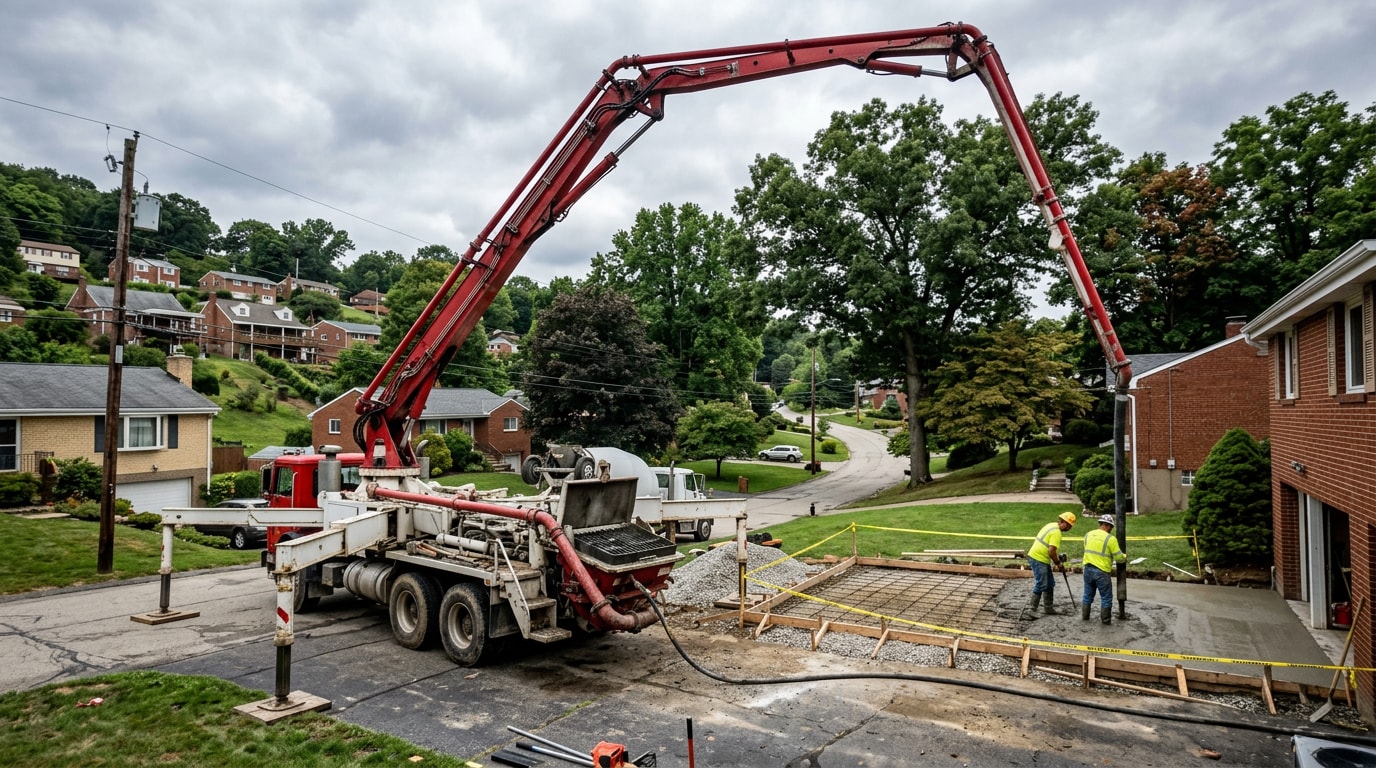
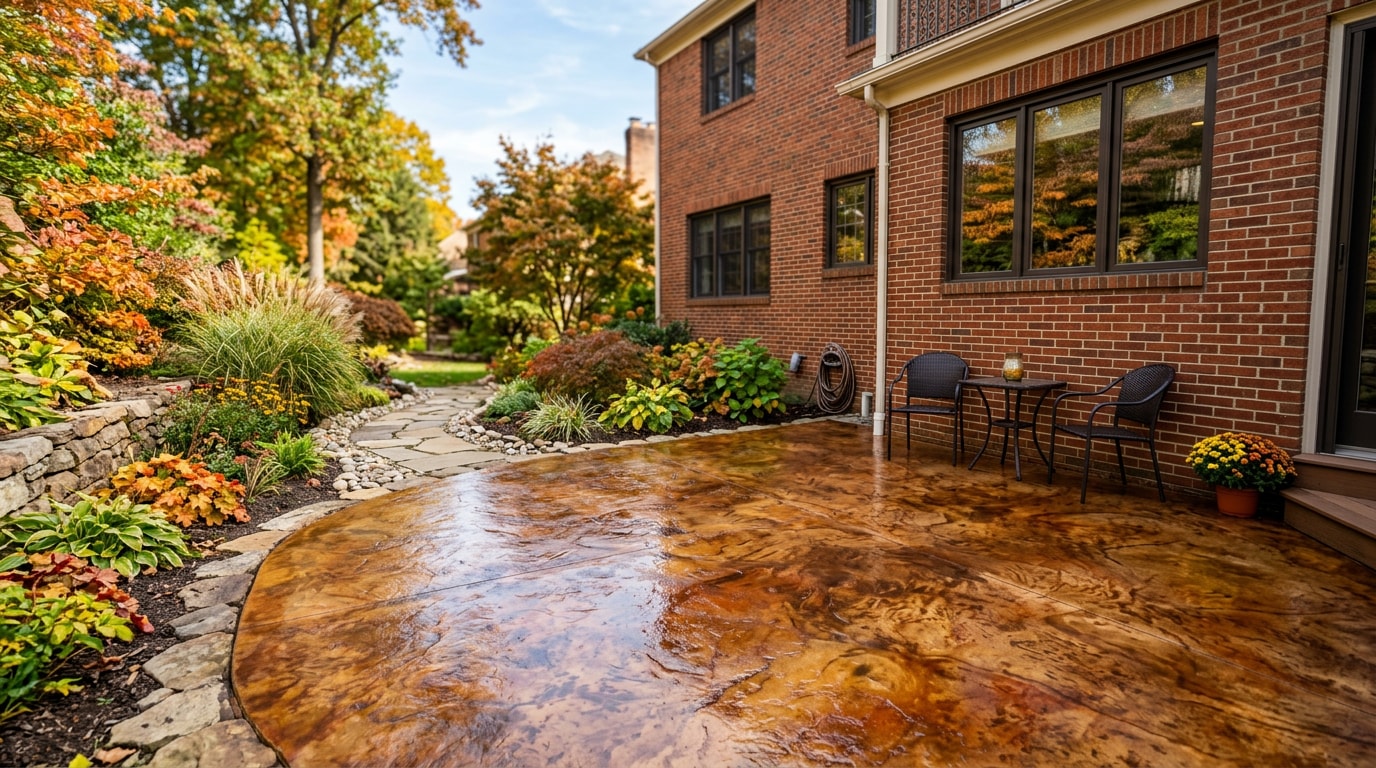
Acid stain concrete in Sewickley, PA turns a flat gray driveway, patio, or basement floor into a marbled, stone-like surface that won't peel or fade. Before you call a contractor, you need straight answers on cost, how the process actually works, and whether it can survive another Western Pennsylvania winter. This guide covers all three.
Visit Johnny's Asphalt to see our services and request a free estimate.
What Is Acid Stain Concrete?
Acid stain isn't paint. It's a chemical reaction.
The stain is a mild acid solution carrying metallic salts. When it's applied to a cured concrete slab, it reacts with the calcium hydroxide, or free lime, that's naturally present in the cement. That reaction forms new, insoluble color compounds inside the surface of the slab itself, which is why the American Cement Association lists staining as one of the decorative finishes compatible with concrete surfaces.
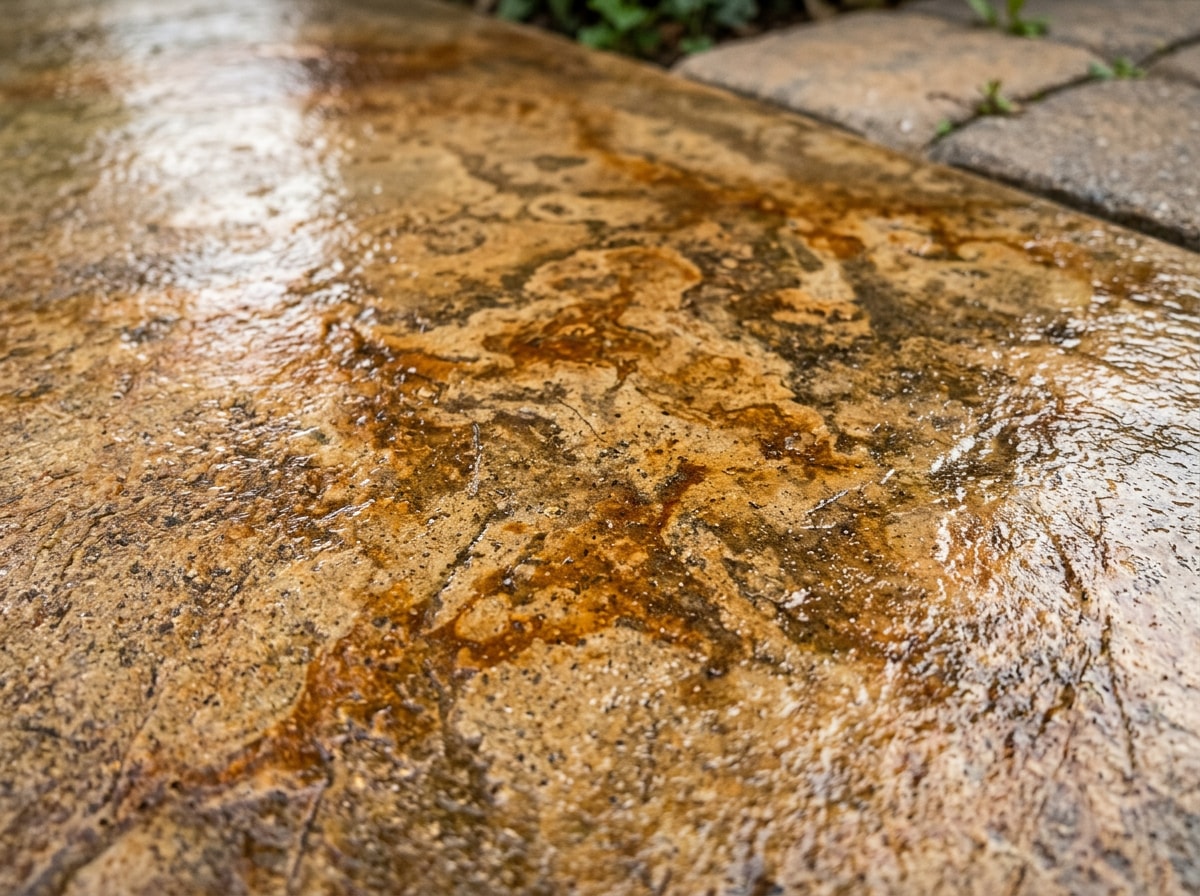
Because the color becomes part of the slab, it doesn't chip, peel, or wear off like a surface coating does. The tradeoff is predictability: every slab has a different mix of cement, moisture, and porosity, so the same stain can look different on two driveways poured the same week.
One thing we've learned from staining jobs around Sewickley: slab age and porosity change the final color more than the stain brand does. That's why we always run a small test patch on-site before committing a whole driveway or patio to one color.
Acid Stain Concrete Cost in Sewickley, PA
Pricing depends on surface prep, color complexity, and whether you're staining an existing slab or a new pour. Here's a realistic 2026 planning range for the Pittsburgh area.
| Project Scope | Cost Per Sq. Ft. | Notes |
|---|---|---|
| Basic single-tone stain | $3 – $6 | Simple earth-tone color, minimal prep |
| Standard professional application | $4 – $12 | Includes prep, stain, neutralizing, sealer |
| Multi-color or stenciled pattern | $12 – $25 | Blended colors, borders, or stamped combinations |
| Resealing (every 2–4 years outdoors) | $0.50 – $1.50 | Maintains color and water resistance |
A typical 300-square-foot patio in the standard professional range lands between roughly $1,200 and $3,600. Surface prep, especially grinding or crack repair, is usually the biggest swing factor in that total.
Acid Stain vs. Water-Based Stain
Most homeowners narrow it down to two options before they call anyone. Here's how they actually compare.
| Feature | Acid Stain | Water-Based Stain |
|---|---|---|
| Color process | Chemical reaction with the slab | Pigment deposited into pores |
| Color range | Earth tones, variegated, translucent | Wide palette, more uniform |
| Look | Marbled, stone-like | Flat, consistent |
| Best for | Patios, driveways, floors with a natural look | Interior floors, bold or matched color |
| Maintenance | Reseal periodically | Reseal periodically |
If you want a result that looks like aged stone or leather, acid stain is the better fit. If you need a specific, repeatable color across a large area, water-based stain gives you more control.
Why Acid Stain Holds Up in Sewickley's Freeze-Thaw Climate
Sewickley sits in a moderate freeze-thaw zone. The borough averages 109.5 nights a year with lows below freezing, which means repeated freeze-thaw cycling is a normal part of a slab's life here, not an exception.
Because acid stain bonds chemically with the concrete rather than sitting on top of it, it doesn't flake off the way a surface coating can when water gets underneath it and freezes. A properly applied sealer is still the part doing the heavy lifting against salt and snowmelt, which is why exterior stained surfaces need resealing more often than interior ones.
For steps and walkways, slip resistance matters as much as color. OSHA's long-standing guidance recommends a static coefficient of friction of 0.5 for walking surfaces, and a slip-resistant sealer additive is a simple way to hit that benchmark on sealed, sloped, or frequently wet concrete.
The Acid Staining Process
A professional job generally moves through these steps:
- Clean and prep the slab – grease, old sealer, and efflorescence have to come off first, or the stain reacts unevenly.
- Test the color on a hidden section – porosity varies slab to slab, so a sample patch avoids surprises.
- Apply the stain – usually sprayed on in a circular motion, left to react for one to four hours.
- Neutralize the acid – a baking soda or ammonia solution stops the chemical reaction and rinses off residue.
- Seal the surface – the sealer locks in color and blocks moisture, salt, and UV damage.
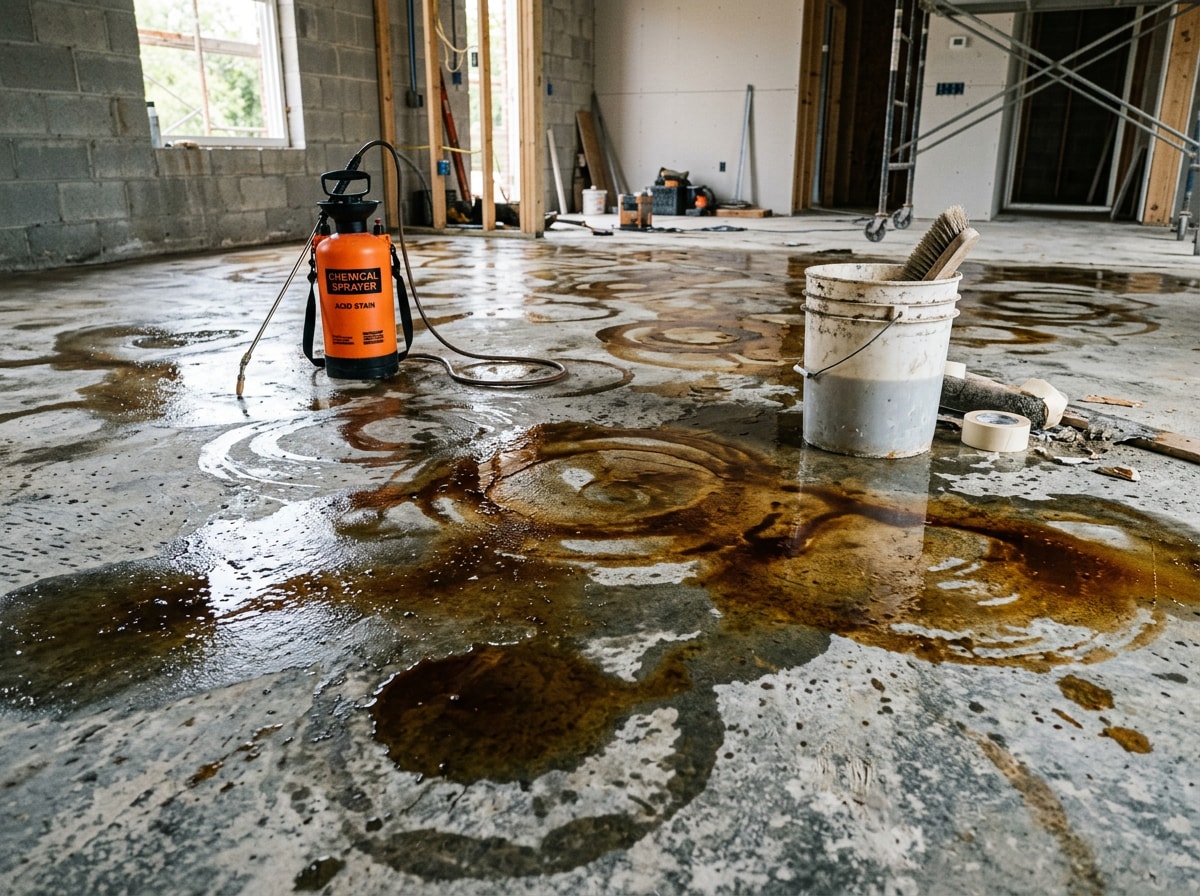
Skipping or rushing any one of these steps is how projects end up blotchy, hazy, or prone to peeling sealer within a year.
Is Acid Staining Safe to DIY?
Acid stain products are hydrochloric-acid-based. They require ventilation, gloves, and eye protection, and mistakes in handling or neutralizing are hard to reverse once they've happened to a slab. OSHA's exposure data for hydrogen chloride vapor outlines why ventilation and PPE aren't optional when you're working with this chemistry indoors or in an enclosed garage.
Beyond the safety side, even application and correct dwell time are what separate a marbled, professional-looking floor from a patchy one. That's the main reason most Sewickley homeowners hire it out rather than treat it as a weekend project.
Our concrete finishing services cover acid staining, surface prep, and sealing for driveways, patios, and floors throughout the area. You can also see examples of completed work on our projects page, including stained and stamped finishes like the ones covered in our stamped concrete patio guide for Sewickley.
If you're ready to talk through color options and get a real number for your slab, get your free estimate and we'll walk the site before you commit to anything.
FAQ
How long does acid-stained concrete last?
The stain itself is permanent since it chemically bonds with the slab. The sealer is what wears down, and most sealed surfaces need a fresh topcoat every 2 to 4 years outdoors, longer indoors.
Can acid stain be used outdoors in Sewickley?
Yes. Acid stain works well on sealed driveways, patios, and walkways. For steps and exterior walkways, add a slip-resistant sealer additive given the area's snow and ice.
How much does acid staining cost per square foot?
Standard professional acid staining in the Sewickley area runs about $4 to $12 per square foot, including prep, stain, neutralizing, and sealer. Basic single-tone work can run closer to $3 to $6, while multi-color or stenciled patterns run $12 to $25.
Does staining affect concrete texture?
No. Staining changes color only. It doesn't smooth, roughen, or otherwise alter the slab's underlying texture.
Can you acid stain new concrete?
Yes, but the slab needs to fully cure first, typically 28 days, so the lime content has stabilized enough to react predictably with the stain.
Is stained concrete slippery when wet?
It can be. A slip-resistant sealer additive addresses this for exterior steps, pool decks, and other high-traffic or wet-prone surfaces.